
Spaceflight – Artemis II astronauts return safely after Pacific Ocean splashdown
Spaceflight – The four-member Artemis II crew has safely completed its journey back to Earth, marking a significant step forward in human space exploration.
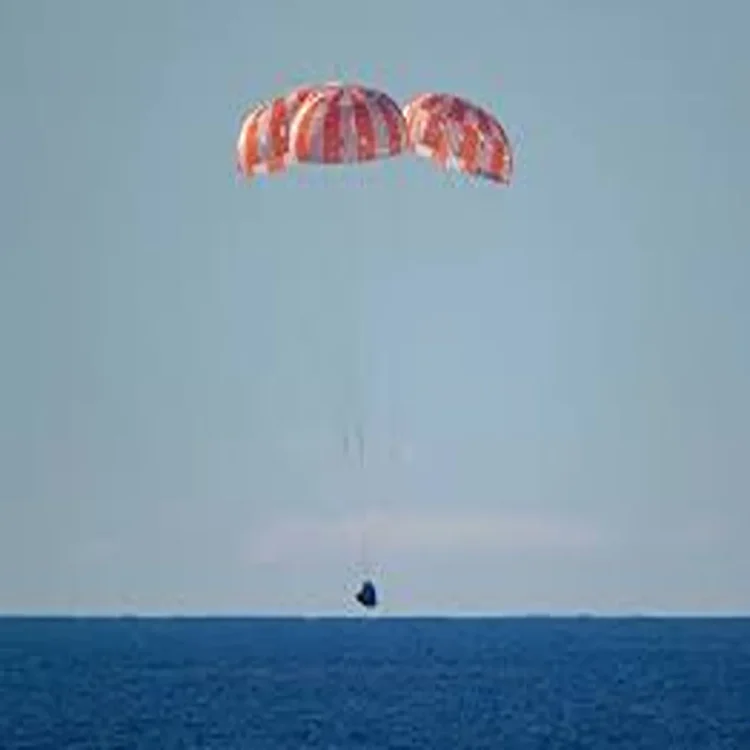
The astronauts were successfully retrieved from their Orion spacecraft shortly after it splashed down in the Pacific Ocean. According to official updates, recovery teams promptly secured the capsule and assisted the crew out of the spacecraft before transferring them to a nearby naval vessel for further procedures.
Recovery operations completed at sea
Following the splashdown, all four astronauts were moved aboard the USS John P. Murtha, where they are currently undergoing standard post-mission protocols. Space agency officials confirmed that the crew will be taken to the ship’s medical bay for detailed health assessments, a routine step after long-duration space travel.
The recovery process unfolded smoothly, with teams working in coordination to ensure astronaut safety and spacecraft handling. Initial reports indicate that the crew members are in stable condition and responding well after their return from space.
Medical evaluations and post-mission procedures
Once aboard the recovery vessel, the astronauts began preliminary medical evaluations. These checks are essential to monitor how the human body readjusts to Earth’s gravity after spending time in space. Specialists will assess physical and physiological parameters, including cardiovascular response, balance, and muscle condition.
These evaluations are part of a broader effort to gather data that will help improve future missions, especially those planned for deeper space exploration. The findings are expected to contribute to ongoing research into astronaut health and long-term space travel readiness.
Reentry witnessed from orbit
Earlier in the day, crew members aboard the International Space Station observed the Artemis II spacecraft as it reentered Earth’s atmosphere. One astronaut described seeing a bright streak of light across the sky, created as parts of the spacecraft interacted with the atmosphere during descent.
Although the Orion capsule itself was not directly visible during the critical phase of reentry, observers noted a faint trail left behind at high altitude. The sight offered a rare orbital perspective on the spacecraft’s return journey, adding to the mission’s memorable moments.
Final moments before descent
In the hours leading up to reentry, mission teams shared updates indicating that the spacecraft was steadily approaching Earth. The astronauts were engaged in final preparations, ensuring all systems were ready for a safe descent.
Weather conditions in the designated splashdown zone were reported to be favorable, which played a crucial role in the success of the landing. Officials also released brief glimpses of the crew’s preparations, highlighting their readiness and coordination during the final phase of the mission.
A milestone in lunar exploration efforts
The successful completion of Artemis II represents an important achievement in ongoing efforts to expand human presence beyond Earth. The mission demonstrated key capabilities required for future lunar expeditions, including crewed deep-space travel and safe return operations.
Experts view this mission as a foundational step toward more ambitious goals, including sustained human activity on the Moon and eventual missions to Mars. The data collected during Artemis II will inform planning, technology development, and safety protocols for upcoming missions.
With the crew now safely back on Earth, attention will turn to detailed analysis of mission performance and lessons learned. These insights are expected to shape the next phase of human space exploration.