
SpaceExploration – Artemis II Mission Success Sets Stage for Future Mars Plans
SpaceExploration – The successful return of NASA’s Artemis II crew has marked a significant moment in modern space exploration, drawing attention from global leaders and space agencies alike. After completing their journey around the Moon, the astronauts safely splashed down in the Pacific Ocean and were promptly recovered, signaling the end of a mission widely viewed as a major step toward deeper space travel.
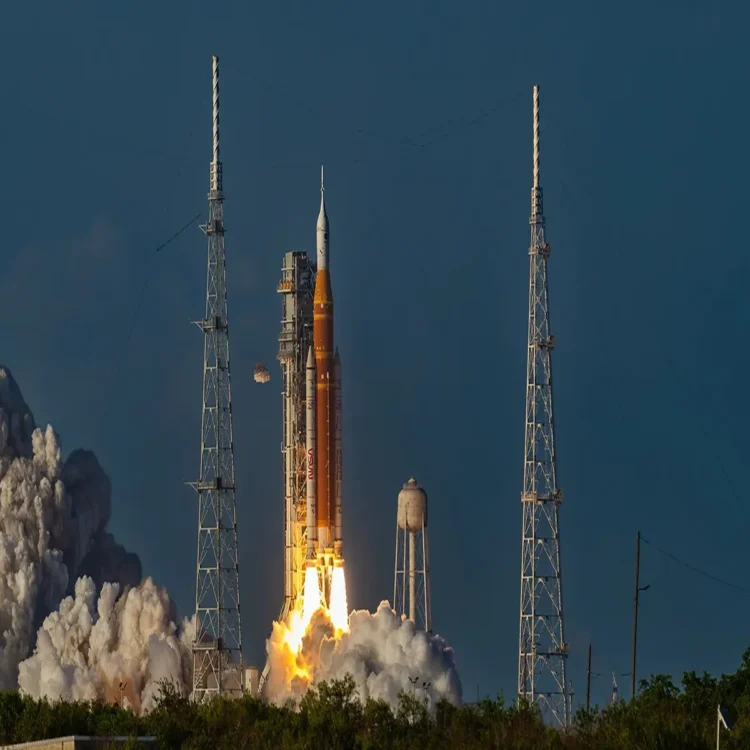
Safe Return and Immediate Recovery Operations
Following the splashdown, all four astronauts were carefully extracted from the Orion spacecraft. NASA confirmed that the crew was transferred to the USS John P. Murtha, where standard post-mission procedures began. Medical teams onboard initiated routine health evaluations to ensure the astronauts’ well-being after their time in space.
According to official updates, the recovery process went smoothly, reflecting the effectiveness of NASA’s planning and execution. The astronauts are expected to undergo further observation and analysis in the coming days as part of standard post-mission protocols.
Presidential Response and Mars Vision Announcement
Reacting to the mission’s success, US President Donald Trump extended his congratulations to the Artemis II team. In a public statement, he praised the crew for their performance and described the mission as a remarkable achievement for the country.
The President also revealed broader ambitions for the future of space exploration, indicating that the success of Artemis II could pave the way for human missions to Mars. He expressed interest in hosting the astronauts at the White House and hinted at continued efforts to build on the momentum generated by the lunar mission.
Observations from the International Space Station
Earlier in the day, astronauts aboard the International Space Station witnessed the Artemis II crew’s re-entry into Earth’s atmosphere. One of the station’s crew members described seeing a bright streak of light as the spacecraft’s service module burned up during descent.
Although the Orion capsule itself was not directly visible during re-entry, the glowing trail left behind in the upper atmosphere provided a clear indication of the spacecraft’s return. The observation added a unique perspective to the mission, highlighting the coordination and shared experiences within the global space community.
A Milestone in Human Spaceflight
NASA described the Artemis II mission as a historic achievement, emphasizing its importance in advancing human space exploration. The mission not only demonstrated the capability of modern spacecraft systems but also reinforced confidence in future crewed missions beyond Earth’s orbit.
The successful journey around the Moon represents a critical step in NASA’s broader Artemis program, which aims to establish a sustainable human presence on the lunar surface. This, in turn, is expected to serve as a foundation for eventual missions to Mars.
Looking Ahead to Future Missions
With Artemis II now completed, attention is shifting toward upcoming missions that will build on its success. NASA and its partners are expected to use data collected from this mission to refine technologies, improve safety measures, and prepare for more complex operations in deep space.
The possibility of a human mission to Mars, as mentioned by the US President, remains a long-term goal. However, the achievements of Artemis II have brought that vision closer to reality, offering renewed optimism about the future of space exploration.
As agencies continue to push boundaries, the successful return of Artemis II stands as a reminder of how far human spaceflight has come—and how much further it may go.