
Russia : previously proposed a trade deal between Venezuela and Ukraine Report
Russia: According to seven-year-old congressional testimony by Fiona Hill, a former senior National Security Council official, Russia once indicated a willingness to give the United States leeway in Venezuela in exchange for Washington softening its stance on Ukraine. This account has resurfaced amid renewed scrutiny of great-power negotiations.
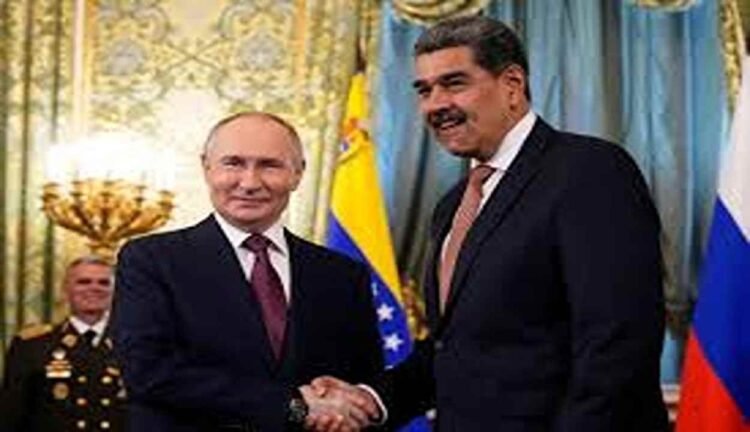
The New York Times piece on Monday recounted the incident, which dates back to Hill’s 2019 congressional testimony when she was the senior director for Russian and European issues at the NSC during the first Trump administration.
In her testimony, Hill detailed what she termed “strong Russian signaling,” which was mostly in public forums and the media and suggested a connection between Russia’s goals in Ukraine and US strategy in Venezuela.
In reference to a time in early 2019 when tensions between Washington and Caracas were at their highest and Russia was providing military support for Venezuelan President Nicolas Maduro, Hill told lawmakers, “The Russians at this particular juncture were signaling very strongly that they wanted to somehow make some very strange swap arrangement between Venezuela and Ukraine.”
Hill said the messages came as Moscow pointed to what it considered to be its own “backyard” in Ukraine and the United States used the Monroe Doctrine to support its position in Venezuela.
“You possess your Monroe Doctrine. You want us to leave your backyard. We have our own version of this, you know. She summarized the Russian stance expressed via unofficial channels and Russian news criticism by telling the hearing, “You’re in our backyard in Ukraine.”
Hill testified that the notion of a trade-off emerged via public remarks, commentary, and media pieces rather than being expressed through official diplomatic initiatives. She said that the Russians “laid it out in articles,” many of which were written in Russian, so that US authorities monitoring Moscow’s message could see the connection.
Hill then made an unclassified trip to Moscow to meet with Russian colleagues, including at a think tank, and told Congress that the conversations there confirmed the perception that Russian officials wanted to link Ukraine and Venezuela in their strategic calculations. She said, “It was also clear … that the Russian government was eager to have a conversation about Venezuela and Ukraine.”
She emphasized that there had been enough public discussion of the issue that concerns about whether she had been to Russia “to make a trade between Venezuela and Ukraine” were posed at a press conference by the US State Department, highlighting the fact that the notion was already being discussed.
Moscow’s conflicted response to recent US intervention in Venezuela, according to the New York Times story, has brought up memories of that previous incident, which took place years before to Russia’s full-scale invasion of Ukraine.
As Washington stepped up pressure on the Maduro regime, Russia had sent troops and equipment to Venezuela at the time Hill testified.
In her testimony, Hill said that throughout her contacts with Russian officials, she personally rejected the idea of such a trade. In contrast to US policy stances, she explained the incident as part of a larger pattern in which Moscow attempted to construct international affairs in terms of reciprocal spheres of influence.
Hill clarified in her testimony that her comments were limited to unclassified material that was previously available to the public. When asked about the scope of her disclosures, she told MPs, “I have limited all my answers to the things that have either been in the public discussion.”