
Politics – Trump Links Legislative Deal to Passage of ‘Save America Act’
Politics – Former US President Donald Trump has signaled firm opposition to any agreement with Democratic lawmakers unless they support a broad legislative proposal he has termed the “Save America Act.” His remarks come at a time when discussions are underway in Washington over several key policy areas, including immigration funding and election-related measures.
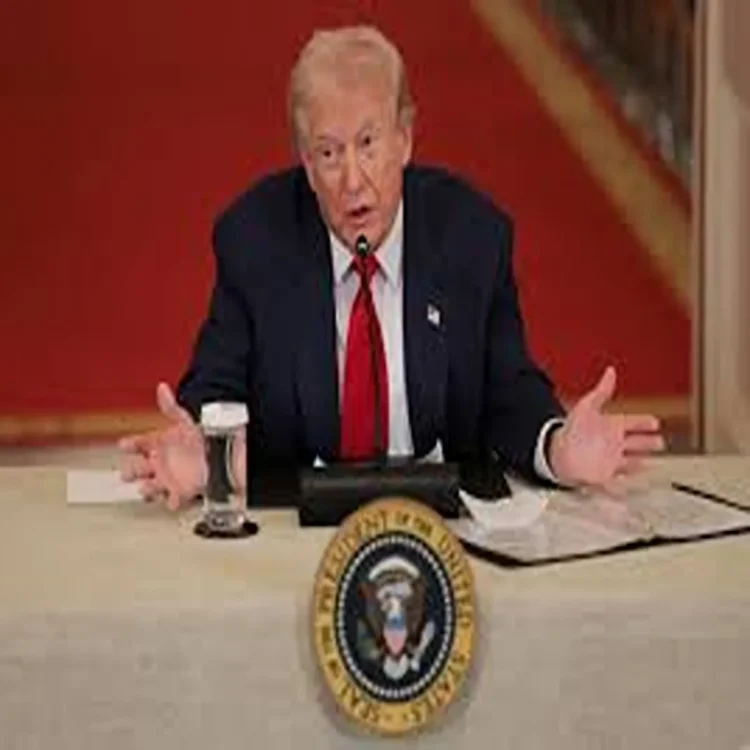
Conditions Set for Bipartisan Agreement
In a message shared publicly, Trump made it clear that he does not support compromise unless Republicans secure backing for the proposed legislation. He framed the bill as a central priority, urging Republican leaders to push for its passage before engaging in any further negotiations with Democrats.
According to his statement, the proposed measure encompasses a wide range of policy demands. These include changes to voting procedures, immigration enforcement policies, and social issues. Trump emphasized that any potential deal must address these concerns collectively, rather than in separate legislative efforts.
Criticism of Immigration Funding Proposal
Trump also voiced strong objections to a reported proposal involving a reduction in funding for Immigration and Customs Enforcement (ICE). He argued that such a move, even if presented under a different framework, would not align with public expectations or national priorities.
His criticism reflects ongoing debates in the United States over immigration enforcement strategies and budget allocations. While some policymakers advocate for reforms and adjustments to enforcement funding, others argue for maintaining or increasing support for border security agencies.
Focus on Election and Social Policy Measures
A significant portion of Trump’s proposal centers on election-related reforms. Among the measures he highlighted are stricter voter identification requirements, proof of citizenship for voting eligibility, and limitations on mail-in voting, with certain exceptions. He also called for a return to paper ballots as part of efforts to strengthen election processes.
In addition to election policies, Trump’s plan includes provisions related to social issues, particularly those involving sports participation and medical procedures linked to gender identity. These topics have become increasingly prominent in political discussions across the country, often drawing sharply differing viewpoints from lawmakers and advocacy groups.
Call for Unified Legislative Strategy
Trump urged Republican lawmakers to combine all of these policy priorities into a single legislative package. He argued that presenting a unified bill would strengthen the party’s position and provide clarity on its policy agenda.
He also called for procedural changes in the Senate to facilitate passage of the legislation. Specifically, he suggested eliminating the filibuster rule, which currently requires a higher threshold of votes to advance most bills. Additionally, he encouraged lawmakers to remain in Washington if necessary to ensure progress on the proposal.
Internal Party Dynamics Highlighted
The former president’s comments also pointed to divisions within the Republican Party. He encouraged party leadership to identify members who may not support the proposed legislation, suggesting that such opposition could have political consequences in future elections.
These remarks underscore ongoing debates within the party about legislative strategy and policy priorities. While many Republicans align with Trump’s positions on issues such as election reform and immigration, others have taken more moderate or independent stances.
Broader Context of Policy Debates
The issues raised in Trump’s statement reflect broader political trends in the United States. Discussions around election integrity, voting access, and immigration enforcement have played a central role in recent elections and legislative battles.
Republican lawmakers have generally supported measures such as voter identification laws and restrictions on mail-in voting, citing concerns about election security. In contrast, Democratic leaders have often opposed these proposals, arguing that they could limit access to the voting process.
As negotiations continue in Washington, the path forward remains uncertain. Trump’s position adds another layer of complexity to an already challenging legislative environment, where bipartisan agreement often requires balancing competing priorities and perspectives.