
News – Mehbooba Mufti Welcomes US-Iran Truce, Raises Kashmir Concerns
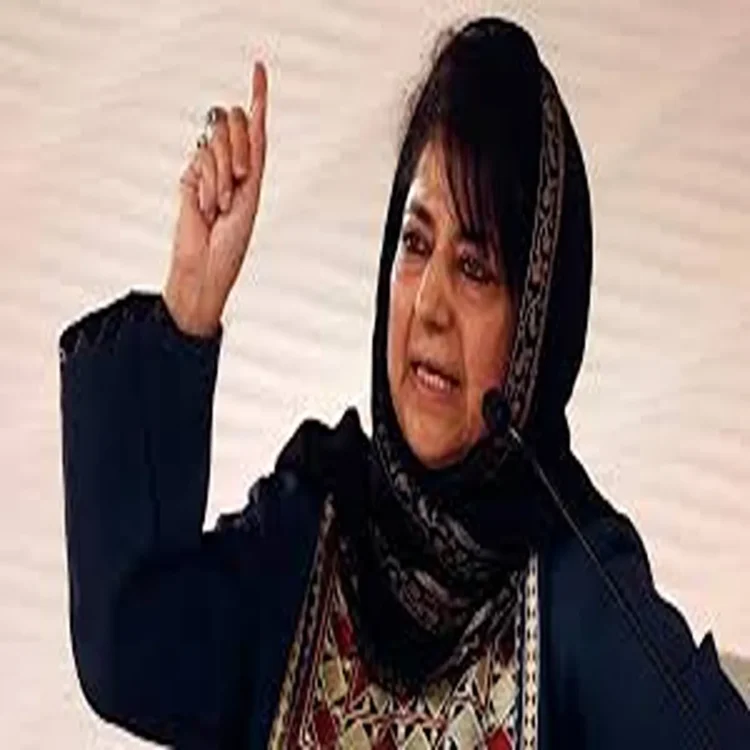
News – Peoples Democratic Party (PDP) leader Mehbooba Mufti on Thursday expressed support for the recently announced ceasefire between the United States and Iran, describing it as a positive step that could contribute to long-term stability in a conflict-prone region. She said such developments offer hope for reducing tensions and fostering dialogue.
Call for Lasting Peace in the Region
Speaking on the development, Mufti said the agreement should not remain a temporary pause in hostilities but evolve into a sustained effort toward peace. She underlined the importance of diplomatic engagement, noting that prolonged conflicts often worsen humanitarian conditions and deepen mistrust among nations.
Mufti also referenced broader regional sensitivities, suggesting that the ceasefire could open space for renewed conversations aimed at resolving underlying disputes. According to her, peaceful negotiations remain the most effective way to address long-standing geopolitical tensions.
Concerns Over Religious Sites
In the same statement, Mufti raised concerns regarding religious institutions closer to home. She pointed out that while Jerusalem’s Al-Aqsa Mosque has reopened after being shut for several weeks, Srinagar’s historic Jamia Masjid continues to remain closed. She described the situation as troubling and called for attention to the issue.
Her remarks reflected a broader concern about access to places of worship and the need for consistency in ensuring religious freedoms. She emphasized that such matters carry deep emotional and cultural significance for communities.
Reference to Past Leadership and Dialogue Approach
Mufti also recalled the stance of her father, former Jammu and Kashmir Chief Minister Mufti Mohammad Sayeed, who consistently advocated dialogue as the only sustainable path to peace. She reiterated that the same approach remains relevant today, particularly in times of heightened tensions.
According to her, meaningful engagement between conflicting parties is essential to prevent escalation and build trust. She stressed that political solutions must be prioritized over military responses.
Fragile Ceasefire Faces Challenges
The ceasefire between the United States and Iran, however, remains uncertain as conflicting interpretations emerge. Tehran has indicated that the agreement includes a halt to Israeli military actions in Lebanon, suggesting a broader scope for the truce.
On the other hand, Israeli Prime Minister Benjamin Netanyahu has rejected this interpretation, stating that operations against Hezbollah in Lebanon will continue without interruption. He asserted that military actions are necessary to ensure national security and protect citizens.
Disagreements Add to Uncertainty
This difference in understanding has complicated the situation further. Iran has accused Israel of breaching the ceasefire by carrying out strikes in Lebanon, while both Washington and Israel maintain that the agreement does not cover that region.
The lack of consensus has raised concerns among observers about the durability of the ceasefire. Analysts warn that without clear terms accepted by all involved parties, the agreement risks collapsing, potentially leading to renewed conflict.
Broader Implications for Regional Stability
The developments highlight the complexities of diplomacy in the Middle East, where multiple actors and overlapping conflicts often make agreements difficult to sustain. While the ceasefire has been welcomed in principle, its effectiveness will depend on adherence and mutual understanding.
Mufti’s remarks reflect a wider hope that such initiatives can lead to meaningful peace, while also drawing attention to unresolved issues both internationally and domestically. As the situation continues to evolve, the focus remains on whether diplomatic efforts can overcome existing divisions.