
Legislation – Republican Lawmakers Push Bills Targeting Foreign Religious Laws
Legislation – Republican members of the US House of Representatives used a coordinated floor session to advocate for new legislation aimed at preventing the influence of foreign religious laws, including Sharia, within the American legal framework.
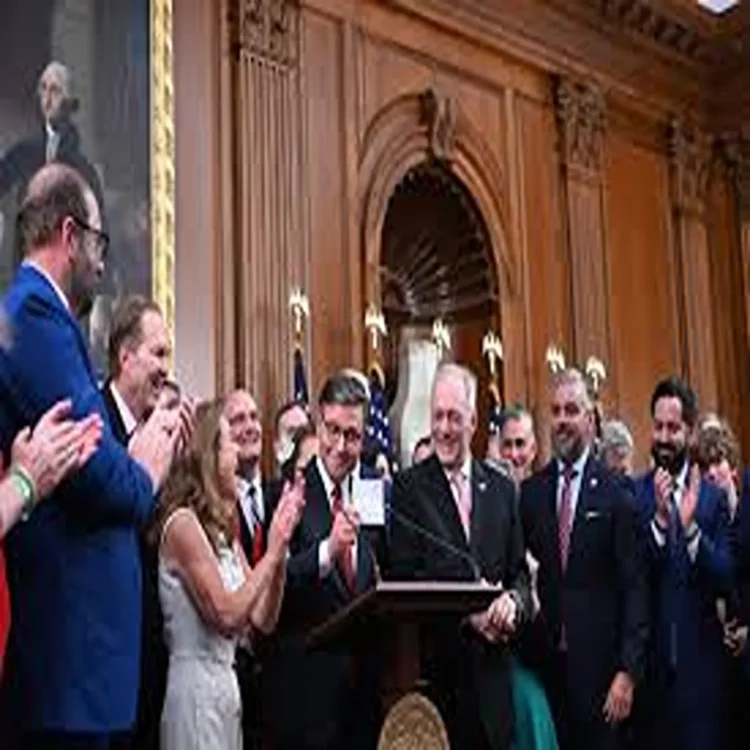
The hour-long discussion was organized by Representatives Keith Self and Chip Roy, who lead the Sharia Free America Caucus. The group, formed just three months ago, has reportedly expanded quickly, now including around 60 lawmakers representing 25 states. Supporters say this growth reflects increasing concern among legislators about safeguarding the US legal system.
Caucus Growth Reflects Rising Political Attention
Speaking during the session, Keith Self highlighted the rapid expansion of the caucus as evidence of broader national interest in the issue. He framed the debate as a matter of constitutional integrity, emphasizing that the United States was founded on principles of individual liberty governed by a consistent and supreme legal structure.
Chip Roy reinforced this perspective, arguing that policymakers must acknowledge what he described as a wider ideological challenge. According to him, failing to recognize potential threats could weaken efforts to address them effectively.
Strong Emphasis on Constitutional Supremacy
Several Republican lawmakers echoed the view that the US Constitution must remain the sole authority guiding the country’s legal system. Representative Randy Weber stated firmly that the Constitution is the only law of the land, while Russ Fulcher added that alternative legal systems cannot operate alongside it.
Other participants in the debate included Mark Harris, Mary Miller, Buddy Carter, Barry Moore, Sheri Biggs, Randy Fine, Eli Crane, and Scott Perry. Each contributed to the discussion by emphasizing the importance of maintaining a unified legal framework.
Security Concerns Highlighted During Debate
Some lawmakers connected their concerns to national security, referencing recent incidents they associated with extremist ideologies. Keith Self pointed to developments in Texas, particularly in Plano, where he alleged that a mosque-linked housing project could function as a parallel community. He also mentioned a larger proposed development that is currently under regulatory and legal review.
While these claims were presented as part of the argument for stricter oversight, such developments remain subject to ongoing scrutiny and have not been conclusively defined in legal terms.
Legislative Proposals Under Consideration
During the session, lawmakers stated that seven bills are already prepared to address what they see as potential risks linked to foreign legal influences. Barry Moore argued that no external legal code should have any role in American courts, while Sheri Biggs emphasized that individuals living in the United States are expected to follow its laws exclusively.
Randy Fine described the debate as a significant moment, noting that lawmakers were addressing an issue they consider critical to the country’s future. Supporters of the proposed legislation believe it will reinforce constitutional clarity and prevent legal ambiguity.
Call for Broader Political Support
Caucus leaders concluded by urging lawmakers from both major political parties to support their efforts. Keith Self extended an invitation to colleagues across the political spectrum, stating that the initiative is focused on preserving a unified national legal identity.
The debate underscores an ongoing discussion within US politics about the relationship between constitutional law and cultural or religious practices. As the proposed bills move forward, they are likely to face further examination and debate in Congress.