
Iraq: Salih the former president of was chosen to be the UN High Commissioner for Refugees
Iraq: Former Iraqi president and former refugee Barham Salih was chosen to serve as the UN High Commissioner for Refugees at a time when the organization is dealing with the twin problems of declining funding and a sharp rise in the number of individuals in need of its assistance.
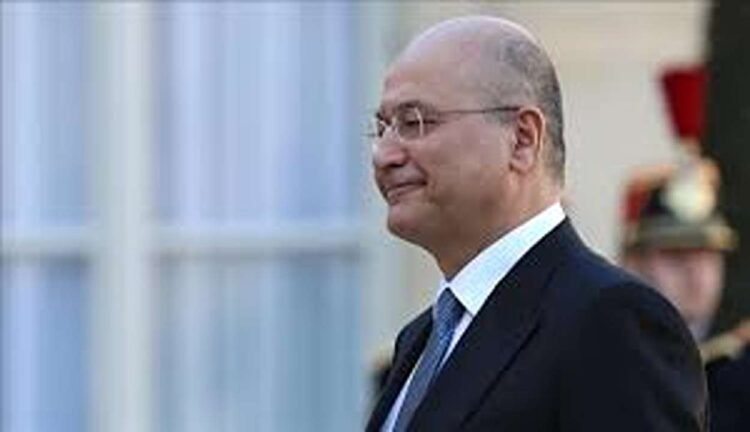
On Secretary-General Antonio Guterres’ suggestion, the General Assembly overwhelmingly elected him on Thursday, filling the position in an area beset by refugee issues.
Following his victory, Salih said, “As a former refugee, I know first-hand how protection and opportunity can change the course of a life.” “A leadership approach based on empathy, pragmatism, and a principled commitment to international law will be informed by that experience.”
He will take over for Italy’s Filippo Grandi, whose second term expires at the end of this year.
“His background and experience make him well-suited to lead UNHCR at a time of large-scale displacement and increasingly complex humanitarian and political challenges,” Grandi said, welcoming his replacement.
Guterres himself had been in charge of the UN’s refugee agency.
The other eight commissioners have all been Europeans, with the exception of Sadruddin Aga Khan and Sadako Ogata of Japan.
Salih was chosen by Guterres from a group of 10 individuals recommended by UN member nations.
Among them were Paris Mayor Anne Hidalgo, former Spanish Foreign Minister Arancha Gonzalez Laya, and Sweden’s Jesper Brodin, who resigned as CEO of the international home furnishings company Ikea.
After serving as the regional prime minister of his home region of Kurdistan from 2009 to 2012, Salih served as president of Iraq from 2018 to 2022.
His participation in the Kurdish independence struggle led to his detention in 1979 under the cruel reign of Saddam Hussein.
He left Iraq for Britain, where he earned a PhD in statistics and computer applications from the University of Liverpool and a bachelor’s degree in civil engineering from the University of Cardiff.
He is one of the founders of Sulaimani’s American University of Ira.
The UNHCR organization estimates that there are more than 117 million refugees worldwide, the majority of whom reside in poor nations.
It operates in 128 countries with 14,600 employees.
“A deadly confluence of factors pummeling millions of refugees and displaced people: rising displacement, shrinking funding, and political apathy,” according to an agency assessment earlier this year.
It said that due to financial shortages, $1.4 billion worth of vital programs are being canceled or suspended.
According to the report, up to 11.6 million refugees and those who were compelled to escape might lose UNHCR assistance.
“Around 1.9 million Afghans have returned home or been forced back since the start of the year, but financial aid for returnees is barely enough to afford food, let alone rent, undermining efforts to ensure stable reintegration,” the statement stated, referring to Pakistan’s expulsion of refugees.