
IranConflict – Trump Claims US Strikes Crippled Iran’s Military for Years
IranConflict – Former US President Donald Trump has claimed that recent American military strikes have severely weakened Iran’s military capabilities, suggesting it could take the country many years to rebuild its defense infrastructure. However, Trump stopped short of formally declaring the conflict over, saying the situation is still evolving.
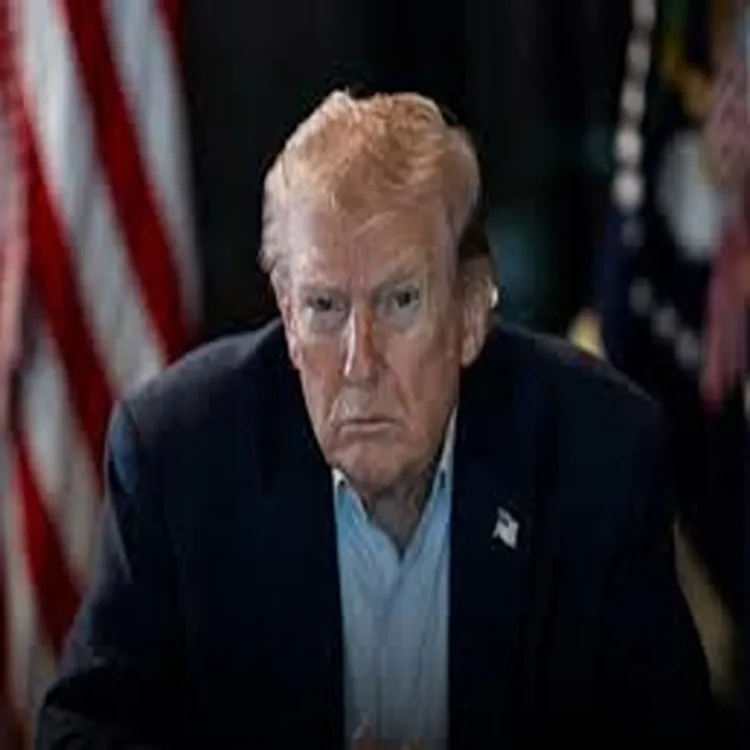
Speaking to reporters aboard Air Force One while traveling to Joint Base Andrews on Sunday, Trump said the damage inflicted by US operations had left Iran’s military significantly weakened. According to him, if military actions ended immediately, Iran might require up to a decade or more to restore its military strength.
Trump Says Iran’s Military Power Has Been Severely Reduced
During the interaction with journalists, Trump said the United States had dealt a major blow to Iran’s military structure. He stated that the operations had effectively neutralized key elements of Iran’s defense systems.
Trump claimed that Iranian air power and air defense networks had been heavily targeted during the strikes. According to his remarks, these operations left Iran with little remaining capability to defend its airspace.
Despite these assertions, Trump avoided announcing an official end to the conflict. Instead, he suggested that although Iran might attempt some form of retaliation, its ability to respond militarily would be limited due to the scale of the damage already inflicted.
Claims of Eliminated Iranian Leadership
Trump also suggested that several high-ranking Iranian figures had been killed during the military campaign. While he did not provide detailed confirmation, he indicated that multiple senior leaders had been removed from command structures as a result of the strikes.
He said the exact number of leaders eliminated was still being verified, but suggested the campaign had significantly disrupted Iran’s leadership hierarchy.
These statements come amid ongoing uncertainty about the full extent of the military operations and their long-term impact on Iran’s political and military institutions.
Strike on Kharg Island Oil Facility Highlighted
Trump further referred to a US attack on Iran’s Kharg Island, a critical hub for the country’s oil exports located in the Persian Gulf. The facility plays a central role in Iran’s ability to ship crude oil to international markets.
According to Trump, most of the infrastructure at the site had been heavily damaged, with only a small operational section left intact. He stated that US forces had the capability to destroy the remaining components of the facility quickly if required.
Trump said the decision not to carry out additional strikes immediately was deliberate, adding that the United States retained the capacity to escalate operations if circumstances demanded it.
Trump Says Iran May Seek Negotiations
During the same conversation, Trump suggested that Iran may be interested in opening negotiations with the United States. He indicated that intelligence and reports he had received suggested Tehran was looking for a diplomatic solution.
However, he added that he believed Iran was not yet prepared to meet the conditions required for meaningful negotiations. According to Trump, discussions could potentially happen in the future if the situation changes.
He also praised the US armed forces for their role in carrying out the military operations, describing their performance as exceptional.
Iran Rejects Claims of Ceasefire Request
Iranian officials have pushed back strongly against claims that Tehran is seeking negotiations or a ceasefire. Iranian Foreign Minister Seyed Abbas Araghchi rejected the suggestion that Iran had approached the United States for talks.
In an interview with CBS News, Araghchi said Iran had not asked for a ceasefire and remained ready to continue defending itself. He said Tehran would maintain its military response as long as what he described as an illegal conflict continues.
Araghchi also defended Iran’s actions targeting US military assets located in Gulf region countries, arguing that the strikes were part of the country’s broader self-defense strategy.
The Iranian government maintains that its military actions are justified responses to foreign aggression, and officials have indicated they are prepared for a prolonged confrontation if necessary.
Ongoing Tensions in the Gulf Region
The exchange of claims between Washington and Tehran highlights the continued volatility in the Persian Gulf region. Kharg Island remains strategically significant because it serves as the main gateway for Iranian crude oil shipments to global markets.
Damage to infrastructure in this area could have broader implications for regional energy supply and geopolitical stability.
With both sides presenting conflicting narratives about the conflict’s progress and possible negotiations, international observers are closely monitoring developments to assess whether tensions could escalate further or eventually move toward diplomacy.