
Indo-Pacific – US and Japan unveil major strategic investment and defence push
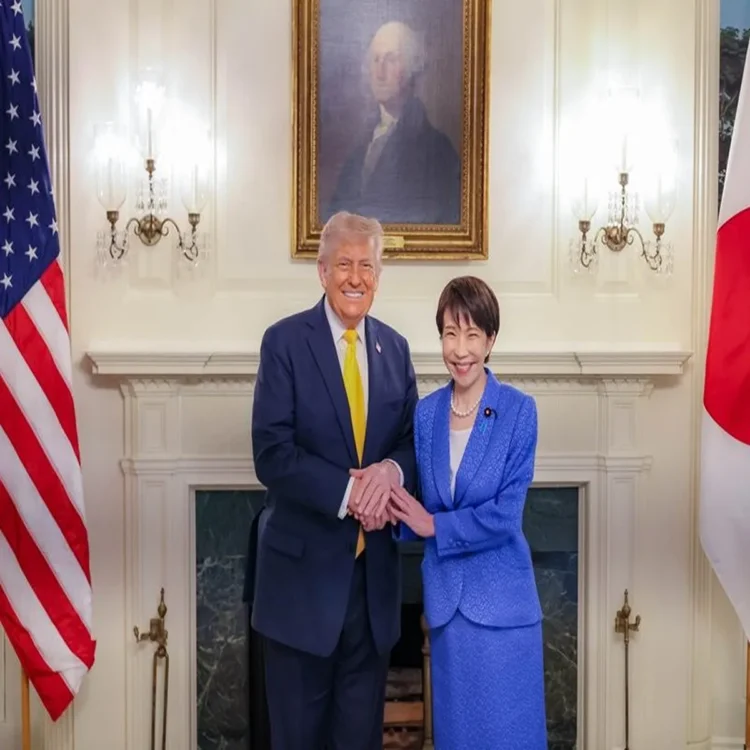
Indo-Pacific – The United States and Japan have announced a sweeping package of energy, infrastructure, and defence initiatives exceeding $100 billion, marking a significant step toward deeper strategic cooperation in the Indo-Pacific region. The announcement followed high-level talks at the White House between US President Donald Trump and Japanese Prime Minister Sanae Takaichi.
Expanding Economic and Energy Investments
A major highlight of the agreement is the expansion of Japanese investments in the United States. Building on a previously committed $36 billion, Japan will now channel additional funds into critical energy infrastructure. This includes up to $40 billion for small modular nuclear reactor projects in Tennessee and Alabama, along with another $33 billion earmarked for natural gas facilities in Pennsylvania and Texas.
Officials from both countries emphasized that these advanced energy projects are expected to provide stable and reliable electricity while helping manage long-term power costs. They also see this collaboration as a way to strengthen technological leadership in the global energy sector.
Strengthening Supply Chains and Critical Minerals Access
Both nations have agreed to enhance cooperation in securing supply chains, particularly in critical minerals that are essential for modern industries such as electronics, defence systems, and renewable energy technologies. A new joint action plan aims to diversify sourcing and boost production capacity.
US Ambassador Jamieson Greer noted that the initiative would lay the groundwork for a broader international agreement, potentially supported by pricing mechanisms and coordinated policies. In addition, the two countries will accelerate joint research on deep-sea mineral exploration, including rare-earth deposits located near Japan’s Minamitorishima Island.
Boosting Trade and Business Mobility
Economic ties are also set to strengthen through improved market access for US agricultural products in Japan. The United States expects this move to benefit American farmers and exporters while balancing trade relations.
In a further effort to promote investment, the US government plans to streamline visa processing for business professionals. Priority will be given to individuals who contribute to economic growth through investments, workforce training, or the transfer of specialized knowledge and technology.
Advancing Technology and Innovation Partnerships
Technology cooperation emerged as another key pillar of the discussions. Both countries have agreed to expand joint efforts in fields such as artificial intelligence, quantum computing, and high-performance computing systems.
These collaborations will involve both public institutions and private sector players, with the aim of accelerating innovation and maintaining competitiveness in rapidly evolving technological landscapes.
Deepening Space Collaboration
Space exploration is also set to benefit from the strengthened alliance. Japan has committed to supporting NASA’s Artemis programme by contributing a crewed lunar rover. The partnership will further extend to joint activities in low Earth orbit and future missions aimed at lunar exploration.
This growing cooperation reflects a shared ambition to play leading roles in the next phase of space development.
Enhanced Defence and Security Cooperation
Defence collaboration formed a central part of the discussions. The United States welcomed Japan’s commitment to increase its defence spending and enhance military capabilities. Both sides plan to expand missile defence systems and ramp up production of key defence technologies.
Plans include increasing the output of Standard Missile-3 systems and exploring joint production of advanced air-to-air missiles. The deployment of advanced military capabilities in Japan will also support what officials described as a strengthened defensive posture in the region.
Regional Stability and Strategic Commitments
On broader regional issues, both leaders reaffirmed their commitment to maintaining peace and stability across the Taiwan Strait, opposing any unilateral attempts to alter the current situation. They also reiterated their shared goal of achieving complete denuclearization of North Korea.
Meanwhile, a bipartisan group of US lawmakers welcomed Prime Minister Takaichi’s visit, highlighting the alliance as a key pillar of economic and security stability in the Indo-Pacific. Officials described the partnership as entering a new phase marked by stronger coordination across defence, economic, and energy sectors.