
Finance – US Moves to Ease Restrictions on Venezuelan Mineral Trade
Finance – The United States Department of the Treasury has announced a new step aimed at reviving Venezuela’s struggling economy by allowing limited activities related to minerals sourced from the country. The decision, made public on Saturday, involves the issuance of general licenses by the Office of Foreign Assets Control (OFAC), which will permit certain transactions that were previously restricted under sanctions.
Treasury Signals Economic Re-engagement Strategy
According to the Treasury, the move is part of a broader effort to gradually reintroduce Venezuela into international economic activity. Officials indicated that the policy is designed not only to stabilize Venezuela’s internal economy but also to create opportunities that could benefit both American businesses and Venezuelan stakeholders.
In a statement shared on social media, the department highlighted that recent actions have focused on accelerating economic adjustments. The goal, it said, is to restore operational capacity in key sectors while redirecting investment flows in a way that aligns with mutual economic interests.
Focus on Mineral Sector Activities
The newly issued licenses specifically address Venezuelan-origin minerals, a sector considered vital for the country’s economic recovery. While details of the permitted activities remain limited, the authorization suggests a controlled reopening of trade channels that had been largely blocked due to sanctions.
Experts believe this step could encourage cautious engagement from international investors, particularly in industries tied to natural resources. However, the extent of participation will likely depend on regulatory clarity and geopolitical developments in the coming months.
Legal Battle Continues for Former President
At the same time, political developments linked to Venezuela continue to unfold in the United States. Former Venezuelan president Nicolas Maduro is expected to appear again in a New York courtroom as he seeks dismissal of charges related to alleged drug trafficking.
This upcoming hearing marks the first court appearance for Maduro and his wife, Cilia Flores, since their arraignment in January. During that earlier proceeding, Maduro denied all allegations and objected to his detention, claiming he had been forcibly taken by US military personnel.
Detention and Legal Challenges
Both Maduro, aged 63, and Flores, aged 69, are currently being held at a detention facility in Brooklyn. Neither has applied for bail so far. The presiding judge has not yet confirmed a trial date, although legal observers expect that the timeline could become clearer during the next hearing.
Maduro’s legal team has raised concerns over access to financial resources, arguing that restrictions imposed by US authorities are preventing the use of Venezuelan government funds to cover legal expenses. This issue is expected to form a key part of the defense’s arguments in court.
Political Landscape in Venezuela
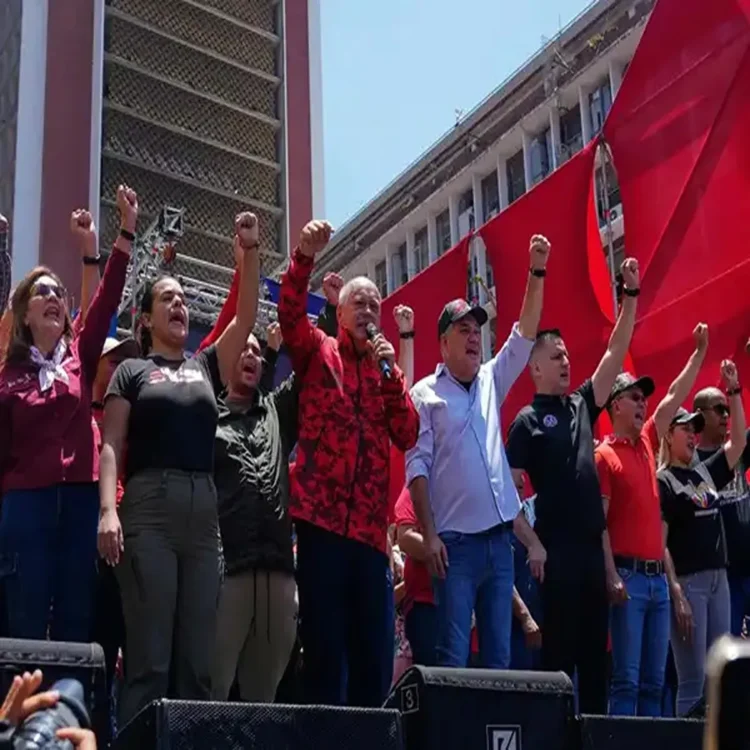
Despite his detention, Maduro continues to have visible support within parts of Venezuela. Public displays in Caracas, including murals and billboards, call for his return, reflecting ongoing divisions in the country’s political environment.
However, the internal power structure has shifted. While the ruling party remains in control, Maduro’s direct influence appears to have diminished. The current administration, led by acting President Delcy Rodriguez, has taken on a more prominent role in governing the country.
Broader Implications for US-Venezuela Relations
The simultaneous economic and legal developments highlight the complex relationship between Washington and Caracas. On one hand, the easing of restrictions in the mineral sector suggests a willingness to explore limited cooperation. On the other, ongoing legal proceedings against a former leader underline persistent tensions.
Analysts say these parallel tracks indicate a nuanced approach, balancing economic interests with legal and political considerations. Whether these steps will lead to broader engagement or remain narrowly focused initiatives remains to be seen.