
Energy – Trump Urges Oil-Dependent Nations to Secure Hormuz Passage
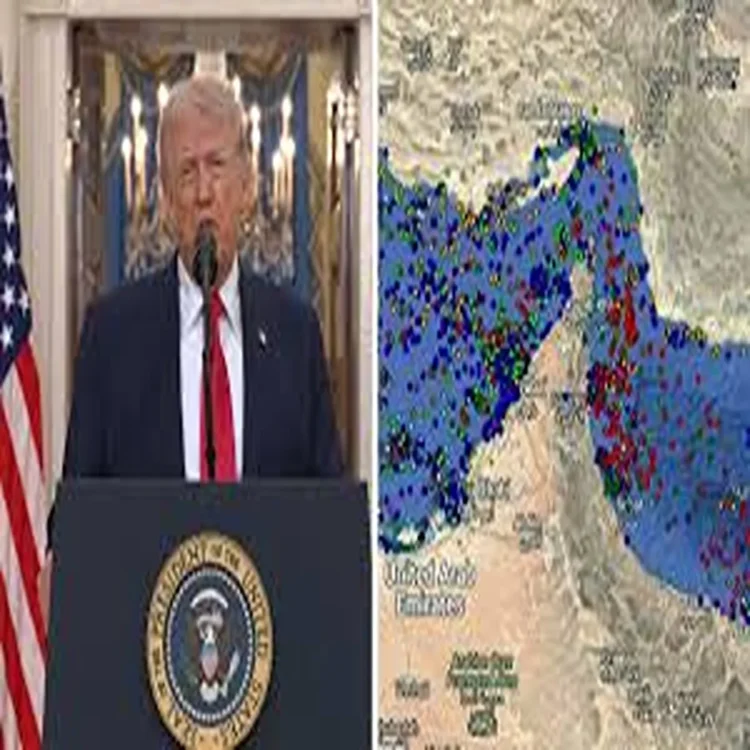
Energy – In a recent national address, US President Donald Trump called on countries heavily reliant on Middle Eastern oil to take a more active role in safeguarding the Strait of Hormuz. He placed responsibility for recent disruptions and rising fuel prices on Iran, linking the situation to escalating tensions in the region.
Concerns Over Oil Supply Disruptions
Speaking during a televised speech on Wednesday night, Trump said that the surge in gasoline prices was directly tied to what he described as aggressive actions by Iran. He alleged that attacks on commercial oil tankers and nearby nations had destabilized key shipping routes, affecting global fuel supply chains.
According to him, these developments have increased uncertainty in international energy markets. He reiterated Washington’s long-standing concerns about Iran, stating that such actions further strengthen the argument against allowing Tehran access to nuclear weapons capabilities.
Call for Shared Responsibility
Trump made it clear that the United States should not be solely responsible for ensuring the safety of maritime routes in the region. He emphasized that countries benefiting from oil transported through the Strait of Hormuz must contribute to its protection.
He pointed out that several nations dependent on these energy supplies have largely remained uninvolved in ongoing regional tensions. In his remarks, he suggested that these countries should now step forward and take ownership of securing the passage.
The US President also offered a direct suggestion: nations facing fuel shortages should consider sourcing oil from the United States while simultaneously investing in safeguarding key shipping routes themselves.
Temporary Nature of Disruptions
Trump indicated that the current disruptions are closely tied to the ongoing conflict and may not be permanent. He expressed confidence that normal operations in the Strait of Hormuz would resume once tensions ease.
He also noted that Iran’s economic recovery would depend on its ability to return to stable oil exports, implying that long-term disruptions would not be sustainable for Tehran either.
US Energy Production as a Buffer
Highlighting domestic capabilities, Trump underscored the strength of the United States in oil and gas production. He stated that the country currently leads global output, claiming it produces more energy than major producers such as Saudi Arabia and Russia combined.
According to him, increased domestic production has significantly reduced US dependence on Middle Eastern oil. He added that the country now imports minimal quantities through the Strait of Hormuz, positioning itself as relatively insulated from disruptions in the region.
Trump also suggested that robust US energy output, along with contributions from countries like Venezuela, could help stabilize global markets over time.
Impact on Global Markets and India
The Strait of Hormuz remains one of the most strategically important routes for global oil transport, with a large share of the world’s crude oil passing through this narrow corridor. Any instability in this region can quickly influence international fuel prices and supply chains.
Countries like India, which rely heavily on crude imports from the Gulf region, are particularly vulnerable to such fluctuations. Prolonged disruptions or sustained price increases could have wider economic consequences, including pressure on inflation, trade balances, and overall energy security.
As geopolitical tensions continue to shape energy markets, the situation in the Strait of Hormuz is expected to remain a key factor influencing global economic stability.