
Elections – Senate Divided as SAVE Act Sparks Sharp Voting Rights Debate
Elections – The United States Senate has entered a heated phase of debate over the proposed SAVE Act, a bill that has drawn strong and opposing reactions from Republican and Democratic lawmakers. While supporters describe the proposal as a necessary step to secure elections, critics argue it risks limiting access to voting for millions of eligible citizens.
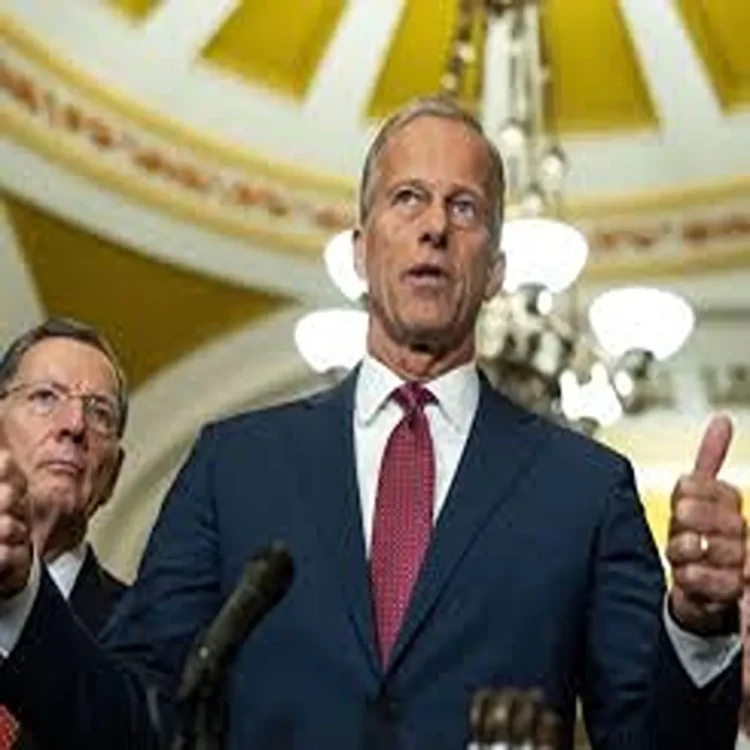
Republicans Emphasize Citizenship and Identification Requirements
Republican leaders have framed the SAVE Act as a straightforward effort to strengthen confidence in the electoral process. Senate Majority Leader John Thune stated that the bill is built around two main principles: requiring proof of citizenship for voter registration and mandating identification at polling stations.
According to Thune, such requirements are consistent with everyday practices in the United States. He pointed out that identification checks are commonly needed for financial transactions, travel, and other routine activities. Applying similar standards to voting, he argued, would reinforce trust in a system fundamental to democracy.
Several Republican senators echoed this perspective. Senator John Barrasso stressed that voting should remain limited to US citizens and supported the requirement for photo identification. He also indicated that Republicans intend to push for a formal vote on the measure, seeking to clarify where Democrats stand on the issue.
Supporters Call Bill a Practical Safeguard
Backers of the SAVE Act have repeatedly described it as a “common sense” reform. Senator Shelley Moore Capito highlighted that voter ID laws are already in place in several states, including her own. She argued that adding a citizenship verification component would further protect the integrity of elections while safeguarding citizens’ voting rights.
For many Republicans, the bill represents an effort to standardize election rules nationwide. They maintain that such measures are not restrictive but rather essential for ensuring that only eligible voters participate in the democratic process.
Democrats Warn of Voter Access Challenges
Democratic leaders have strongly opposed the proposal, raising concerns that it could disrupt existing voting systems and prevent eligible Americans from casting their ballots. Senate Minority Leader Charles Schumer criticized the bill, stating that it goes beyond identification requirements and could lead to widespread voter exclusion.
Schumer warned that millions of Americans might face difficulties under the proposed rules. He also expressed concern that the legislation could affect established practices such as online voter registration and mail-in voting, both of which have become increasingly significant in recent elections.
Additionally, Schumer questioned the strictness of the identification standards outlined in the bill, suggesting that commonly accepted forms of ID may no longer be sufficient under the new framework.
Concerns Over Barriers to Participation
Other Democratic senators shared similar reservations. Senator Amy Klobuchar argued that the proposal focuses on tightening voting rules instead of addressing broader national concerns, including economic challenges faced by voters. She suggested that the bill could lead to unnecessary obstacles for individuals who are already eligible to vote.
Senator Alex Padilla also voiced concern that the legislation might complicate the process of registering, maintaining registration, and ultimately casting a ballot. He described the proposal as one that could disproportionately impact lawful voters by introducing additional procedural hurdles.
Debate Expected to Continue in Senate
Despite uncertainty over whether the bill will secure enough support to pass, Republican leaders remain committed to advancing the discussion. Thune acknowledged that the outcome is not guaranteed but emphasized the importance of open debate within the Senate.
The SAVE Act has quickly become a focal point in the broader national conversation about election laws, highlighting ongoing divisions over how best to balance security with accessibility. As discussions continue, the issue is expected to remain a significant topic in US politics.