
Elections – Bangladesh Heads to Polls After Political Upheaval
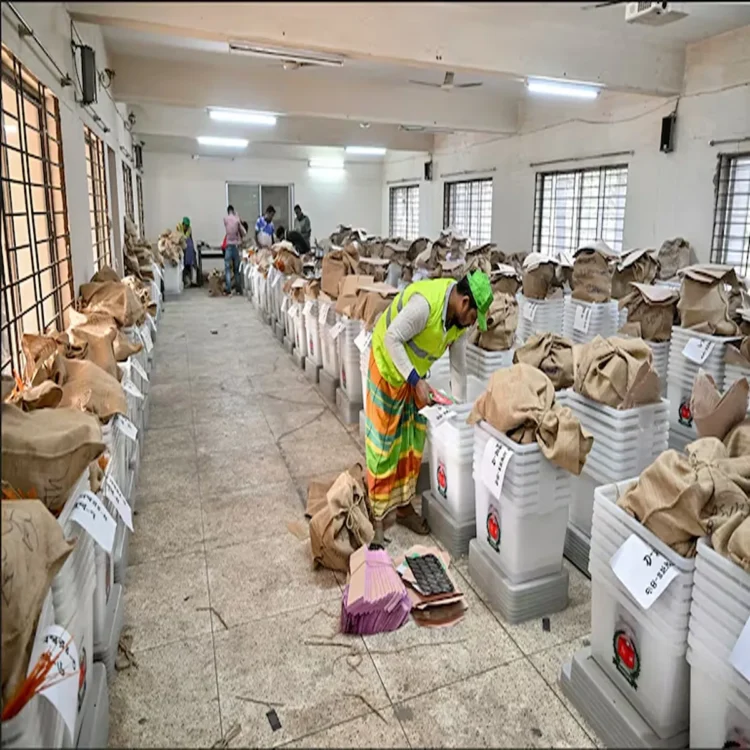
Elections – Bangladesh is preparing for a decisive day at the ballot box as citizens head to polling stations on Thursday for parliamentary elections that could reshape the nation’s political future. The vote comes nearly a year and a half after former Prime Minister Sheikh Hasina left office following weeks of intense nationwide demonstrations that ended her 15-year tenure.
A Country Under Interim Leadership
Since the change in leadership, Bangladesh has been overseen by an interim administration led by Chief Adviser Muhammad Yunus. The transitional period has been marked by recurring street protests, reports of unrest involving minority communities, and the growing visibility of conservative Islamic groups in public life.
One of the most consequential decisions taken by the interim authorities was the dissolution of the Awami League, the party long led by Sheikh Hasina. The party has been barred from contesting the upcoming elections, a move that has drawn sharp criticism from its leaders. Awami League representatives have described the vote as unfair and alleged that opposition activists have intimidated their supporters—claims that rival parties deny.
BNP Emerges as Frontrunner
Political observers suggest that the Bangladesh National Party is positioned to gain the most from the current political climate. The party is now under the leadership of Tarique Rahman, following the recent death of former Prime Minister Khaleda Zia. Rahman is widely regarded as the leading candidate for the country’s top executive post if his party secures a parliamentary majority.
However, the BNP faces competition from Bangladesh Jamaat-e-Islami, a conservative Islamic party that previously aligned with the BNP in past coalitions. While many analysts anticipate a BNP victory, they also note that Jamaat-e-Islami could achieve one of its strongest electoral showings in years.
Massive Electorate and Youth Participation
This election is expected to draw participation from a vast and diverse electorate. According to local media estimates, around 127 million registered voters are eligible to cast ballots. Citizens between the ages of 18 and 37 make up roughly 44 percent of the electorate, reflecting a significant youth presence in the democratic process.
For many voters in their 20s and early 30s, this marks their first opportunity to vote in a national election not dominated by Sheikh Hasina’s long rule. The generational shift is being closely watched by political parties seeking to expand their appeal beyond traditional support bases.
Polling for the 13th National Parliament will take place across 299 constituencies from early morning until late afternoon. Vote counting is scheduled to begin immediately after polling stations close.
Referendum Could Redefine Governance
In addition to selecting lawmakers, voters will weigh in on a nationwide referendum that proposes far-reaching constitutional changes. The July National Charter outlines reforms including a two-term limit for the prime minister, the reinstatement of a neutral caretaker government to supervise future elections, and the creation of an upper house of parliament.
The proposed upper chamber would introduce 100 nominated members to work alongside the existing 350 elected representatives, a structural shift that supporters argue could strengthen checks and balances within the political system.
Women Voters Take Center Stage
Women constitute a significant share of the electorate. Of the 127.7 million registered voters, nearly 62.9 million are women. Notably, approximately 2.7 million women have registered as first-time voters, exceeding the number of newly registered male voters.
In certain constituencies, particularly within the Khulna division, women voters outnumber men. This demographic trend has prompted major political parties to address issues such as employment, safety, and social welfare more prominently in their campaign platforms.
Despite this growing influence at the ballot box, female representation among candidates remains limited. Only 83 women are contesting the election—63 nominated by political parties and 20 running as independents—representing roughly four percent of the total candidate pool.
Tight Security Across the Nation
Authorities have implemented extensive security arrangements to ensure a peaceful voting process. Nearly 958,000 security personnel have been deployed nationwide, with additional reinforcements assigned to sensitive areas. More than 100,000 army personnel are stationed to maintain order and assist civil authorities.
As Bangladesh approaches this pivotal moment, the outcome of both the parliamentary elections and the constitutional referendum is expected to set the direction for the country’s democratic and institutional future.