
Education – Thousands of Flood-Damaged Schools in Sindh Still Await Repair
Education – Nearly four years after the catastrophic floods struck Pakistan’s Sindh province, a significant number of damaged schools remain unrepaired, raising serious concerns about access to education for thousands of children. Official figures indicate that out of 19,808 schools impacted by the 2022 disaster, only a fraction have undergone restoration, leaving a large gap in recovery efforts.
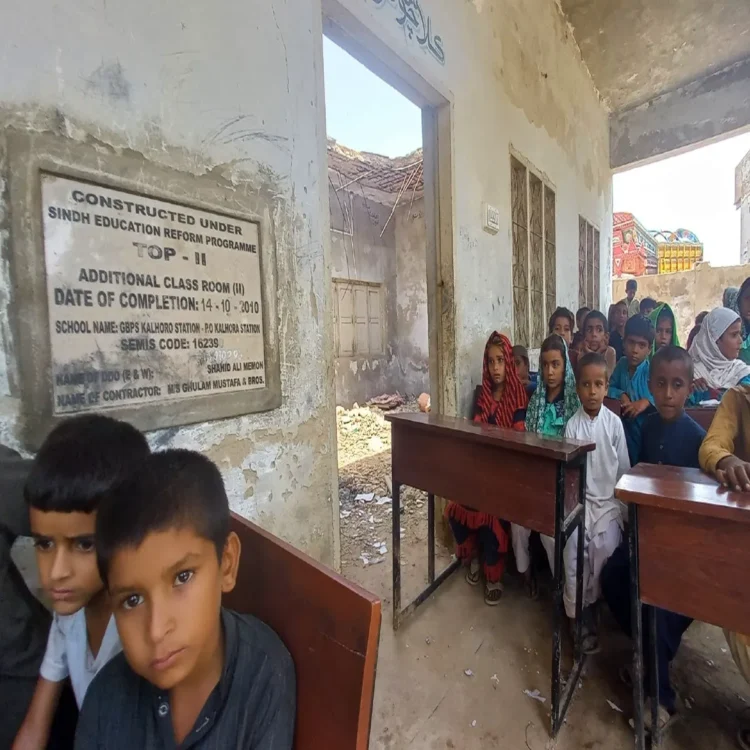
Scale of Damage and Slow Reconstruction
The floods caused widespread destruction across Sindh, with 2,268 schools completely wiped out and another 3,197 sustaining partial damage. Despite ongoing efforts by provincial and federal authorities, along with support from international donors, only 5,465 schools have seen reconstruction or rehabilitation work begin. This means that 14,343 institutions are still waiting to be restored, highlighting the slow pace of recovery.
The prolonged delay has intensified concerns among educators and policymakers. Many believe that the current rate of rebuilding falls far short of what is needed to address the crisis effectively. Each passing day without functional schools continues to disrupt learning for children already facing multiple barriers.
Growing Education Crisis
Pakistan is already grappling with a longstanding education challenge, where millions of children remain out of school due to economic hardship, social barriers, and insufficient infrastructure. The situation in Sindh has further aggravated these issues, particularly in flood-affected areas where school facilities remain unusable.
The continued absence of proper educational infrastructure not only disrupts academic progress but also affects the overall development of children. Experts emphasize that access to education is a fundamental right and a critical factor in shaping a country’s future.
Gender Disparities and Rural Challenges
The crisis is particularly severe for girls, who face greater obstacles in accessing education. Reports indicate that around 28 percent of children aged 5 to 16 in Pakistan are out of school. Among them, the proportion of girls not enrolled stands significantly higher at 34 percent, compared to 22 percent for boys.
These disparities are even more pronounced in rural areas, where cultural norms, safety concerns, and limited facilities further restrict opportunities for girls. Distance from schools and lack of secure transportation also contribute to lower enrollment and higher dropout rates.
Literacy and Enrollment Gaps
Recent survey data reveals that about two-thirds of Pakistan’s population aged 10 and above has attended school at some point. However, access to education remains uneven across regions and communities.
The national literacy rate is estimated at 63 percent, with a noticeable gap between men and women. Male literacy stands at 73 percent, while female literacy lags behind at 52 percent. Urban areas fare better, with literacy levels reaching 77 percent, compared to just 56 percent in rural regions.
Enrollment trends also show a sharp decline as students progress through the education system. While approximately 68 percent of children attend primary school, only 40 percent continue to middle school, and around 30 percent reach matriculation level.
Barriers to Continuing Education
Several factors contribute to the drop in school attendance, especially at higher levels. Financial pressures often force families to prioritize immediate income over education. Children, particularly in rural households, may be required to support family work or take on domestic responsibilities.
For girls, these challenges are compounded by social expectations and practices such as early marriage. Limited availability of secondary schools in remote areas further discourages continued education.
Urgent Need for Action
The delay in rebuilding flood-affected schools underscores the need for urgent and coordinated action. Strengthening infrastructure, ensuring timely completion of reconstruction projects, and addressing social barriers are essential steps to prevent long-term educational setbacks.
Improving access to education, especially in vulnerable regions, will require sustained commitment from authorities and stakeholders. Without swift intervention, the consequences of the current crisis could impact an entire generation.