
Earthquake: Tibet is struck by a magnitude 3.8
Earthquake: Tibet According to a statement from the Earthquake of Magnitude 3.8 Strikes Tibet (NCS), an earthquake with a magnitude of 3.8 occurred in Tibet late on Wednesday.
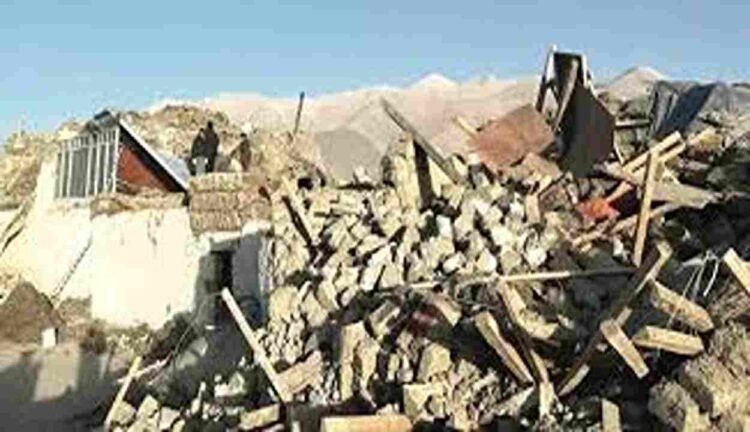
Ninety kilometers was the depth at which the earthquake occurred.
The NCS said in a statement on X that “EQ of M: 3.8, On: 17/12/2025 21:34:38 IST, Lat: 30.39 N, Long: 98.50 E, Depth: 90 Km, Location: Tibet.”
The area was vulnerable to aftershocks earlier on Wednesday when another earthquake of magnitude 4.2 hit at a shallow depth of 10 kilometers.
In general, shallow earthquakes pose a greater threat than deep ones. This is due to the fact that seismic waves from shallow earthquakes have a shorter path to the surface, which causes increased ground shaking and perhaps more structural damage and fatalities.
Because of tectonic plate clashes, the Tibetan Plateau is well-known for its seismic activity.
Earthquakes often occur as a consequence of the Indian tectonic plate pushing up onto the Eurasian plate along a major geological fault line that runs across Tibet and Nepal. Because of geological uplifts that may become powerful enough to alter the heights of the Himalayan peaks, the area is seismically active.
When the Indian and Eurasian plates collided to form the Himalayas, the crust thickened, giving the Tibetan Plateau its high elevation. Normal and strike-slip processes are linked to faulting within the plateau. GPS data, strike-slip faulting, and grabens that strike north-south all show that the plateau stretches east-west.
While east-west extension on north-south trending normal faults is the dominating tectonic domain in the south, strike-slip faulting is the dominant tectonic type in the north.
Using satellite photography, seven north-south trending rifts and normal faults were first found in southern Tibet in the late 1970s and early 1980s. Between 4 and 8 million years ago, when extension took place, they started to develop.
Strike-slip faults are the site of Tibet’s biggest earthquakes, which have magnitudes of 8.0 or higher. Five normal faulting earthquakes with magnitudes ranging from 5.9 to 7.1 occurred in different places over the plateau in 2008. Normal faulting earthquakes are lesser in magnitude.