
Earthquake – Moderate Tremors Recorded in Pakistan Within Three Days
Earthquake – A moderate earthquake measuring 4.6 on the Richter scale was recorded in Pakistan early Saturday morning, according to data released by the National Center for Seismology. The tremor occurred at a depth of 140 kilometers beneath the surface, indicating a relatively deep seismic event.
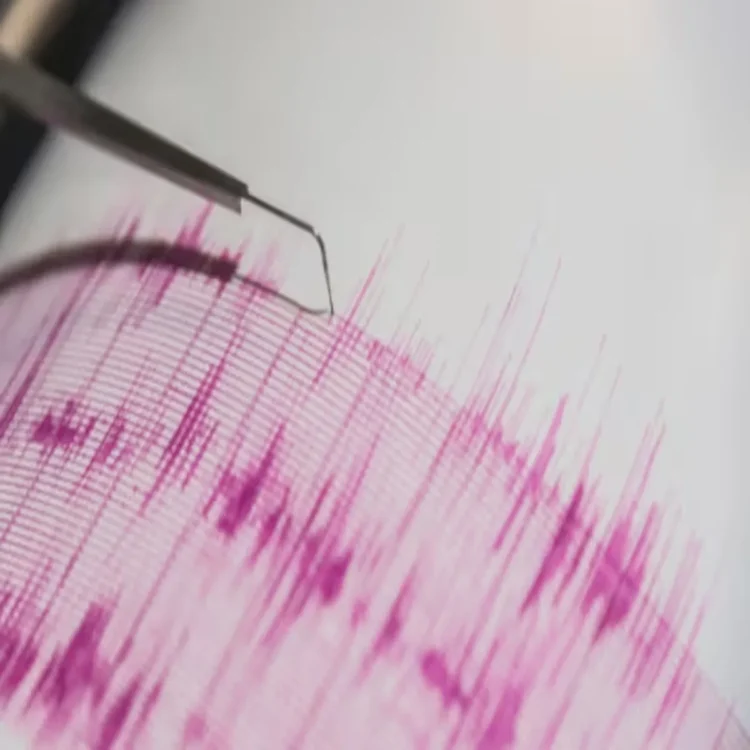
Latest Earthquake Details
The seismic activity was detected at approximately 6:50 AM IST, with coordinates placing the epicenter at latitude 32.680 North and longitude 71.263 East. Experts note that deeper earthquakes, such as this one, often result in less surface damage compared to shallow quakes, though they can still be felt across wider areas.
Series of Recent Tremors in the Region
This latest tremor is part of a sequence of earthquakes recorded over the past few days. On Friday, a slightly weaker quake of magnitude 4.5 struck another part of Pakistan at a depth of 130 kilometers. Earlier in the week, on March 26, a magnitude 4.6 earthquake was also reported, occurring at a depth of 92 kilometers.
The recurrence of these moderate tremors highlights a pattern of ongoing seismic activity in the region. While none of the recent earthquakes have been reported to cause significant damage, they underline the need for continued monitoring.
Why the Region Experiences Frequent Earthquakes
Pakistan, along with Afghanistan and northern India, lies in a geologically sensitive zone where the Indian tectonic plate collides with the Eurasian plate. This interaction creates immense pressure beneath the Earth’s crust, which is periodically released in the form of earthquakes.
Because these tectonic plates are constantly moving, the region frequently experiences seismic disturbances of varying intensity. Many of these events are moderate in scale, but stronger quakes are also possible due to the active fault lines.
High-Risk Zones Within Pakistan
Several areas within Pakistan are particularly vulnerable to earthquakes due to their geographic positioning. Provinces such as Balochistan, Khyber Pakhtunkhwa, and Gilgit-Baltistan lie close to major fault lines along the southern boundary of the Eurasian plate. These regions have historically recorded stronger seismic events.
Punjab and Sindh, though relatively less active compared to the western and northern regions, are not entirely immune. Punjab lies near the northwestern edge of the Indian plate, making it susceptible to tremors, while Sindh remains at some risk due to its proximity to tectonic boundaries.
Geological Factors Behind Continued Activity
Balochistan, in particular, is situated near the boundary where the Arabian and Eurasian plates interact. This adds another layer of tectonic complexity, increasing the likelihood of seismic disturbances. The continuous movement and pressure buildup along these plate boundaries contribute to frequent earthquakes across the broader region.
Importance of Monitoring and Preparedness
Experts emphasize that while many of these earthquakes are moderate and occur deep underground, the region’s geological characteristics mean that preparedness remains crucial. Monitoring agencies continue to track seismic patterns to provide timely updates and reduce potential risks.
Authorities also encourage awareness and readiness, especially in high-risk zones, as tectonic activity in this part of the world is both natural and ongoing.