
Diplomacy – South Korea Acknowledges Drone Incident, Signals Shift in Korea Relations
Diplomacy – South Korean President Lee Jae Myung has formally acknowledged and expressed regret over a drone-related incident involving North Korea earlier this year, marking a notable shift in Seoul’s stance.
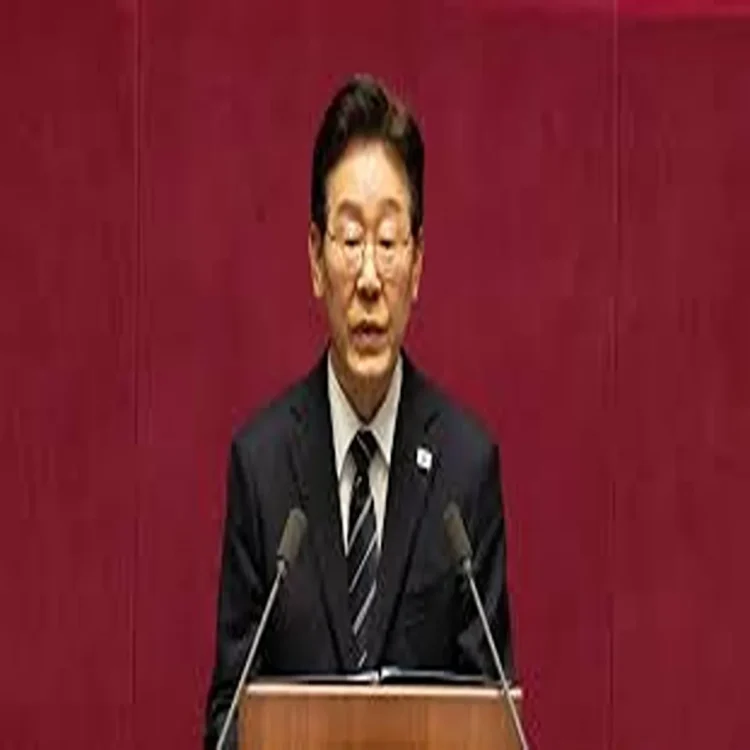
South Korean President Lee Jae Myung on Monday publicly expressed regret over drones that crossed into North Korean territory earlier this year, calling the episode “irresponsible” and acknowledging official involvement after weeks of denial.
Investigation Reveals Official Involvement
Initially, South Korean authorities denied any government connection to the January drone incursion, suggesting that private individuals might have been responsible. However, following an internal probe, Lee confirmed that both a National Intelligence Service official and an active-duty soldier were linked to the operation.
Addressing a cabinet meeting, Lee said the actions of those involved had contributed to unnecessary tensions on the Korean Peninsula. He stressed that such operations, especially those with potential cross-border implications, must be handled with extreme caution.
Regret Aimed at Reducing Tensions
Lee’s statement included a direct expression of regret toward Pyongyang, emphasizing that the incident had aggravated military sensitivities. He also pointed out that South Korean law prohibits civilians from engaging in activities that could provoke North Korea, reinforcing the importance of maintaining strict control over such actions.
The North had earlier claimed to have shot down a drone equipped with surveillance devices in early January. State media released images showing fragments of what appeared to be a winged drone along with components believed to include cameras.
North Korea’s Strong Reaction
In February, Pyongyang issued a warning of severe consequences if similar incursions occurred again. The warning heightened concerns in Seoul and prompted a closer examination of the incident.
North Korean leader Kim Jong Un further escalated rhetoric in March, describing South Korea as the “most hostile state” and signaling a hardened stance toward inter-Korean relations. He reiterated that the country’s nuclear program would continue without compromise, calling it an irreversible path.
Political Fallout in South Korea
The drone controversy has also drawn attention to the previous administration. Former president Yoon Suk Yeol is currently on trial over allegations that his government authorized drone operations aimed at provoking North Korea. Prosecutors argue that such actions may have been intended to justify stricter military measures.
Yoon, who was removed from office and later sentenced to life imprisonment following a controversial declaration of martial law, remains at the center of political debate in South Korea. The ongoing trial has added another layer of scrutiny to past policies toward Pyongyang.
Efforts to Rebuild Dialogue
Since taking office, Lee has attempted to ease tensions and reopen communication channels with North Korea. He has criticized earlier strategies that relied on provocative tactics, including the alleged use of drones to distribute propaganda materials.
Despite these efforts, North Korea has not responded to Seoul’s outreach. Relations between the two sides remain strained, with little sign of immediate improvement.
Background of Ongoing Hostility
Tensions between the two Koreas have persisted for decades. Although active fighting ended in 1953, the conflict concluded with an armistice rather than a formal peace agreement. As a result, both countries technically remain at war.
In recent years, the situation has been marked by symbolic and psychological confrontations. North Korea has sent balloons carrying waste materials across the border, while activists in the South have launched propaganda leaflets northward.
Mandatory military service continues in both nations, reflecting the enduring security concerns on the peninsula.
Lee’s acknowledgment of the drone incident and his conciliatory tone suggest an attempt to stabilize the situation. However, with deep mistrust on both sides and unresolved historical tensions, meaningful progress may remain difficult in the near term.