
Defense – Taiwan Tracks Chinese Naval Activity Near Its Waters
Defense – Taiwan’s Ministry of National Defense reported early Monday that multiple Chinese vessels were operating in waters surrounding the island, highlighting ongoing military vigilance in the region.
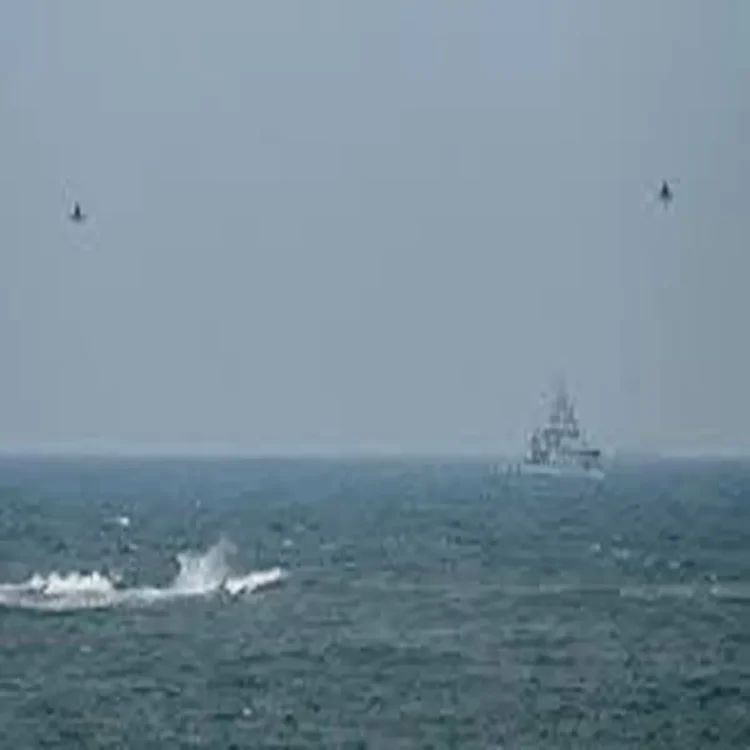
Naval Activity Observed Near Taiwan
According to an official update, seven vessels from China’s People’s Liberation Army Navy, along with three government-operated ships, were detected near Taiwan as of 6 a.m. local time. The ministry noted that Taiwan’s armed forces closely monitored the situation and took appropriate response measures.
Officials added that no Chinese military aircraft were observed in the area during this period, and therefore no flight path data was released alongside the update.
Similar Movement Reported a Day Earlier
The latest development follows a similar observation made on Sunday, when Taiwan identified six Chinese naval ships and one official vessel operating nearby. As with Monday’s report, there were no aircraft detected during that timeframe.
Taiwan’s defense authorities emphasized that their monitoring systems remain active and capable of responding promptly to such activities, which have become increasingly frequent in recent years.
Ongoing Tensions Between China and Taiwan
The presence of Chinese vessels near Taiwan comes amid long-standing political and military tensions between the two sides. Beijing continues to assert that Taiwan is part of its territory, a position deeply rooted in its national policy and legal framework.
Taiwan, however, operates as a self-governing entity with its own political system, military, and economy. While it functions independently, its political status remains one of the most sensitive and debated issues in international relations.
Historical Roots of the Dispute
The dispute over Taiwan’s status dates back several centuries. China’s claim traces its origins to the late 17th century, when the Qing Dynasty brought Taiwan under its control after defeating forces loyal to the Ming Dynasty.
However, Taiwan remained on the fringes of Qing administration. A major turning point came in 1895, when China ceded Taiwan to Japan following its defeat in the First Sino-Japanese War. The island remained under Japanese rule for five decades.
After World War II, Taiwan was placed under Chinese administration again, though the legal aspects of sovereignty transfer were never fully formalized on the global stage.
Division Following Civil War
The modern political divide began in 1949, when the Chinese Civil War ended with the establishment of the People’s Republic of China on the mainland. At the same time, the Republic of China government relocated to Taiwan.
Since then, both sides have maintained separate political systems, each historically claiming legitimacy over China. Over time, Taiwan has evolved into a functioning democracy with its own governance structures.
Despite this, Taiwan has refrained from formally declaring independence, largely due to concerns that such a move could trigger military escalation from Beijing.
A Continuing Strategic Flashpoint
The Taiwan Strait remains a key geopolitical hotspot, with global implications for security, trade, and international law. The situation continues to test principles such as sovereignty and self-determination, while also drawing attention from major global powers.
Recent naval movements underscore the fragile balance in the region, as Taiwan maintains its defense readiness amid continued Chinese military presence nearby.