
Defense – Pentagon Reports $5.6 Billion Weapons Use in Iran Strikes
Defense – The United States Department of Defense has reportedly used weapons valued at approximately 5.6 billion dollars during the first 48 hours of its recent military operations targeting Iran. The figure, cited in a report by the Washington Post, has raised concerns among policymakers about the pace at which some of the country’s most sophisticated weapons are being consumed.
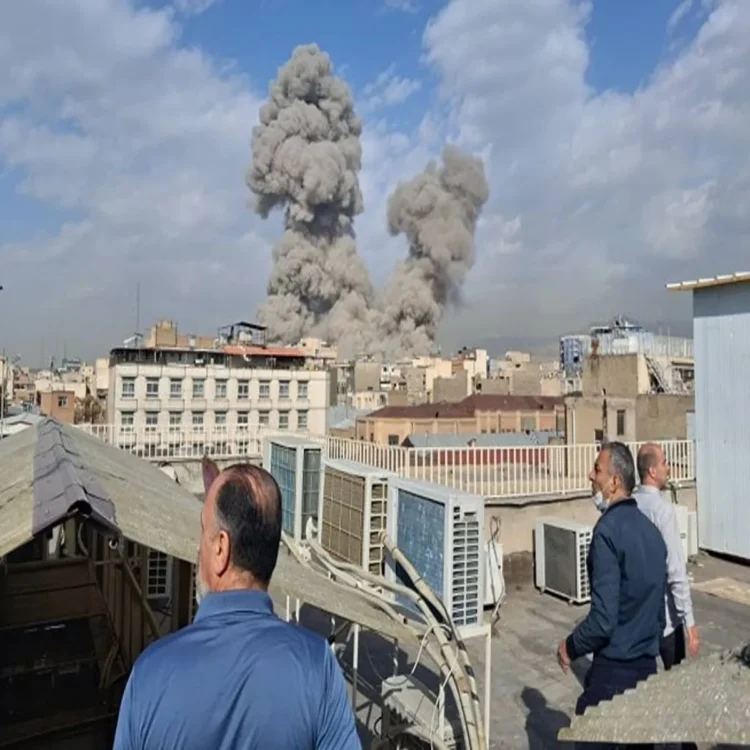
Early Military Operations Incur Significant Costs
According to the report, the expenditure occurred during the initial phase of strikes conducted by US forces. The estimate was presented to members of Congress earlier this week, prompting renewed scrutiny of the administration’s assurances that the ongoing campaign will not significantly weaken the United States’ military preparedness.
Officials monitoring the situation have expressed concern that the rapid deployment of advanced weapons systems could place pressure on existing stockpiles. These weapons are typically reserved for high-intensity conflicts and are produced in limited quantities, making replenishment slower compared with more conventional military equipment.
Debate Over Impact on US Military Readiness
The disclosure has intensified discussion in Washington about whether the scale of the operation could affect the readiness of the US armed forces. Some lawmakers have questioned how long current supplies can sustain extended operations if the conflict continues to escalate.
Despite those concerns, the Pentagon has sought to reassure both lawmakers and the public that the military remains fully capable of carrying out its missions. Sean Parnell, the department’s chief spokesperson, said the United States still maintains sufficient resources to conduct operations wherever and whenever required by the president.
Parnell emphasized that the defense department continues to monitor inventory levels closely and has the ability to adapt its operational strategy if necessary.
White House Expected to Seek Additional Defense Funding
As the military campaign progresses, the administration is expected to request additional funding from Congress to support ongoing operations. Reports suggest that the proposed supplemental defense budget could amount to tens of billions of dollars.
Such funding would be aimed at replenishing weapons stockpiles, sustaining military deployments, and ensuring that the armed forces maintain readiness for potential future conflicts. Supplemental defense packages are commonly requested during prolonged military operations to cover unexpected costs beyond the regular annual defense budget.
Shift Toward More Widely Available Weapons
Military planners are also reportedly adjusting the types of weapons being deployed as operations move deeper into Iranian territory. According to the Washington Post, US and Israeli forces may increasingly rely on laser guided bombs that are available in larger quantities.
These munitions, while still highly accurate, are produced more widely and can be deployed in greater numbers without placing the same strain on limited high-end weapon inventories. The shift could help maintain operational momentum while conserving the most advanced systems for specific strategic targets.
Trump Issues Warning Over Strait of Hormuz
Amid the ongoing military tension, President Donald Trump has issued a warning to Iran regarding the Strait of Hormuz, one of the world’s most critical maritime oil routes. The narrow waterway is used by many countries to transport energy supplies from the Persian Gulf to international markets.
In a statement posted on Truth Social, Trump warned that any attempt by Iran to disrupt the movement of oil through the strait would trigger a far stronger military response from the United States.
He stated that if Iran interferes with the flow of oil in the region, the United States would respond with force significantly greater than any action taken so far during the current conflict.
Concerns Over Global Trade and Energy Security
The president framed his warning as part of a broader effort to safeguard global commerce and maintain stability in international energy markets. Disruptions in the Strait of Hormuz could have widespread economic consequences, affecting major energy-importing nations around the world.
Trump also noted that keeping the passage open benefits countries that rely heavily on Middle Eastern oil shipments, including major economies in Asia.
Conflict Appears to Reach Critical Stage
While tensions remain high, Trump suggested in a separate interview that the current phase of the conflict may be approaching a decisive moment. However, officials have not indicated whether diplomatic efforts or further military actions are likely in the near future.
For now, the situation remains fluid as military operations continue and political leaders weigh both strategic and economic implications of the unfolding crisis.