
China – US Lawmakers to Review Beijing’s Expanding Footprint in Europe
China – A congressional panel in Washington is set to hold a public hearing next week to examine what officials describe as China’s deepening involvement across Europe’s economic landscape, government institutions, and research sectors. Lawmakers say the session will focus on how Beijing’s expanding presence could affect United States strategic priorities and the stability of the NATO alliance.
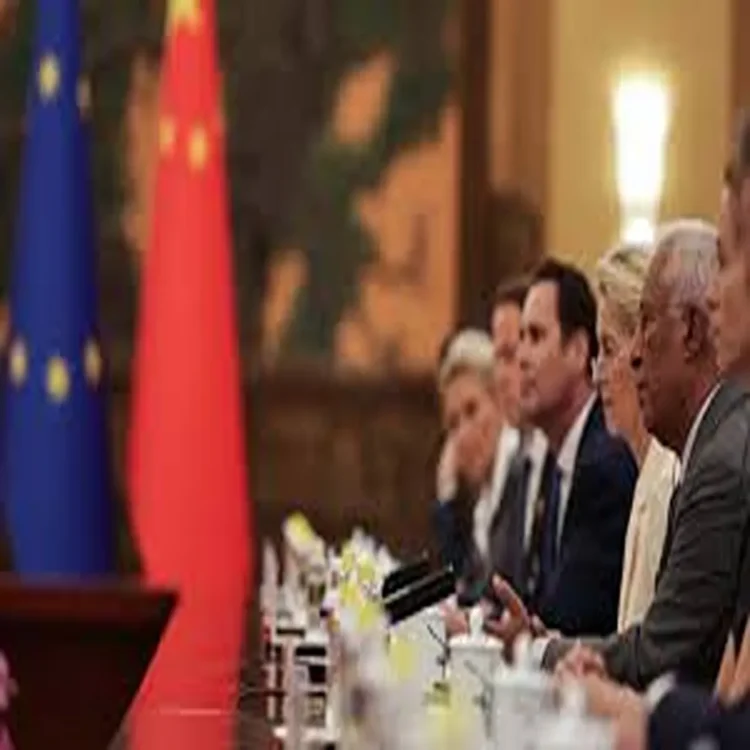
Hearing to Examine Scope of Chinese Engagement
The discussion, scheduled for March 4 and titled “Responding to China’s Infiltration and Coercion in Europe,” has been convened by the US Helsinki Commission, formally known as the Commission on Security and Cooperation in Europe. The independent body monitors compliance with international security commitments and regularly evaluates emerging geopolitical risks.
According to a statement issued ahead of the session, the hearing will explore how China has broadened its access to key industries and institutions across the continent. Organisers argue that while European governments have concentrated heavily on countering Russia’s military aggression in Ukraine, Beijing has simultaneously strengthened its economic and political ties in strategic sectors.
Witnesses to Address Policy and Security Risks
Three experts are expected to testify before the commission: Vidmantas Verbickas, Lithuania’s Vice Minister of Foreign Affairs; Audrye Wong, a nonresident senior fellow at the American Enterprise Institute; and Valbona Zeneli, a nonresident senior fellow at the Atlantic Council.
Their testimony is expected to assess the implications of Chinese investment and influence for European resilience. Lawmakers will seek insight into how Washington can assist its European partners in reinforcing regulatory frameworks, safeguarding research institutions, and protecting critical infrastructure from potential vulnerabilities.
Commission members have indicated that the session will also address the broader challenge of coordinating a unified transatlantic response. Officials say the objective is not only to strengthen domestic safeguards in European countries but also to contribute to a more cohesive international deterrence strategy involving the United States and its allies.
Concerns Over Methods and Strategic Intent
In background materials released before the hearing, organisers describe China’s approach as multifaceted. They cite tactics that allegedly range from political influence operations and state-backed industrial policies to cross-border pressure aimed at critics abroad. These strategies, the statement notes, are often adapted to suit the political and economic environment of each country involved.
The commission’s release further argues that China’s relationship with Russia adds another dimension to the issue. It states that Beijing’s continued ties with Moscow during the conflict in Ukraine should be viewed as part of a broader geopolitical effort to shape Europe’s long-term direction.
Officials warn that if Beijing, in coordination with what they describe as an increasingly aggressive Russia, is able to exploit divisions within the transatlantic partnership, it could weaken shared security structures and undermine collective defence commitments under NATO.
Europe’s Evolving Response
The hearing is also expected to consider how European nations have reacted to growing Chinese investment. According to the commission, some governments have been slow to recognise potential national security implications linked to foreign ownership in sensitive industries or collaboration in advanced research fields.
At the same time, certain countries in Central and Eastern Europe that have experienced past Russian occupation are described as particularly alert to the risks associated with external authoritarian influence. The commission suggests that these nations may offer policy examples for balancing economic cooperation with stronger oversight and legal safeguards.
Lawmakers say the March 4 session will provide an opportunity to assess current policies and identify areas where transatlantic cooperation can be strengthened. As geopolitical competition intensifies, the commission argues that maintaining unity among democratic allies remains essential to protecting shared interests and institutional integrity.