
China – Senate Democrats Warn Trump Policies Undermine U.S. Position Against Beijing
China – A new report released by Democratic members of the Senate Foreign Relations Committee claims that several policies introduced by President Donald Trump have weakened the United States in its competition with China. Lawmakers argue that trade disputes, reductions in foreign aid, and tensions with key allies have created conditions that allow Beijing to expand its global influence.
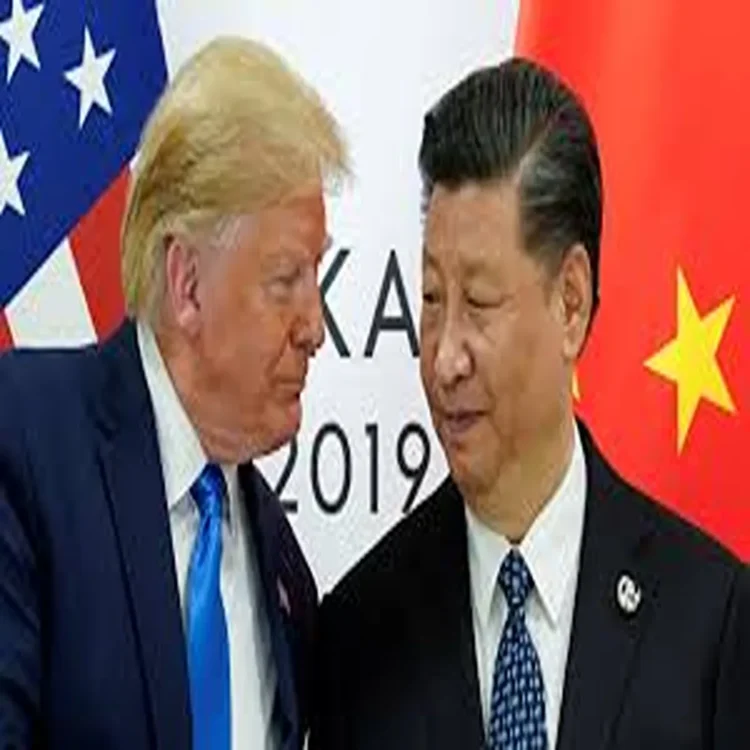
Senate Democrats Release Detailed Policy Assessment
The 56-page report, titled “The Price of Retreat 2.0: Undermining America’s Economic Edge and Alliance Advantage,” was published by Senator Jeanne Shaheen, the committee’s senior Democratic member, along with other party lawmakers. The document evaluates recent foreign policy decisions and their potential consequences for the United States in its long-term strategic rivalry with China.
According to the report’s authors, policies pursued over the past several years have reduced America’s economic and diplomatic leverage. They argue that steps such as tariff battles, reduced support for international programs, and strained diplomatic partnerships have limited Washington’s ability to counter China’s growing influence.
Concerns Ahead of Trump’s Expected Beijing Visit
The report was released shortly before President Trump is expected to travel to Beijing for talks with Chinese President Xi Jinping later this month. Democratic lawmakers said the timing raises questions about the negotiating position the United States will carry into those discussions.
Senator Shaheen stated that the concerns raised by lawmakers over the past year are now becoming more visible in the global economy. She noted that several policy choices have not strengthened the country’s competitive position but instead risk diminishing its advantages in economic leadership and international cooperation.
Economic Effects Linked to Tariff Policies
The report highlights the impact of tariffs imposed during the ongoing trade tensions with China. It states that fluctuating tariff measures have added uncertainty to global markets and placed financial pressure on American businesses.
According to the findings, layoffs at small businesses reached around 120,000 workers in November 2025, marking the highest monthly figure recorded in five years. The report also claims that since the introduction of the administration’s so-called “Liberation Day” tariffs, the U.S. economy has experienced a net loss of approximately 19,000 jobs.
Lawmakers argue that the tariffs have raised costs for many American households while failing to significantly change China’s economic policies or trade behavior.
Technology and Semiconductor Policy Under Scrutiny
Another major concern raised in the report involves technology policy, particularly the export of advanced semiconductors. Democratic lawmakers warn that allowing high-end chip sales to China could gradually weaken the United States’ technological edge.
Semiconductors are considered critical to industries such as artificial intelligence, telecommunications, and advanced manufacturing. The report cautions that easing restrictions on such technology may help accelerate China’s long-term technological development.
Immigration Rules and Talent Competition
The report also points to immigration and visa restrictions as another factor affecting the U.S. economy. Lawmakers say policies limiting international students and skilled professionals have contributed to workforce shortages in several industries.
They argue that while the United States has tightened entry requirements for foreign talent, China has been expanding programs aimed at attracting scientists, engineers, and technology professionals. This shift, according to the report, could gradually influence global competition in science, technology, engineering, and mathematics fields.
Diplomatic Presence and Foreign Aid Reductions
Democratic lawmakers also raised concerns about the state of U.S. diplomacy abroad. The report states that more than half of American embassies currently operate without a Senate-confirmed ambassador, potentially limiting diplomatic engagement in key regions.
In addition, the administration withdrew more than $14 billion in foreign assistance funding during 2025, a move that lawmakers say reduced Washington’s ability to maintain influence in developing countries.
By comparison, China has continued to expand its diplomatic outreach and infrastructure investments through projects linked to the Belt and Road Initiative, strengthening its presence in many regions.
Strained Relations With Allies
The report concludes that tensions between the United States and some of its traditional allies have complicated efforts to build coordinated responses to China’s rise. Lawmakers cited disagreements with partners such as Denmark and Japan, as well as uncertainty surrounding Washington’s commitments related to Taiwan.
To address these concerns, the report urges Congress to play a stronger role in overseeing trade policy. It specifically recommends limiting the administration’s authority to impose tariffs without congressional approval.