
Australia: Despite decreasing rainfall, Queensland, still faces the potential of flooding State premier
Australia: Despite decreasing rainfall, the premier of Queensland, Australia, said on Wednesday that areas in the state’s north and northwest are still vulnerable to floods.
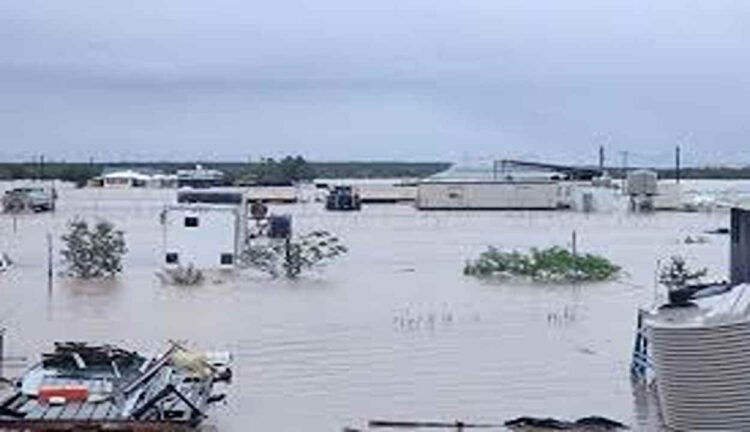
Parts of Queensland’s tropical north and northwest have had more rainfall over the last week than they normally would in an ordinary year, David Crisafulli said Nine Network television on Wednesday morning.
After ex-Tropical Cyclone Koji made landfall on the northeast coast on Sunday morning and traveled west throughout the state, producing significant flash flooding, the Bureau of Meteorology (BoM) forecasted that rainfall across Queensland will decrease on Wednesday.
However, the BoM continued to issue significant flood warnings for four rivers on Wednesday, and Crisafulli said that officials are worried about bloated catchments, according to Xinhua news agency.The great fear is if there is extra rain in catchments that are already high and not going down as quickly as we’d like,” he said.
“We are on an easing trend, but that doesn’t mean there isn’t the prospect of those heavy, isolated falls and in already swollen catchments.”
Over 50,000 animals have died in flooding, according to the premier on Tuesday, and the number is predicted to keep climbing.
In the community of around 3,000 residents, which has been shut off by floods, more than 300 residences were still without power on Tuesday.
He said on Wednesday that authorities are conducting air drops of fodder and emergency veterinary supplies to cattle stranded on high ground in several locations.
Ex-Tropical Cyclone Koji is now making its way west across Queensland after making landfall on the northeast coast on Sunday morning with strong gusts and a lot of rain.
Under ideal circumstances, with sea surface temperatures over 29 degrees Celsius and no vertical wind shear, Koji developed over the Coral Sea. Before making landfall on January 11, the system intensified into a Category 2 cyclone with maximum sustained winds of 100 km/h (62 mph) on average over 10 minutes and gusts of 140 km/h (87 mph). Koji quickly lost strength after reaching the coast, but it kept carrying deep tropical moisture inland.