
Amnesty – Cuba Announces Large Prisoner Release Amid Growing Concerns
Amnesty – Katia Arias stood outside a detention facility on Havana’s outskirts early Friday, holding on to hope as she waited among dozens of anxious families. Hours later, that hope turned into an emotional reunion when her 20-year-old son, Emilio Alejandro Leyva, walked free after years in custody for robbery. Overwhelmed with relief, Arias embraced him tightly, calling the moment a long-awaited blessing after years of hardship.
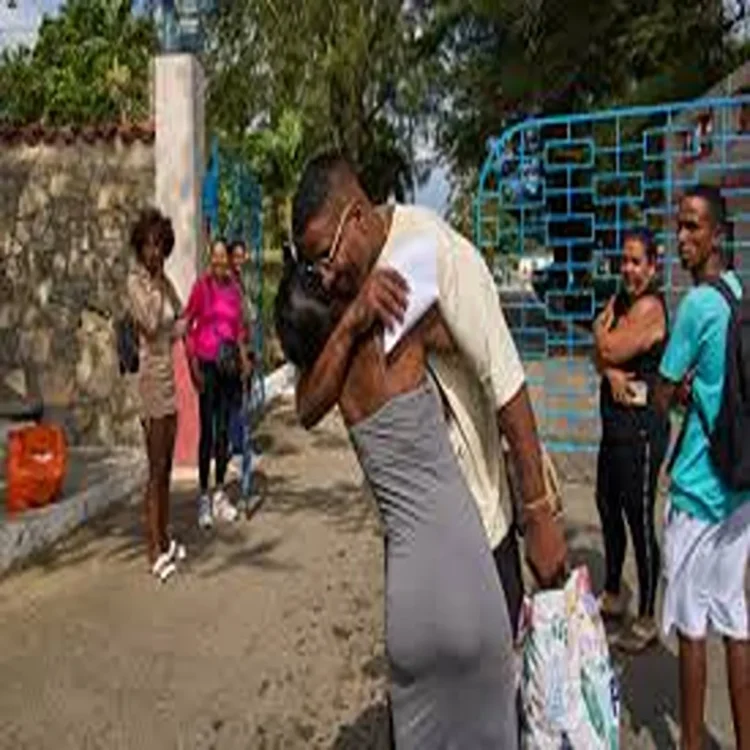
Families Reunite as Prison Gates Open
Scenes of relief unfolded outside the La Lima prison as newly released inmates stepped out carrying small bags and official documents. Many were greeted by tearful relatives who had gathered since morning. Some detainees said they were woken before dawn and informed of their release, with names called out in a process that quickly led to reunions by the prison gates.
For families like Arias’, the day marked a deeply personal milestone. Emotional embraces, tears, and quiet celebrations reflected the significance of the moment for those who had endured long separations.
Government Frames Move as Humanitarian Action
The Cuban government had announced a plan to release 2,010 prisoners, describing the step as a humanitarian gesture ahead of Holy Week. Officials have not provided detailed lists of those freed, leaving uncertainty about the composition of the group.
Authorities maintain that the country does not hold political prisoners, a stance that continues to draw scrutiny from international observers. Limited official information has made it difficult to verify how many individuals were released on the first day or the criteria used in selecting them.
Human Rights Groups Raise Concerns
Despite the emotional reunions, rights organizations expressed concern over the lack of transparency. Activist groups say there is no clear indication that individuals detained for political reasons were included in the releases.
Organizations tracking detentions, including those linked to the 2021 nationwide protests, argue that many individuals remain imprisoned under charges such as public disorder or contempt. These protests had led to widespread arrests and long sentences, which continue to be a focal point for advocacy groups.
Opposition voices have also criticized the government’s framing of the move. They argue that labeling the releases as humanitarian avoids acknowledging allegations of political imprisonment. Calls for broader reforms, including an amnesty law, have intensified in recent months.
Ongoing Crisis and Public Discontent
The releases come at a time when Cuba is facing significant economic and social challenges. In recent months, sporadic protests have emerged as citizens grapple with shortages, power outages, and declining living conditions.
One incident in March saw demonstrators set fire to a local Communist Party office in central Cuba, leading to arrests. Such events highlight the underlying tensions that continue to shape the country’s internal situation.
Rights groups caution that while releases bring immediate relief to families, they do not necessarily indicate a broader shift in policy. Some previously freed individuals, they note, have faced restrictions such as house arrest or limits on free expression.
International Pressure Adds to Complexity
The situation is further complicated by strained relations with the United States. Recent measures, including restrictions affecting fuel supplies, have added pressure to an already struggling economy. These challenges have impacted essential services, including healthcare and electricity distribution.
There have been brief signs of relief, such as the arrival of fuel shipments from abroad, but uncertainties remain over long-term solutions. Analysts note that external pressures and internal challenges are closely intertwined in shaping government decisions.
A Moment of Relief Amid Uncertainty
For those gathered outside prison gates, however, the broader political context took a back seat to personal joy. Families embraced, friends celebrated, and for a brief moment, relief overshadowed uncertainty.
Among the released was 20-year-old Damián Fariñas, who had nearly completed a two-year sentence for robbery. Welcomed by friends, he described the experience as a fresh start, expressing hope for the future beyond prison walls.
While questions remain about the scope and intent of the releases, the day brought undeniable relief to many families. For them, the return of loved ones marked a rare moment of hope in an otherwise challenging time.