
Humanitarian Access at Rafah: Angelina Jolie Highlights the Cost of Aid Restrictions in Gaza
Humanitarian Access at Rafah: Hollywood actor and longtime humanitarian advocate Angelina Jolie recently visited the Rafah Crossing during a humanitarian mission to Egypt, drawing global attention to the growing challenges faced by aid organisations attempting to support civilians in the Gaza Strip. Her visit came at a critical moment, as restrictions on humanitarian operations have intensified and the living conditions for displaced families continue to deteriorate rapidly.
Context of the Rafah Crossing Visit
During her visit to the Rafah Crossing, located on the border between Egypt and Gaza, Angelina Jolie observed firsthand the logistical barriers that are preventing life-saving supplies from reaching people in need. The crossing has become a focal point for international concern, as it serves as one of the few gateways for humanitarian relief into Gaza. Aid agencies have reported increasing delays and denials that have left essential goods stranded in storage facilities rather than reaching hospitals and shelters.
New Registration Rules and Aid Suspension
Jolie’s visit coincided with Israel’s decision to suspend the activities of several humanitarian organisations that failed to renew their registrations under newly imposed rules. These regulations require aid groups to submit detailed personal information about staff members operating in Gaza. Humanitarian agencies argue that such demands expose workers to serious safety risks and discourage experienced professionals from participating in relief efforts.
Israeli authorities have stated that these measures are designed to prevent misuse of international aid by militant groups. However, this justification has been strongly contested by international bodies, including the United Nations, which maintains that there is no evidence of systematic diversion of aid. An independent review by the United States government earlier this year similarly found no proof of widespread aid theft.
Warehouses of Blocked Medical Supplies
One of the most striking moments of Jolie’s visit was her tour of a large warehouse near the crossing. Inside, she saw stacks of humanitarian supplies that had been denied entry into Gaza, the majority of which were medical items. These included equipment and medicines urgently needed by hospitals already struggling with shortages.
Jolie spoke with representatives of multiple aid agencies who described the immense difficulty of navigating restrictions while trying to maintain operations. According to her statement, the situation illustrated how administrative barriers can translate directly into human suffering, especially when medical care is delayed or denied.
Worsening Humanitarian Conditions in Gaza
The humanitarian situation inside Gaza has been described by multiple countries as catastrophic. Large areas remain destroyed after months of conflict, leaving families dependent on temporary shelters. Winter weather has made conditions even harsher, with heavy rain and strong winds flooding tents and damaging makeshift housing.
Reports from local authorities in Gaza indicate that severe weather has caused buildings to collapse, resulting in civilian deaths as people sought refuge from the cold. These conditions underscore the urgent need for uninterrupted humanitarian access, particularly for shelter materials, heating supplies, and medical assistance.
Engagement With Aid Workers in Egypt
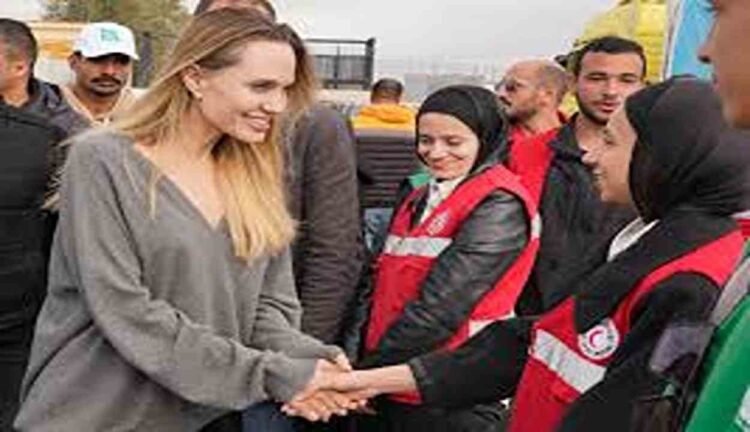
While in Egypt, Jolie met with aid workers from the Egyptian Red Crescent and other local organisations involved in cross-border relief. Discussions focused on practical ways to increase the flow of assistance into Gaza and improve coordination among humanitarian actors.
Jolie emphasized that maintaining a ceasefire is essential for any meaningful improvement in aid delivery. Without sustained calm and guaranteed access routes, even well-funded relief efforts struggle to meet the scale of the crisis.
Call for Sustained and Safe Aid Access
In her public remarks, Jolie stressed that the path forward is clear. Humanitarian access must be consistent, safe, and expanded quickly to allow fuel, food, and critical medical supplies to reach those in need. She highlighted that delays, even of a single day, can cost lives, particularly in overcrowded shelters and under-resourced hospitals.
She also expressed gratitude toward volunteers and frontline workers who continue to operate under extreme pressure, often at personal risk. Their efforts, she noted, are a reminder of the importance of international solidarity during humanitarian emergencies.
Ongoing Humanitarian Advocacy
Beyond the Rafah Crossing, Jolie’s humanitarian engagement in Egypt includes meetings with Palestinian and Sudanese refugee families who have fled conflict and instability. Her work as a former special envoy for the United Nations Refugee Agency has long focused on displaced populations, and this visit reflects her continued commitment to raising awareness about refugee protection and humanitarian access.
As global attention shifts rapidly from one crisis to another, Jolie’s visit serves as a reminder that sustained focus and political will are essential to prevent humanitarian situations from worsening further.