
Technology – IBM Plans Quantum and Cloud Expansion in India
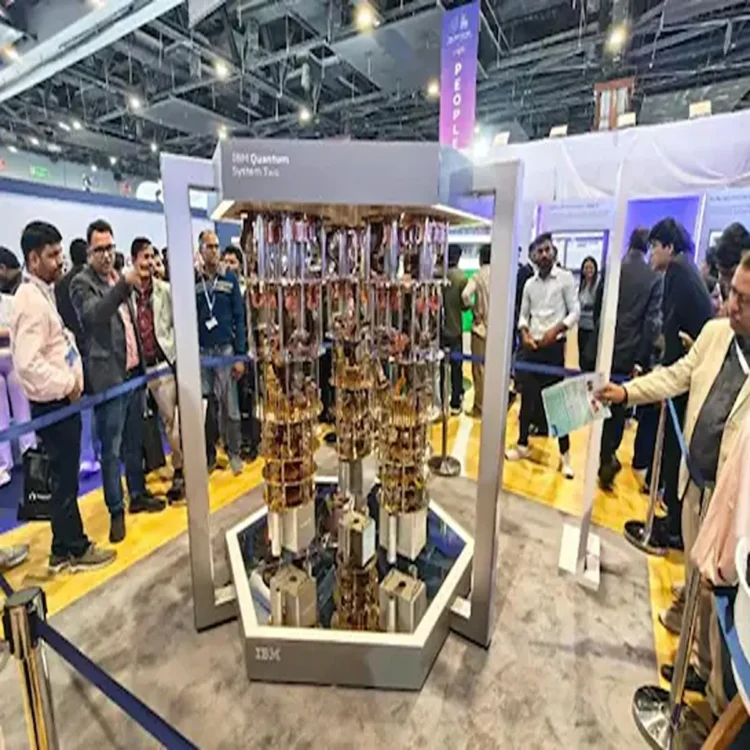
Technology – Union Minister for Electronics and Information Technology Ashwini Vaishnaw announced on Monday that IBM is preparing to expand its footprint in India through fresh investments in quantum computing and cloud infrastructure. The proposed move is expected to open up new opportunities for the country’s expanding base of technology professionals.
Government Meeting Signals Deeper Engagement
The announcement followed a meeting between Ashwini Vaishnaw and senior executives from IBM. According to the Minister, the discussions focused on the company’s long-term plans in India’s high-technology sectors. He later shared details on social media, noting that IBM intends to deepen its involvement in advanced computing and digital infrastructure projects across the country.
Vaishnaw stated that the company is also strengthening its design teams in India, particularly in work related to advanced semiconductor nodes. He said these efforts are likely to create employment prospects for young engineers and researchers entering the technology field.
Focus on Quantum Computing and Cloud Infrastructure
Quantum computing represents one of the most cutting-edge areas in modern science and technology. Unlike traditional computers that process data using bits limited to either 0 or 1, quantum systems operate with qubits, which can represent multiple states simultaneously. This capability allows quantum machines to handle certain complex calculations at speeds far beyond the reach of classical computers.
Industry experts believe such technology can significantly influence areas including drug discovery, financial modelling, cybersecurity systems, artificial intelligence applications, and advanced scientific simulations. IBM’s planned investment signals confidence in India’s research ecosystem and technical workforce to contribute meaningfully in this evolving domain.
Alongside quantum computing, the expansion of cloud infrastructure is another key component of IBM’s India strategy. Strengthening cloud capabilities can support businesses, startups, and government projects that rely on secure and scalable digital services.
Semiconductor Design Gains Priority
A major part of the discussions also centered on semiconductor development. The Minister highlighted that collaboration with IBM would contribute to India’s progress in advanced chip technology, including 7 nanometer and 2 nanometer semiconductor nodes. These nodes represent highly sophisticated stages of chip design, crucial for next-generation electronics and computing systems.
India has been actively promoting semiconductor manufacturing and design as part of its broader technology and digital growth ambitions. By reinforcing local design teams and technical expertise, IBM’s engagement could help nurture a stronger semiconductor talent base within the country.
Global Technology Dialogue at Davos
Earlier this year, during the World Economic Forum summit in Davos, Vaishnaw met with IBM Chief Executive Officer Arvind Krishna and Meta’s Chief Global Affairs Officer Joel Kaplan. The meetings were part of ongoing efforts to position India as a key player in the global technology landscape.
Conversations at the summit extended beyond hardware and infrastructure. They included discussions on digital safety, particularly concerns surrounding deepfakes and AI-generated content. Meta briefed the Minister on measures being implemented to safeguard users and enhance platform security.
Expanding India’s Role in Advanced Technology
IBM’s planned investments in quantum computing, cloud services, and semiconductor design reflect growing international interest in India’s technology ecosystem. With a large pool of skilled engineers and researchers, the country has increasingly attracted global firms looking to expand research, development, and innovation operations.
Government officials believe that partnerships of this scale will not only generate employment but also strengthen India’s standing as a hub for advanced computing and chip design. As global demand for high-performance computing and secure digital infrastructure rises, such collaborations are expected to play a significant role in shaping the country’s next phase of technological growth.