
Shipping – India Faces Strategic Risk From Heavy Dependence on Foreign Vessels
Shipping – India’s strong dependence on foreign shipping companies for transporting goods across international routes has raised concerns about potential economic vulnerability, according to Sanjeev Sanyal, a member of the Prime Minister’s Economic Advisory Council. Speaking during a session at the Raisina Dialogue on Saturday, Sanyal highlighted that the country’s limited domestic merchant fleet could expose the economy to disruptions if global shipping networks face conflict, sanctions, or coordinated boycotts.
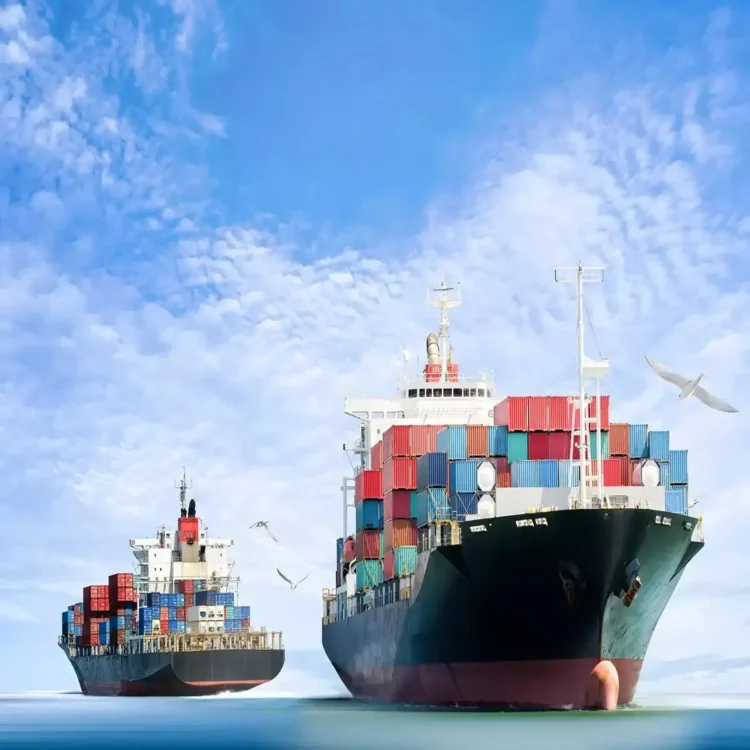
Concerns Over Foreign Control of Trade Transport
Sanyal explained that a large share of India’s external trade currently moves through ships owned and operated by international companies. According to him, nearly all goods transported to and from India rely on foreign vessels, leaving the country exposed to external pressures in the global shipping industry.
He warned that if several major international shipping operators decided to suspend services to India for any reason, it could quickly create severe economic stress. Such a scenario, he noted, would disrupt supply chains, delay cargo movement, and affect trade across multiple sectors of the economy.
Limited Size of India’s Merchant Fleet
Another major concern raised during the discussion was the relatively small size of India’s own fleet of seagoing vessels. Sanyal said that the country currently has only around 480 operational commercial ships involved in international maritime transport. This figure includes large cargo carriers and tankers but excludes fishing boats and smaller vessels.
Given the scale of India’s global trade, the number of domestically owned ships remains insufficient. Experts believe that expanding the national fleet is essential if the country wants to reduce dependence on external shipping providers and strengthen supply chain resilience.
Global Shipbuilding Dominated by Northeast Asia
The discussion also highlighted the concentration of shipbuilding activity in a few countries. Sanyal pointed out that the vast majority of ships currently being constructed worldwide are being built in Northeast Asia.
China accounts for more than half of global shipbuilding output, while Japan and South Korea each contribute roughly one-fifth. Together, these three nations dominate nearly the entire global market for ship construction.
In contrast, the rest of the world contributes only a small portion of global shipbuilding activity, and India’s share is particularly minimal. According to Sanyal, India currently represents less than half a percent of total global ship construction.
Government Initiatives to Strengthen the Maritime Sector
To address these challenges, the government has begun implementing significant policy changes aimed at strengthening the country’s maritime industry. Sanyal said that authorities have introduced reforms in shipping regulations, including adjustments to vessel ownership and flagging rules.
In addition, the government has announced a financial support package of approximately ₹70,000 crore for the shipbuilding sector. The industry has also been granted infrastructure status, which is expected to help attract investment and improve access to financing for large maritime projects.
These steps are intended to encourage domestic ship production, expand the national fleet, and gradually reduce dependence on international shipping companies.
India’s Potential as a Global Shipbuilding Hub
Despite the current challenges, Sanyal expressed optimism about India’s long-term potential in shipbuilding. He noted that the country already has several advantages, including strong steel production capacity, a large skilled workforce, and engineering expertise that could support large-scale ship manufacturing.
According to him, global shipbuilders have begun exploring opportunities in India as part of efforts to diversify their manufacturing bases. Some of the world’s largest shipbuilding companies are reportedly considering expanding or relocating parts of their production activities to the country.
Recent developments suggest that Indian shipyards are beginning to receive not only domestic orders but also contracts from overseas clients, indicating growing international interest in the sector.
Maritime Industry Seen as Strategic Priority
Sanyal emphasized that maritime capacity should be viewed as a strategic priority alongside emerging technology sectors. While industries such as artificial intelligence and semiconductor manufacturing often dominate policy discussions, he argued that strengthening shipbuilding and maritime logistics is equally important for national economic security.
The Raisina Dialogue session also featured remarks from Mehul Pandya, Managing Director and Group Chief Executive Officer of CareEdge Group. Pandya described the summit as an important global forum that enables leaders, policymakers, and experts to exchange ideas on developments shaping economies worldwide.=