
FTAs : will allow Indian professionals to access international markets Government
FTAs: According to an official statement released on Wednesday, legally enforceable obligations on professional services under different free trade agreements (FTAs) will open up international markets for Indian professional services.
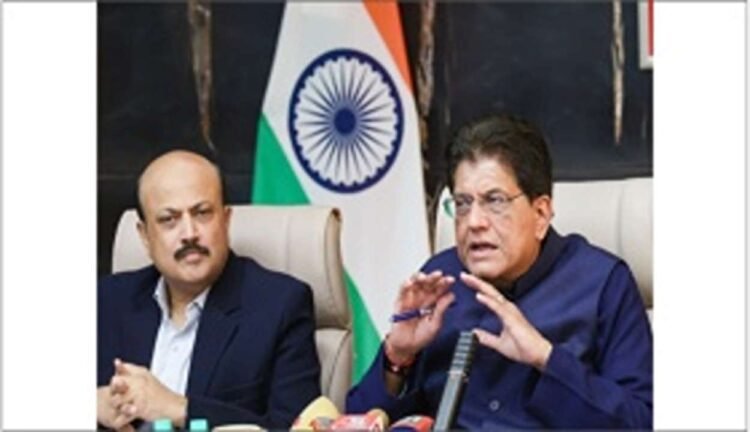
The significance of improved stakeholder coordination, domestic ecosystem changes, and legally enforceable pledges on professional services under different free trade agreements was emphasized by Commerce Secretary Rajesh Agrawal.
The Commerce Secretary further emphasized the significance of services trade for India’s economic development while speaking at the “Chintan Shivir on Professional Services” today. She said that services exports, in addition to product exports, provide a significant contribution to domestic value addition.
India’s demographic dividend has enormous potential to satisfy the growing demand for professional services worldwide, Agrawal said.
According to him, in order to fully realize this potential, professionals must embrace global best practices and acquire updated skills that are in line with the changing demands of the global market and technology advancements.
According to the Commerce Secretary, more foreign commerce in professional services will boost India’s economy’s competitiveness. In order to facilitate information exchange and provide venues for improved cooperation, he urged professional associations to plan and attend international conferences.
The Chintan Shivir gave professional organizations a chance to discuss best practices from across the world and among Indian counterparts.
According to a statement from the Commerce Ministry, “areas were identified where professional bodies could re-examine existing rules and regulations governing professional practice and undertake appropriate changes in training and skill upgrading programs to ensure alignment with evolving developments in artificial intelligence and technology.”
The dynamic and market-oriented hard and soft infrastructure established by the ICAI plan, which included chapters, an international directorate, and certification courses centered on technology and artificial intelligence, was generally praised in this respect.
The Indian Nursing Council’s efforts to provide Indian nurses more access to foreign markets were recognized, especially in light of the legislative obstacles in the health sector in many developed nations.
Discussions on Mutual Recognition Agreements (MRAs) focused on the main obstacles to signing MRAs and making sure that already-existing MRAs are used effectively. The importance of MRAs in India’s future professional services export strategy was also discussed in light of Global Capability Centers and the quick growth of digitally delivered services.
In addition to mobility-related rules and horizontal domestic laws pertaining to qualification standards and processes, talks on leveraging free trade agreements (FTAs) centered on future-proofing the digital delivery of professional services.