
ReligionConversionLaw – Bihar Assembly Sees Renewed Push for Stricter Legislation
ReligionConversionLaw – The final sitting of the Bihar Legislative Assembly on Friday witnessed a renewed demand for a tougher law aimed at curbing forced religious conversions. Members of the ruling National Democratic Alliance (NDA) raised the issue during a calling attention motion, urging the state government to examine and possibly adopt stricter legal provisions similar to those enacted in several other states.
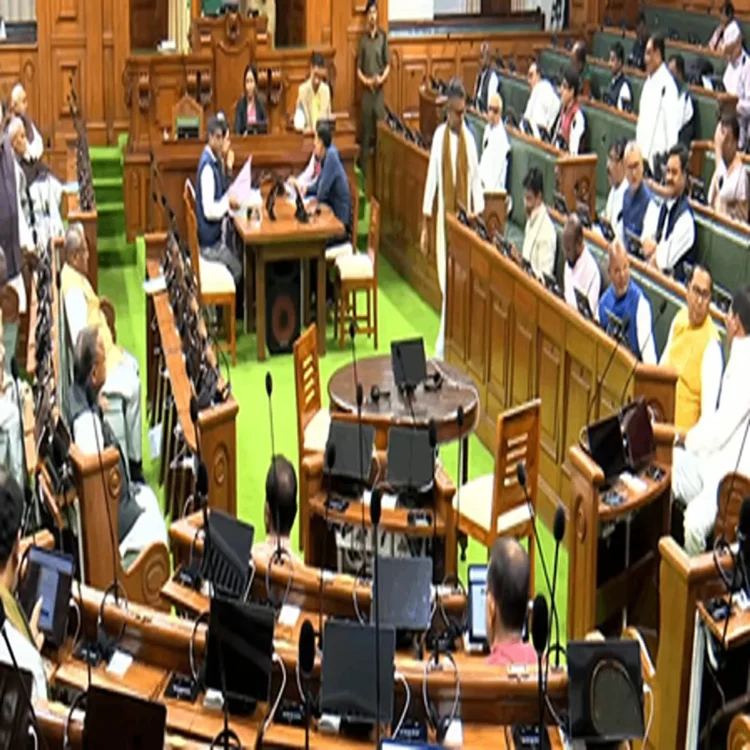
Legislators Seek Stronger Legal Framework
A group of 18 legislators voiced concern over what they described as rising instances of religious conversion under questionable circumstances. Among those who participated in the discussion were Maithili Thakur, Mithilesh Tiwari, Janak Singh, Sanjay Kumar Singh and Baidyanath Prasad. They called for Bihar to introduce legislation comparable to laws currently in force in states such as Uttar Pradesh, Madhya Pradesh, Uttarakhand and Gujarat.
According to the members, these states have enacted laws that impose stringent penalties, including long-term imprisonment, in cases where conversions are carried out through coercion, misrepresentation or inducement. Some provisions, they noted, allow for jail terms extending up to 20 years in severe cases.
Speaker Assures Review of Existing Laws
Responding to the concerns, Assembly Speaker Prem Kumar told the House that the state government would study the legal frameworks adopted elsewhere before making any decision. He assured members that the matter would be examined carefully and that appropriate steps would be taken if necessary.
“The government is sensitive to the concerns expressed in the House,” he said, adding that any action would be guided by legal scrutiny and constitutional considerations. His remarks signaled that the issue would be reviewed at the administrative level rather than decided immediately on the floor of the Assembly.
Reference to Developments in Other States
The discussion repeatedly referred to states where anti-conversion laws have been enacted or strengthened in recent years. Proponents of stricter legislation in Bihar argued that similar measures have been introduced to prevent conversions allegedly carried out through force, fraud or inducement, and to regulate interfaith marriages linked to conversion claims.
Supporters of such laws maintain that they are necessary to protect vulnerable communities and ensure transparency in matters of faith. Critics in other states, however, have raised concerns about the interpretation and implementation of these provisions, emphasizing the need to balance enforcement with constitutional rights.
Claims Raised Over Local Conversions
During the debate, BJP MLA Mithilesh Tiwari, who represents Buxar, cited local data to support the demand for legislative action. He claimed that more than 1,000 Dalit families in Buxar district had converted in recent years. Tiwari urged the government to adopt a model similar to the Uttar Pradesh law, arguing that firm legal measures would act as a deterrent against forced conversions.
While the figures mentioned were not independently verified during the session, the claim added urgency to the discussion. Other legislators echoed similar concerns and pressed the government to ensure that any cases involving coercion or inducement are thoroughly investigated.
Political and Legal Implications
The debate reflects a broader national conversation on religious conversion laws and their legal scope. Several states have introduced amendments to strengthen penalties and expand reporting requirements. In Bihar, any move toward drafting new legislation would likely involve detailed consultations with legal experts to ensure compliance with constitutional safeguards related to freedom of religion.
For now, the state government has not announced a formal proposal. However, the assurance given in the Assembly suggests that the issue will remain under consideration in the coming months.
The developments in the House indicate that the subject of anti-conversion legislation could become a significant policy discussion in Bihar’s political landscape, particularly as lawmakers continue to debate how best to address concerns while upholding constitutional principles.