
Politics – Meira Kumar Targets Nitish Kumar Over Shift to Rajya Sabha Role
Politics – The recent political developments in Bihar have triggered sharp reactions, with former Lok Sabha Speaker Meira Kumar taking a pointed dig at Chief Minister Nitish Kumar following his move to the Rajya Sabha. Her remarks come at a time when discussions are intensifying over Kumar’s changing political priorities and his growing presence in national politics.
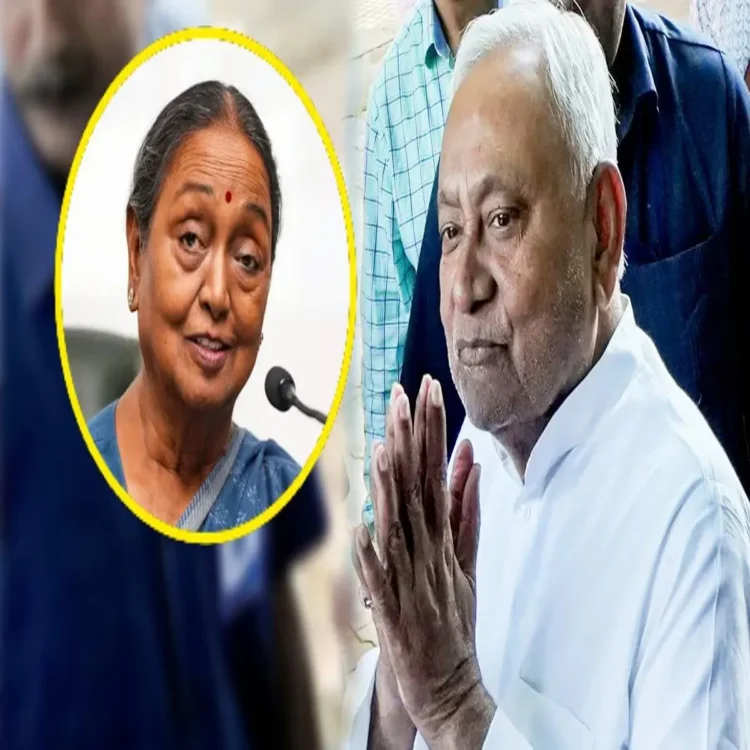
Meira Kumar’s Reaction to Political Shift
Speaking to reporters, Meira Kumar remarked that Bihar had effectively found “relief” with Nitish Kumar’s transition to the upper house of Parliament. Her statement, though brief, reflected a deeper political critique, suggesting that Kumar’s focus may now be shifting away from state governance toward a larger role in Delhi. The comment has added fuel to ongoing debates about leadership changes in Bihar and the future direction of its administration.
Nitish Kumar Takes Oath in Rajya Sabha
Nitish Kumar formally took oath as a Member of Parliament in the Rajya Sabha on Friday morning. This development marks a significant milestone in his long political career. Known for his strategic handling of alliances, Kumar has played a central role in maintaining the National Democratic Alliance’s position in Bihar over the years. His entry into the Rajya Sabha is seen by many as a calculated move that could expand his influence at the national level.
Completion of a Political Journey
With his induction into the Rajya Sabha, Nitish Kumar has now served in all major legislative bodies in the country. His career spans the Bihar Legislative Assembly, the Bihar Legislative Council, the Lok Sabha, and now the Rajya Sabha. This achievement fulfills a long-standing ambition he had expressed publicly on multiple occasions. It also underscores the breadth of his political experience, which stretches across both state and national platforms.
Resignation from Bihar Legislative Council
Prior to assuming his new role, Kumar resigned from his membership in the Bihar Legislative Council. The resignation was formally submitted by Janata Dal (United) MLC Sanjay Gandhi to Council Chairman Awadhesh Narayan Singh. This procedural step cleared the way for his transition to Parliament and marked the end of his direct legislative role within the state framework.
Impact on Bihar’s Political Structure
Kumar’s move is expected to bring significant changes to Bihar’s political landscape. With his shift to the Rajya Sabha, administrative responsibilities within the state are likely to undergo restructuring. Political observers note that this transition could strengthen the Bharatiya Janata Party’s influence in state governance, potentially altering the balance of power within the ruling alliance.
Strategic Meetings and Future Planning
In response to the evolving situation, senior leaders of the BJP held a high-level meeting in Delhi to chart out the roadmap for Bihar’s leadership going forward. These discussions are seen as crucial in determining how governance will be managed in the absence of Kumar’s direct involvement at the state level. The outcome of these deliberations may shape Bihar’s administrative direction in the coming months.
Recent Elections and Party Leadership
Nitish Kumar was elected to the Rajya Sabha on March 16 along with four other candidates backed by the NDA from Bihar. Shortly after, he was unanimously chosen as the president of the Janata Dal (United), with no other candidate filing for the position. This dual development has further consolidated his authority within the party while expanding his role beyond state politics.
A Long and Influential Caree
Nitish Kumar remains one of India’s most experienced political figures. Beginning his journey as a Member of the Legislative Assembly in 1985, he later served as a Union Minister in the Atal Bihari Vajpayee government. He first became Chief Minister of Bihar in 2005 and has since held the position multiple times, making him the longest-serving chief minister in the state’s history. His career reflects a blend of administrative experience and political adaptability.