
Diplomacy – Iran Signals Firm Stance Ahead of Key Islamabad Talks
Diplomacy – Iran’s Parliament Speaker Mohammad Ghalibaf used a recent flight to Islamabad to send a powerful political message, highlighting the human cost of ongoing tensions as Tehran prepares for another round of critical discussions with the United States. The visual display inside the aircraft, featuring portraits and belongings of victims from a deadly school attack, underscored Iran’s narrative ahead of the negotiations.
Symbolic Message Delivered Mid-Flight
During the journey, several empty seats on the aircraft were arranged with photographs of children and personal items such as school bags and flowers. These represented those killed in the February 28, 2026, strike on an elementary school in Minab. Iranian authorities have attributed the attack to a joint US-Israeli operation, a claim that remains disputed internationally.
Ghalibaf shared an image of the arrangement on social media, describing the victims as his “companions” on the flight. The symbolic gesture appeared aimed at reinforcing Iran’s position and drawing global attention to the incident, which has become central to its diplomatic messaging.
Attack Becomes Key Reference Point
The Minab school strike reportedly resulted in at least 165 fatalities and left more than 100 people injured. Many of the victims were children, making the incident particularly sensitive in both domestic and international discourse. Iranian officials have consistently referenced the attack in recent statements, portraying it as evidence of what they describe as hostile actions by Western powers.
Analysts suggest that by foregrounding the tragedy, Iran is seeking to strengthen its moral argument as negotiations approach, while also appealing to international opinion.
Iran’s Position Marked by Caution
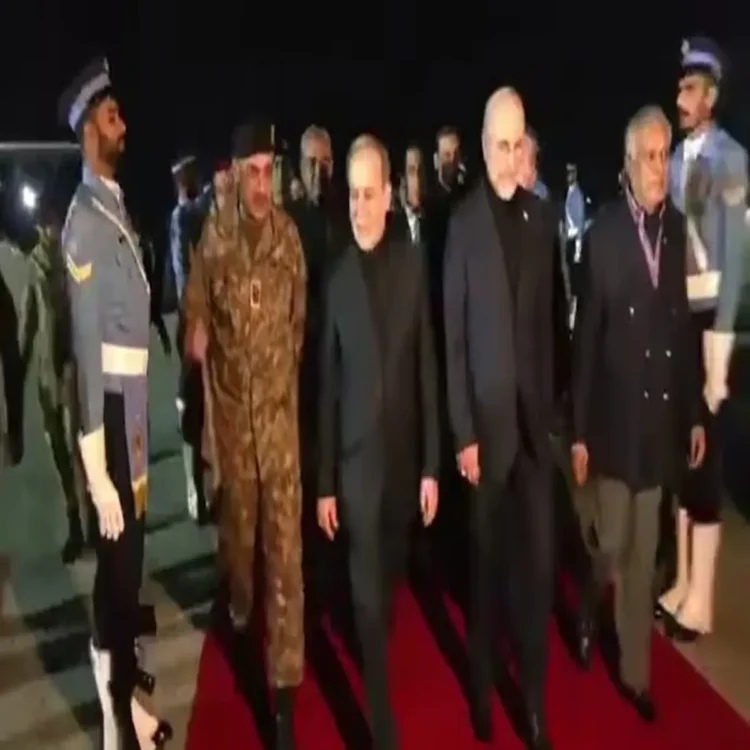
Upon arriving in Islamabad, Ghalibaf struck a measured tone, stating that Iran is entering the talks with positive intent but remains wary. He pointed to past negotiations with the United States, which he said failed to produce lasting agreements.
According to Ghalibaf, previous engagements were marked by unmet commitments and actions that Iran interpreted as breaches of trust. This history, he indicated, continues to shape Tehran’s approach to the current round of discussions.
Conditions for Any Agreement
Ghalibaf made it clear that the outcome of the talks would depend largely on the conduct of the United States. He said Iran would be willing to reach an agreement if its national interests and rights are acknowledged.
At the same time, he warned against what he described as insincere diplomacy. Iran, he said, would respond decisively if it perceives negotiations as a cover for actions lacking genuine intent. His remarks reflect a broader stance within Tehran that combines openness to dialogue with a firm emphasis on safeguarding national interests.
US Signals Openness with Caution
On the American side, Vice President J.D. Vance indicated a willingness to engage in discussions, provided they are conducted honestly. Speaking before departing for Islamabad, he said the United States is prepared to extend cooperation if Iran approaches the talks in good faith.
However, Vance also cautioned that any attempt to manipulate the process would be met with resistance. His comments suggest that while Washington remains open to negotiation, it is also prepared for a challenging dialogue.
Broader Geopolitical Context
US President Donald Trump also weighed in, noting that tensions in the Strait of Hormuz continue to influence the broader situation. He suggested that Iran may be overestimating its negotiating position, adding another layer of complexity to the upcoming talks.
The discussions in Islamabad are expected to address longstanding disputes, but the atmosphere remains tense. With both sides expressing conditional openness, the outcome will likely depend on whether mutual trust can be rebuilt after years of strained relations.