
Copyright – Delhi High Court Seeks Clarity on AI Authorship Rights
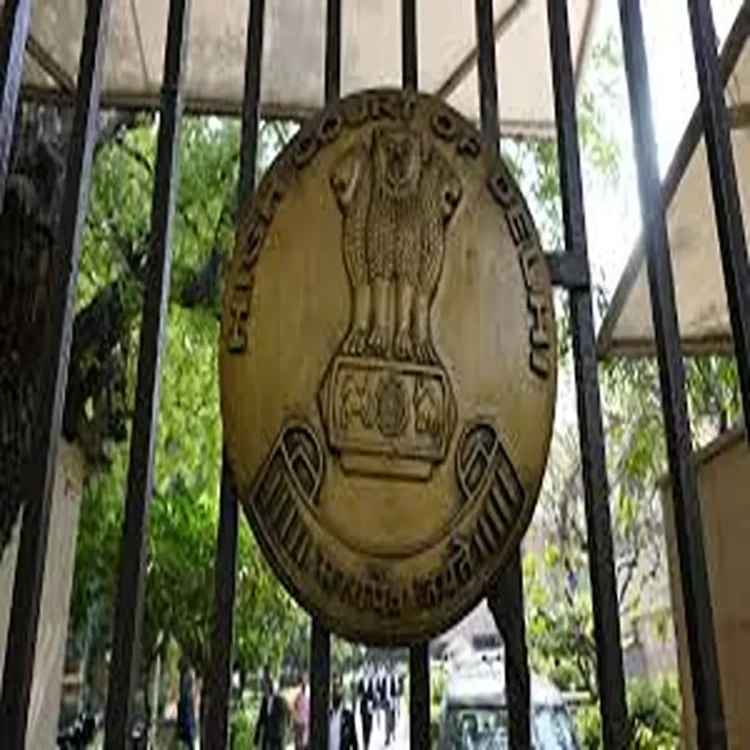
Copyright – The Delhi High Court has asked the Copyright Office to take a clear decision on whether artificial intelligence can be recognised as an author and granted copyright protection for its creations. The directive came during a hearing on a petition filed by a US-based researcher seeking legal recognition for artwork generated entirely by an AI system.
Court Calls for Timely Decision
Justice Tushar Rao Gedela instructed the Registrar of Copyrights to resolve the matter within eight weeks. The court noted that the issue raises important questions about the evolving role of artificial intelligence in creative fields and the interpretation of existing copyright laws.
The directive followed confirmation that the Copyright Office has already scheduled a hearing on April 27. The court emphasized the need for a prompt conclusion to avoid prolonged uncertainty over the legal status of AI-generated works.
Petition Challenges Traditional Definition of Authorship
The case was brought forward by American researcher Stephen Thaler, who has been actively testing legal boundaries surrounding artificial intelligence and intellectual property. He is seeking copyright registration for an artwork titled “A Recent Entrance to Paradise,” which he claims was created independently by his AI system, DABUS.
According to Thaler, the system is designed to replicate human-like creativity without direct human intervention. He argues that such works should qualify for copyright protection under existing provisions related to computer-generated content.
Objections Raised by Copyright Authorities
Thaler submitted his application in 2022, but it faced objections during the review process. Authorities questioned whether an AI system could be recognised as an author under current law, which traditionally grants authorship only to natural persons.
In response, Thaler maintained that copyright laws already include provisions for computer-generated works. He argued that authorship in such cases could be assigned to the individual responsible for initiating or enabling the creation, even if the output itself is generated autonomously by a machine.
Broader Legal Implications
The case highlights a growing global debate about how intellectual property laws should adapt to rapid technological advancements. As AI systems become increasingly capable of producing art, music, and written content, legal frameworks are being tested in ways not previously anticipated.
The outcome of this case could influence how similar applications are handled in India and potentially shape future guidelines on AI-generated content. It also raises questions about accountability, ownership, and the role of human involvement in creative processes.
Similar Cases Across Jurisdictions
Thaler has pursued comparable legal efforts in several countries, seeking recognition of AI as either an inventor or an author. However, courts in multiple jurisdictions have so far declined to grant such recognition.
In the United Kingdom, the Supreme Court upheld earlier decisions rejecting his attempt to list AI as an inventor. Similarly, courts in the United States ruled that works created without human authorship do not qualify for copyright protection, and the Supreme Court chose not to review those rulings.
Awaiting a Defining Decision
The Delhi High Court’s directive does not settle the issue but ensures that the Copyright Office will examine it thoroughly and deliver a reasoned decision within a defined timeframe. Legal experts believe the final outcome could provide much-needed clarity on how Indian law interprets authorship in the age of artificial intelligence.
As technology continues to blur the lines between human and machine creativity, the decision may serve as an important reference point for policymakers, creators, and innovators navigating this evolving landscape