
OilTrade – Tensions Rise Over Strait of Hormuz Shipping Disruptions
OilTrade – Fresh concerns have emerged over oil transport through the Strait of Hormuz after US President Donald Trump accused Iran of failing to uphold a ceasefire understanding related to maritime passage. In a series of public remarks, Trump alleged that Tehran had not allowed oil shipments to move freely through the critical waterway, raising questions about the stability of energy supply routes.
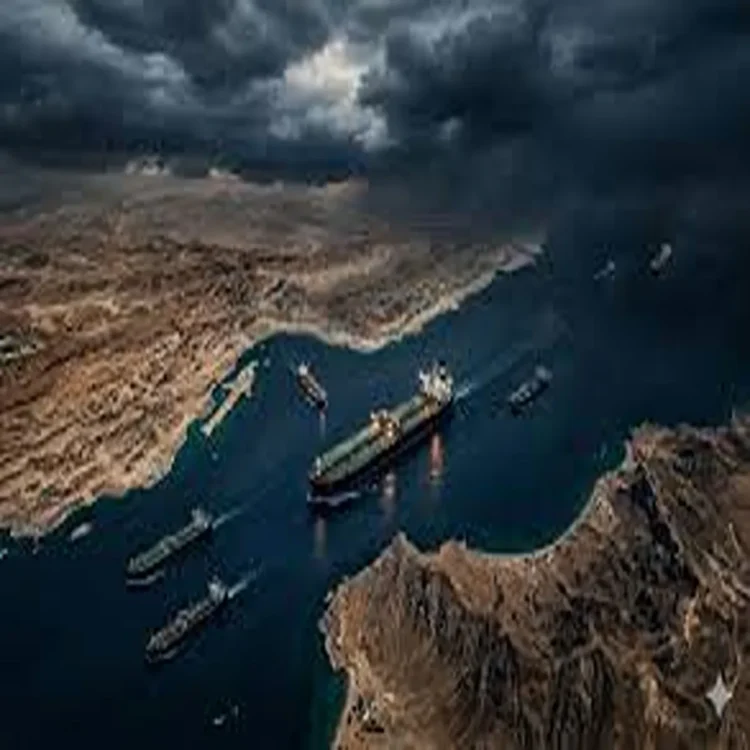
Dispute Over Maritime Access Intensifies
Trump claimed that Iran’s actions in the region did not align with the terms of the ceasefire, pointing specifically to reduced tanker movement through the strait. According to recent reports, only a limited number of vessels have crossed the passage since the truce came into effect, adding to global uncertainty over oil supply continuity. The Strait of Hormuz serves as a key transit route for crude oil, making any slowdown a matter of international concern.
The US president’s statements suggest growing frustration in Washington, as expectations of normal shipping activity following the ceasefire appear unmet. However, no immediate policy response or concrete action from the United States has been announced so far.
Concerns Over Alleged Transit Charges
Another point of contention has been reports suggesting that Iran may be imposing fees on oil tankers passing through the strait. Trump strongly objected to these claims, warning that such practices would be unacceptable if confirmed. His remarks indicate that even unverified developments are contributing to heightened tensions between the two sides.
Previously, Trump had floated the idea of introducing US-controlled tolls in the same region, but in his latest comments, he stated that he had only recently become aware of Iran’s alleged fee-related measures.
Iran’s Position on Shipping Conditions
Iran has responded by maintaining that maritime movement remains possible under certain guidelines. Officials have indicated that vessels can pass through the strait if coordination is established with Iranian authorities, particularly the military, and if operational limitations are taken into account. Analysts note that this stance is not entirely new and reflects Tehran’s earlier approach to managing access in the region.
While Iran insists that passage is not fully restricted, the added conditions may be contributing to the reduced number of ships navigating the route.
Political Exchanges Add to Uncertainty
In a separate development, Trump dismissed criticism from a prominent US publication that questioned his handling of the Iran situation. He defended his approach, asserting that recent developments represented a meaningful success rather than a premature claim of victory. He also reiterated his position on Iran’s nuclear capabilities, emphasizing that his administration’s actions had prevented Tehran from advancing in that direction.
The exchange highlights how political rhetoric continues to intersect with geopolitical developments, further complicating the broader narrative around the ceasefire.
Strategic Importance of the Strait of Hormuz
The Strait of Hormuz remains one of the most strategically significant maritime corridors in the world. Connecting the Persian Gulf to the Arabian Sea, it facilitates the movement of a substantial portion of global oil exports. Even minor disruptions in this narrow passage can have far-reaching consequences for international markets.
Energy-importing countries are particularly sensitive to developments in the region, as any prolonged disturbance can influence oil prices and supply availability.
Implications for India and Global Markets
For India, which relies heavily on imported crude oil, stability in the Gulf region is essential. Any constraints on shipping through the Strait of Hormuz could lead to increased costs and supply challenges, potentially affecting domestic fuel prices and broader economic conditions.
Market analysts warn that continued uncertainty around maritime access could trigger volatility in global oil prices. As diplomatic tensions persist, the focus remains on whether both sides can ensure uninterrupted flow through one of the world’s most vital energy routes.