
Property – Delhi Revises Policy to Ease Regularisation of Unauthorised Colonies
Property – In a significant move aimed at benefiting a large number of residents, the central government has introduced a revised framework to accelerate the regularisation of properties in over 1,500 unauthorised colonies across Delhi.
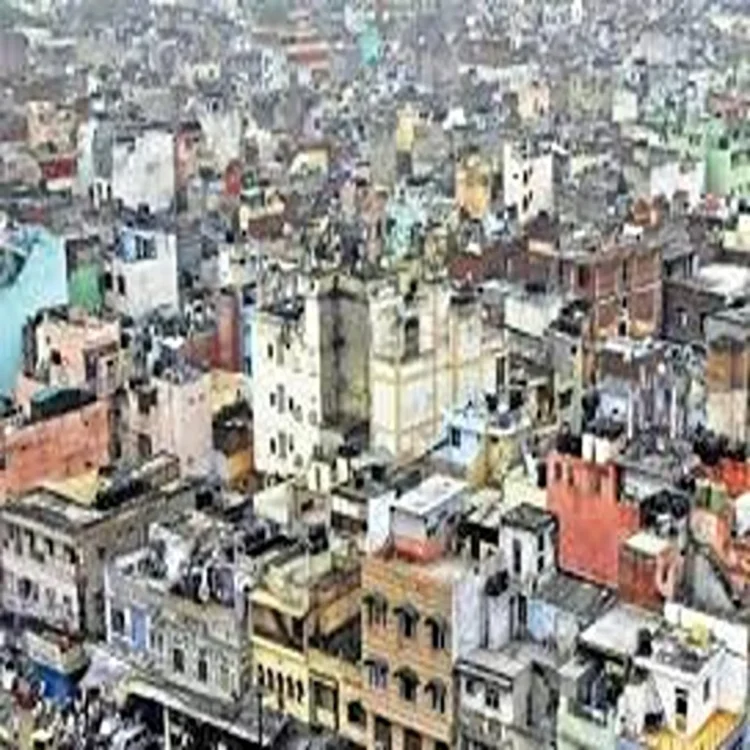
Policy Shift Brings Relief to Property Owners
The updated approach, announced on Tuesday, adopts an “as is where is” principle to streamline the process of granting ownership rights. The decision is expected to provide relief to lakhs of residents who have long faced challenges in securing legal status for their properties. The revised rules are part of the Pradhan Mantri–Unauthorised Colony in Delhi Awas Adhikar Yojana (PM-UDAY), which was launched to address such issues.
A key highlight of the policy is the simplification of documentation procedures, making it easier for residents to obtain conveyance deeds and authorisation slips. These documents are essential for establishing ownership, transferring property, or accessing financial services such as loans.
Removal of Layout Plan Requirement
One of the most notable changes is the removal of the mandatory requirement for an approved layout plan. Earlier, this condition had been a major hurdle for applicants, delaying or preventing the regularisation of properties. With this restriction lifted, officials believe the process will become more accessible and efficient.
Authorities have also clarified that new construction and redevelopment activities in these colonies will now be permitted, provided they comply with prescribed building bylaws. This is expected to encourage planned development in areas that have grown without formal approval over the years.
Provisions for Small Commercial Establishments
The revised norms also address small commercial activities operating within these colonies. Convenience shops measuring up to 20 square metres will now be considered for regularisation if they are connected to a road with a minimum width of six metres. For smaller shops up to 10 square metres, the road width requirement has been relaxed further, allowing flexibility for densely built neighbourhoods.
These changes are likely to support local businesses and provide legal recognition to small traders who have been operating informally.
Administrative Responsibility Shifted
In a significant administrative adjustment, the responsibility for implementing the regularisation process has been transferred from the Delhi Development Authority (DDA) to the revenue department. Since the launch of PM-UDAY in 2019, the DDA had overseen the initiative, but progress had been relatively slow, with ownership rights granted to only around 40,000 properties so far.
Officials expect that the involvement of the revenue department will speed up processing and improve coordination at the local level.
Use of Technology for Mapping and Monitoring
To support the updated framework, authorities will rely on satellite imagery and drone mapping to prepare layout plans for the colonies. An inter-agency cell comprising representatives from the DDA, Municipal Corporation of Delhi (MCD), and the Delhi government will oversee this process.
Additionally, the municipal body has established a dedicated encroachment monitoring unit. Regular surveys are planned every two months to track changes and prevent illegal developments, ensuring better oversight in the future.
Clarifying Ownership Rights
Under the scheme, property holders can establish ownership based on documents such as General Power of Attorney, agreements to sell, payment receipts, and possession records. For properties located on government land, conveyance deeds will be issued, while authorisation slips will be provided for those on private land.
The revised policy aims to formalise long-standing informal settlements while maintaining regulatory checks. By addressing procedural bottlenecks and introducing clearer guidelines, the government hopes to bring greater transparency and legal certainty to residents of these colonies.