
Defense – Chinese Aircraft and Naval Activity Spotted Near Taiwan Waters
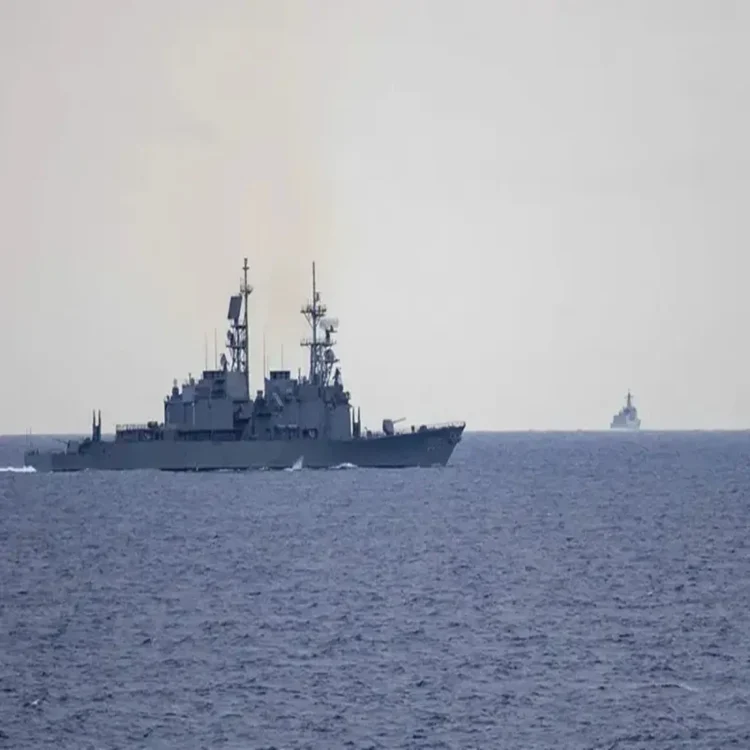
Defense – Taiwan’s Ministry of National Defense reported fresh military movements by China near the island early Wednesday, highlighting ongoing tensions in the region. According to official data released at 6 a.m. local time, two Chinese military aircraft sorties, nine naval vessels, and one government-affiliated ship were observed operating close to Taiwan’s surrounding waters.
Aircraft Cross Median Line and Enter Air Defense Zone
Authorities stated that both detected aircraft crossed the sensitive median line of the Taiwan Strait, a boundary long regarded as an informal buffer between the two sides. The aircraft then entered Taiwan’s northern and southeastern Air Defense Identification Zone (ADIZ).
Taiwan’s armed forces kept a close watch on the developments and initiated appropriate responses, the ministry said. Surveillance systems and defensive measures were activated to ensure the island’s security during the activity.
Similar Activity Recorded a Day Earlier
The latest developments follow a similar incident reported just a day earlier. On Tuesday morning, Taiwan tracked one Chinese aircraft sortie alongside eight naval vessels and an official ship operating in nearby waters.
That aircraft entered Taiwan’s southwestern ADIZ, prompting monitoring and response actions by Taiwan’s military. Officials noted that such repeated movements reflect a pattern of sustained pressure in the region.
Taiwan Continues Vigilance Amid Rising Tensions
Taiwan’s defense authorities have consistently emphasized their readiness to respond to such incursions. The armed forces maintain routine surveillance of air and maritime activity around the island, using radar systems, patrol aircraft, and naval deployments.
While these encounters have become more frequent in recent years, Taiwan continues to handle them cautiously to avoid escalation while safeguarding its territorial integrity. Officials have reiterated that all movements are being closely tracked and assessed in real time.
Background of the China-Taiwan Dispute
The situation is rooted in a long-standing political and historical dispute between China and Taiwan. Beijing considers Taiwan to be part of its territory and has repeatedly asserted its intention to bring the island under its control, if necessary.
Taiwan, however, functions independently with its own administrative system, armed forces, and economy. Despite this, it has stopped short of formally declaring independence, largely to prevent potential military conflict with China.
Historical Roots of the Issue
The origins of the dispute trace back several centuries. China’s claim dates to 1683, when the Qing Dynasty incorporated Taiwan after defeating Ming loyalists. However, governance over the island remained limited during that period.
A major shift occurred in 1895 when China ceded Taiwan to Japan following the First Sino-Japanese War. Taiwan remained under Japanese rule for five decades until the end of World War II, when control reverted to Chinese authorities.
Division After Chinese Civil War
The modern political divide emerged in 1949 after the Chinese Civil War. The People’s Republic of China (PRC) was established on the mainland, while the Republic of China (ROC) government relocated to Taiwan.
Since then, both sides have maintained separate administrations, each historically claiming legitimacy over all of China. Over time, Taiwan has evolved into a self-governed entity, though its international status remains complex and widely debated.
Ongoing International Attention
The Taiwan issue continues to draw global attention, as it raises broader questions about sovereignty, self-determination, and regional stability. Military movements such as those reported this week are closely watched by international observers, given their potential implications for security in the Indo-Pacific region.
Taiwan’s defense ministry has reaffirmed its commitment to maintaining stability while remaining prepared for any developments, as military activity around the island shows no signs of slowing down.