
Environment – Hundreds of Lakes Vanish Across Jammu and Kashmir Since 1967
Environment – A recent audit has raised serious concerns about the rapid disappearance and shrinking of lakes in Jammu and Kashmir over the past several decades. According to findings presented by India’s national auditor, a significant number of water bodies in the region have either vanished or reduced considerably in size, pointing to long-term environmental stress and changing land patterns.
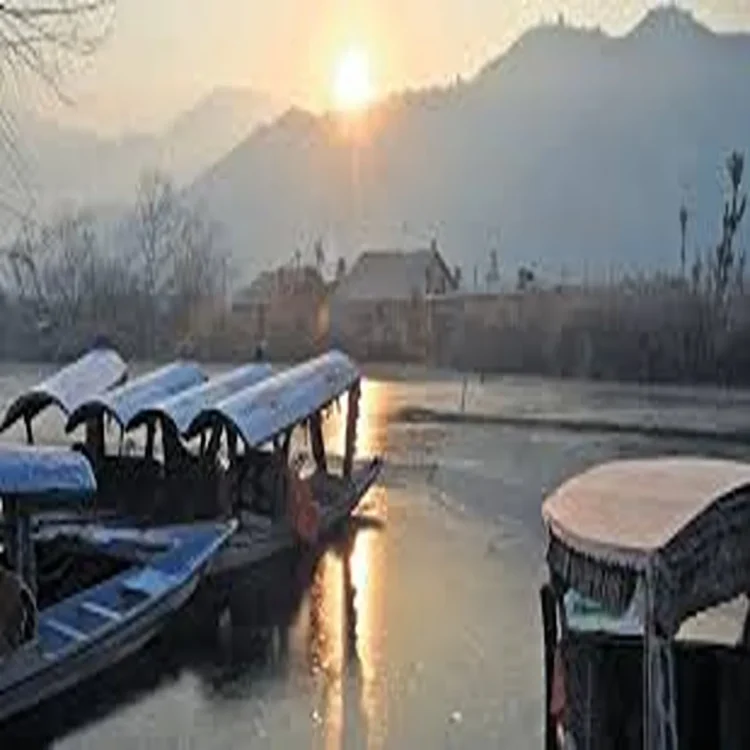
Large Number of Lakes Lost Over Decades
The report highlights that out of 697 lakes recorded in 1967 across Jammu and Kashmir, as many as 315 no longer exist. This decline has led to a loss of more than 2,800 hectares of water spread. The Jammu region accounted for a larger share of these losses, with 259 lakes disappearing, while 56 lakes vanished from the Kashmir Valley.
Originally, the region had 367 lakes in Jammu and 330 in Kashmir. Over time, these numbers have reduced significantly, reflecting a steady decline in natural water resources. The disappearance of these lakes alone has resulted in a loss of over 1,500 hectares of water area.
Departmental Oversight and Responsibility
The audit also examined which government departments were responsible for the lakes that disappeared. It found that 80 of the lost lakes were managed by the Forest Department, while the remaining 235 fell under the control of the Revenue and Agriculture Departments.
This distribution suggests that land use practices and administrative management may have played a role in the gradual loss of these water bodies. Changes in land ownership, agricultural expansion, and lack of monitoring are believed to have contributed to the situation.
Shrinking Lakes Add to the Concern
Apart from the lakes that have completely disappeared, a large number of existing lakes have also shrunk over time. The report notes that 203 lakes across the region have seen a reduction in their size. These include 144 lakes in Kashmir and 59 in Jammu.
In 1967, these lakes collectively covered more than 8,500 hectares. By 2020, their combined area had reduced to just over 7,200 hectares, marking a loss of more than 1,300 hectares. Alarmingly, 63 of these lakes have lost at least half of their original area, placing them at serious risk of vanishing in the future.
Some Lakes Show Expansion
While the overall trend remains negative, the report also observed that not all lakes have declined. Around 150 lakes have actually expanded in size, adding over 500 hectares of water area. Of these, 104 are located in Kashmir and 46 in Jammu. Additionally, 29 lakes have remained largely unchanged over the years.
However, experts caution that these gains are not sufficient to offset the widespread losses seen across the region.
Impact on Ecosystems and Biodiversity
The shrinking and disappearance of lakes have had far-reaching consequences beyond water availability. The report emphasizes that these changes have disrupted local ecosystems, leading to the loss of plant and animal life.
Out of the total lakes studied, 518 have undergone noticeable changes, affecting nearly three-fourths of all water bodies in the region. These changes have weakened natural systems that support biodiversity, food chains, and water cycles. They have also impacted carbon and nutrient flows, contributing to broader environmental instability.
Link to Flooding and Climate Risks
The report also draws attention to the connection between shrinking lakes and extreme weather events. It suggests that reduced water storage capacity in lakes played a role in worsening the devastating floods that hit Jammu and Kashmir in September 2014.
Research by various institutions has indicated that alterations in land use around lakes, including encroachment and conversion for other purposes, have increased flood vulnerability. With fewer lakes to absorb excess water, the region becomes more prone to sudden flooding during heavy rainfall.
Need for Urgent Conservation Measures
The findings underline the urgent need for focused conservation efforts to protect remaining lakes and restore those that have been degraded. Strengthening monitoring systems, regulating land use, and improving coordination between departments could be crucial steps in reversing the trend.
Without timely intervention, experts warn that more lakes could disappear, further threatening the region’s ecological balance and water security.