
SpaceMission – Artemis II Crew Advances Toward Moon After Key Engine Burn
SpaceMission – The crew of NASA’s Artemis II mission has moved beyond Earth’s orbit and is now heading toward the Moon, marking a significant moment in modern space exploration. The spacecraft, Orion, performed a crucial engine burn that placed it on a precise path for a lunar flyby, bringing humans closer to returning to deep space after decades.
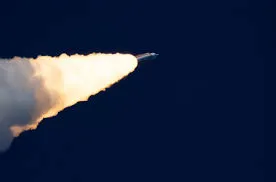
Critical Engine Burn Successfully Completed
NASA confirmed that the spacecraft carried out a translunar injection burn lasting nearly six minutes. During this operation, Orion’s main engine generated around 6,000 pounds of thrust, enabling the spacecraft to break free from Earth’s gravitational pull.
Mission controllers closely monitored the manoeuvre, which lasted five minutes and 49 seconds, and unanimously approved the operation before execution. The successful burn ensures the crew is now on track to circle the Moon, a milestone not achieved since the Apollo 17 mission in 1972.
Historic Return to Lunar Exploration
This mission represents a renewed commitment to human space exploration. NASA officials described the event as a defining step in sending astronauts farther into space than previous missions.
In an official update, the agency confirmed that the spacecraft is now steadily progressing toward its planned lunar trajectory. The Artemis II mission is designed to test key systems that will be used in future missions aimed at landing humans on the Moon once again.
Crew Begins Operations in Space
The four-member crew includes astronauts Reid Wiseman, Victor Glover, and Christina Koch, along with Canadian astronaut Jeremy Hansen. After launch, the astronauts began their first full day in space with scheduled activities, including system checks and physical exercise to maintain health in microgravity conditions.
Mission control marked the beginning of their day with music, creating a calm and focused atmosphere ahead of the critical engine operation. The crew also prepared the spacecraft for the burn, ensuring all systems were functioning correctly.
Orion Spacecraft Performs as Planned
The Orion spacecraft’s service module engine played a vital role in achieving the required acceleration. Engineers had carefully calculated the timing and strength of the burn to ensure accuracy in the spacecraft’s path toward the Moon.
The upcoming lunar flyby will allow NASA to evaluate navigation systems, communication capabilities, and overall spacecraft performance. These tests are essential for future missions that aim to carry astronauts to the lunar surface.
Launch Marked Start of Historic Journey
The Artemis II mission began with a successful launch aboard NASA’s Space Launch System rocket from Kennedy Space Center in Florida. The launch marked the first crewed mission in the Artemis program and set the stage for a new era of lunar exploration.
Following the launch, the spacecraft entered Earth’s orbit before performing the critical burn that has now sent it toward the Moon.
Mission Duration and Return Plan
The mission is expected to last approximately 10 days. During this time, the crew will travel around the Moon and gather important data to support upcoming missions.
After completing the lunar flyby, the spacecraft will return to Earth, with a planned splashdown in the Pacific Ocean. This final phase will test re-entry systems and recovery procedures, ensuring readiness for future missions involving longer stays on the Moon.
The Artemis II mission stands as a major step forward in humanity’s efforts to explore deep space, laying the groundwork for sustained lunar exploration in the coming years.