
RoadSafety – Calm Car Owner Response After Bengaluru Crash Goes Viral
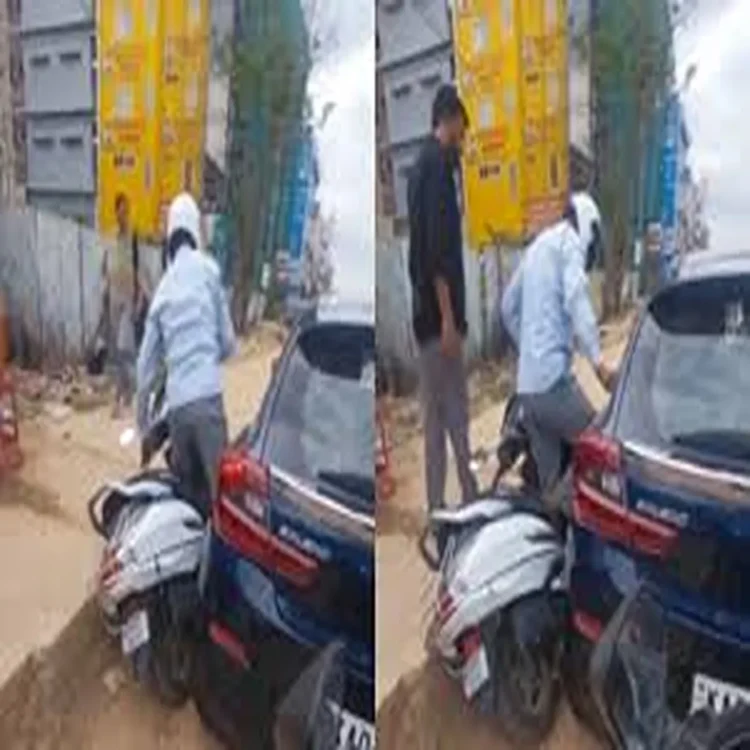
RoadSafety – A brief video from Bengaluru has captured widespread attention online, not for the accident itself but for the unexpected reaction that followed. The clip shows a scooter rider using a footpath to overtake traffic before losing control and crashing into a parked car. While such incidents often lead to heated exchanges, what stood out in this case was the composed and considerate response of the car owner.
A Moment That Defied Expectations
The footage begins with the two-wheeler rider navigating through a crowded stretch, choosing the footpath instead of the road. Within seconds, the rider appears to lose balance and collides with a stationary car. The impact, though not severe, is enough to draw immediate attention. However, instead of reacting with anger or frustration, the car owner approaches the situation calmly and checks on the rider’s condition.
https://x.com/karnatakaportf/status/2035294967103647924?s=20
This measured response has resonated strongly with viewers. In a setting where road rage incidents frequently dominate headlines, the driver’s behavior offered a refreshing alternative. Many online users noted that such reactions are rare, especially in high-pressure urban traffic environments.
Social Media Applauds Composure
Since being shared online, the video has attracted significant engagement, crossing more than 220,000 views. Comments from users reflect a mix of surprise and appreciation. Several viewers highlighted how the driver chose empathy over confrontation, setting an example for others.
Many users pointed out that minor accidents often escalate unnecessarily due to emotional reactions. In contrast, this incident demonstrated how maintaining composure can prevent conflict and ensure safety for everyone involved. The driver’s willingness to assist instead of blame has been widely described as a model of responsible behavior.
The Ongoing Issue of Unsafe Riding
While the driver’s response earned praise, the incident also brought attention to a persistent concern—reckless scooter riding. The video clearly shows the rider using a footpath, which is a violation of traffic regulations and poses risks to pedestrians. Such practices are frequently reported in major cities, despite repeated awareness campaigns.
Traffic authorities have consistently warned against riding on footpaths, emphasizing that these spaces are meant exclusively for pedestrians. Violations can attract penalties under the Motor Vehicles Act. However, enforcement alone has not fully curbed the problem, as instances continue to surface.
Why Responsible Behavior Matters
Experts often stress that road safety depends not only on rules but also on individual conduct. The Bengaluru incident illustrates both sides of this equation. On one hand, it highlights the dangers of ignoring traffic norms. On the other, it showcases how calm and thoughtful reactions can prevent situations from worsening.
Road safety campaigns frequently underline the importance of patience, especially in congested urban areas. Quick tempers can escalate minor mishaps into serious disputes, sometimes even leading to violence. In this context, the driver’s behavior serves as a reminder that maintaining control can make a meaningful difference.
A Small Incident With a Larger Message
Though the accident itself was minor, its impact on public discourse has been notable. The video has sparked conversations about everyday driving habits and the need for mutual respect on the road. It also reinforces the idea that responsible actions, even in small moments, can influence broader attitudes.
As cities continue to grow and traffic volumes increase, such examples gain importance. They offer a practical demonstration of how individuals can contribute to safer and more respectful road environments.
In the end, the Bengaluru incident is not just about a collision but about how people choose to respond when things go wrong. It shows that even in stressful situations, a calm approach can leave a lasting impression.