
SpiritualVisit – President Murmu Engages in Religious Events Across Uttar Pradesh
SpiritualVisit – President Droupadi Murmu continued her three-day visit to Uttar Pradesh with a series of spiritual engagements, reflecting a blend of cultural reverence and public outreach. On Friday, she is scheduled to visit Vrindavan, where she will meet the widely respected saint Premanand Maharaj at Shri Hit Radha Keli Kunj Ashram.
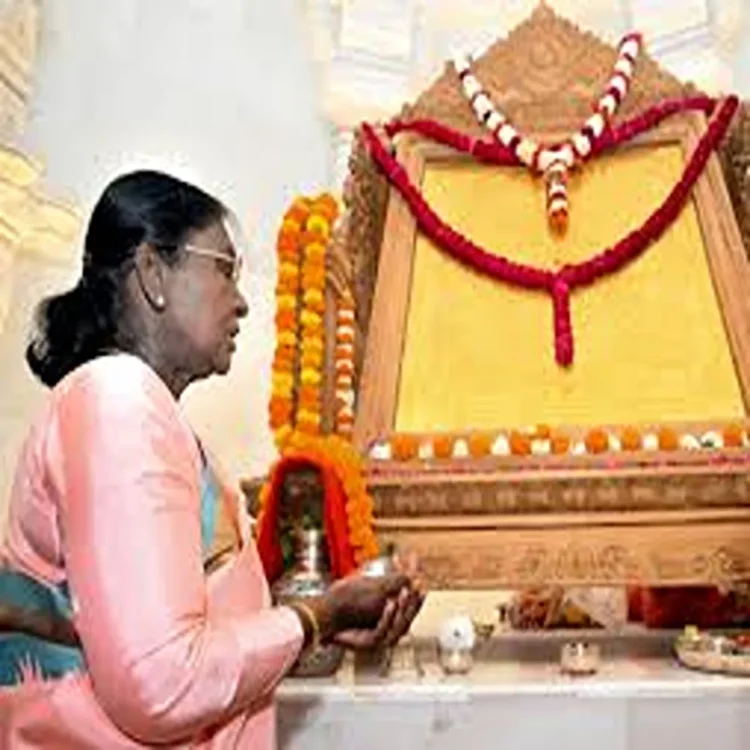
Interaction with spiritual leaders in Vrindavan
During her time at the ashram, the President is expected to seek blessings and engage in a meaningful spiritual discussion with Premanand Maharaj. The visit is seen as part of her broader effort to connect with prominent religious figures and institutions across the state.
Later in the day, she will also pay her respects at the memorial of Neem Karoli Baba, a revered spiritual figure whose teachings continue to inspire followers across India and abroad.
Healthcare initiative to be launched
In the evening, President Murmu will inaugurate a newly constructed Oncology Block at the Ramakrishna Mission Sevashram. The facility is expected to significantly improve access to cancer treatment services in the region, addressing a critical healthcare need for local communities.
Officials noted that the expansion of medical infrastructure aligns with ongoing efforts to strengthen public health systems, particularly in smaller cities and religious hubs that attract large populations.
Visit to social welfare institution
As part of her itinerary, the President will also visit Vatsalya Gram, an institution founded by Sadhvi Ritambhara. The organization is known for its work in providing shelter and care to orphaned children and elderly individuals. Her visit is expected to highlight the importance of social service initiatives rooted in community support.
Concluding rituals in Govardhan
The President’s visit will conclude on March 21 with a trip to Govardhan. She is scheduled to offer prayers at the Danghati Temple, followed by participation in the traditional Govardhan Parikrama. This sacred circumambulation, spanning approximately seven miles, holds deep religious significance among devotees.
After completing these rituals, she will return to New Delhi, marking the end of her visit.
Arrival and engagements in Ayodhya
President Murmu arrived in Uttar Pradesh on March 19, beginning her यात्रा with Ayodhya, one of the country’s most important religious centers. She was received by Governor Anandiben Patel, Chief Minister Yogi Adityanath, and Deputy Chief Ministers Keshav Prasad Maurya and Brajesh Pathak.
During her time in Ayodhya, she participated in significant temple ceremonies, including the installation of the Shri Ram Yantra at the Shri Ram Janmabhoomi Temple. The ritual was conducted with Vedic chants and traditional practices led by scholars and priests from various regions.
Milestone at Ram Temple construction
The placement of the Shri Ram Yantra on the temple’s top level marks a symbolic completion of the structure. Religious scholars from southern India, Kashi, and Ayodhya conducted the ceremony under the guidance of priest Ganeshwar Shastri.
The installation is considered an important spiritual milestone, representing the culmination of years of construction and devotion associated with the temple.
Devotional visit to Mathura temples
On Thursday evening, the President reached Mathura, where she visited the ISKCON Temple. She participated in the evening aarti and offered prayers in a devotional atmosphere marked by chanting and rituals.
She also paid tribute at the samadhi of A.C. Bhaktivedanta Swami Prabhupada and offered prayers at multiple shrines within the temple complex, including those dedicated to Gaur Nitai, Krishna Balaram, and Shyam Sunder.
A tour blending spirituality and public engagement
President Murmu’s यात्रा across Ayodhya, Mathura, and Vrindavan reflects a carefully planned schedule combining religious observances with public initiatives. From temple rituals to healthcare development and social outreach, the visit underscores a broader emphasis on cultural connection and community welfare.
Her engagements have drawn attention from both religious leaders and local residents, highlighting the significance of such visits in strengthening ties between institutions and the public.