
Cheetah – India’s Big Cat Population Crosses 50 After Birth of Five Cubs
Cheetah – India’s ambitious effort to restore cheetahs to its grasslands has achieved another milestone. On Monday, the country’s cheetah population crossed the 50 mark after a Namibian cheetah named Jwala, also known as Siyaya, delivered five cubs at Madhya Pradesh’s Kuno National Park. The park has served as the primary habitat for African cheetahs in India since their historic reintroduction on September 17, 2022.
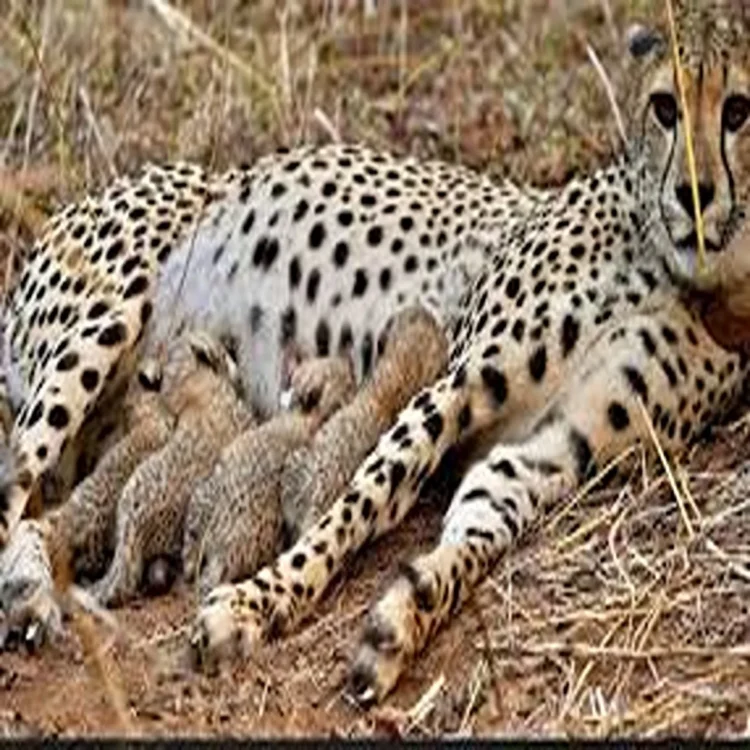
New Birth Pushes Total Count Beyond 50
With the arrival of the five cubs, India now hosts 53 cheetahs across two protected areas in Madhya Pradesh — Kuno National Park and Gandhi Sagar Wildlife Sanctuary. This figure includes 33 cubs currently at Kuno and 20 adult cheetahs originally brought from Namibia, South Africa and Botswana. Among the adults, three cheetahs from South Africa are presently housed at the Gandhi Sagar sanctuary.
The birth of Jwala’s litter represents the tenth successful cheetah reproduction recorded since the start of the reintroduction programme. Conservation officials view this development as an encouraging sign for the long-term stability of the species in the region.
All Adult Females in Kuno Have Now Reproduced
Wildlife authorities highlighted another notable achievement following the latest birth. All six adult female cheetahs currently living in Kuno National Park have now successfully produced offspring. This marks an important stage in the establishment of a self-sustaining population.
Jwala has also reached a unique milestone within the project. She has become the first cheetah in Kuno to be both a mother and a grandmother. One of her cubs from her first litter, born in March 2023 and named Mukhi, grew up and delivered her own litter of five cubs in November 2025.
Earlier Cubs Continue to Thrive
Officials managing the conservation programme confirmed that Mukhi’s five cubs are doing well and continue to grow under careful monitoring. Their healthy development has strengthened confidence among wildlife experts overseeing the project.
According to an official update from Kuno National Park, African cheetah mothers in the park have collectively given birth to 45 cubs over the past three and a half years. Out of these, 33 cubs are currently alive and showing positive signs of survival in the protected habitat.
Survival Rates Show Steady Improvement
Data from the past few years suggests a gradual improvement in cub survival rates. In 2023, four cubs were born, but only one managed to survive. The following year saw a better outcome, with nine of the 15 cubs born in 2024 surviving.
The trend continued in 2025, when 12 cubs were born and nine of them successfully survived. Conservation teams attribute this improvement to better monitoring, habitat management and growing experience in caring for the animals under Indian conditions.
Record Number of Cubs Born in 2026
The year 2026 has already recorded the highest number of births since the programme began. Within just the first three months of the year, 14 cubs have been born at Kuno National Park. Officials confirmed that all of them are currently alive and showing healthy growth.
Experts believe the steady rise in births and survival rates indicates that the habitat is gradually becoming suitable for the species. Kuno’s grasslands and prey base are being continuously managed to support the growing population.
Project Cheetah’s Long-Term Vision
Project Cheetah aims to restore the species to India decades after it was declared extinct in the country in 1952. The initiative involves bringing cheetahs from African nations and gradually establishing breeding populations within protected landscapes.
While challenges remain, the increasing number of births and improved survival of cubs suggest that the programme is making measurable progress. Wildlife authorities say continued monitoring and habitat development will remain crucial to ensuring the species thrives in India once again.