
Defense – South Korea Says US Military Asset Moves Won’t Weaken North Korea Deterrence
Defense – South Korean President Lee Jae Myung said on Tuesday that any potential relocation of military equipment belonging to the United States forces stationed in the country would not undermine the joint deterrence posture against North Korea.
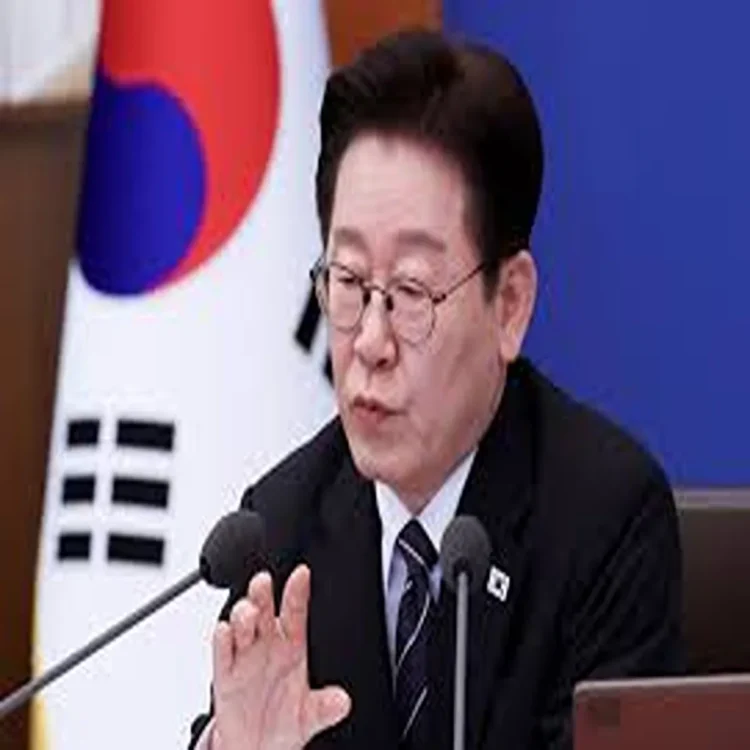
Speaking during a Cabinet meeting in Seoul, Lee addressed recent media reports suggesting that the United States Forces Korea (USFK) may have transferred or repositioned some of its military systems, including elements of an anti-missile defense system.
Government Says Deterrence Strategy Remains Strong
President Lee emphasized that South Korea’s defensive strategy against North Korea remains firm regardless of the potential movement of certain American military assets.
“If the question is whether our deterrence against North Korea has been seriously affected because of such possible changes, the answer is clearly no,” Lee told Cabinet members.
His comments were aimed at easing concerns following reports about the potential repositioning of US military equipment. However, Lee did not directly confirm whether any specific systems had actually been moved.
South Korea hosts nearly 28,500 US troops as part of a long-standing security alliance designed to deter aggression from North Korea and maintain stability on the Korean Peninsula.
Seoul Voices Concern Over Possible Asset Movement
While downplaying the impact on security, Lee acknowledged that the South Korean government had expressed reservations about any potential relocation of USFK military equipment.
He said that although Seoul had communicated its concerns to Washington, decisions regarding the deployment of US forces are ultimately determined by American military priorities.
“Our government expects the US Forces Korea to continue playing a full role in maintaining peace and stability on the Korean Peninsula, and I believe it has done so consistently,” Lee said.
He added that changes in global military requirements could sometimes lead to adjustments in how US forces are deployed. In such cases, South Korea may not always be able to fully influence those decisions.
US Military Needs May Influence Deployments
Lee noted that depending on evolving security conditions, USFK could temporarily send certain air defense systems or other assets to different regions if required by US military strategy.
Although South Korea may oppose such moves, Lee acknowledged that the government cannot always ensure that its preferences will prevail.
The United States maintains a network of military commitments around the world, and redeployment of certain equipment may occur as part of broader defense planning.
Despite these possibilities, Lee stressed that the alliance between South Korea and the United States remains a key pillar of regional security.
South Korea Emphasizes Strong Defense Capabilities
The president also highlighted South Korea’s significant defense spending and growing military capabilities.
According to Lee, South Korea’s defense budget ranks among the five largest in the world. He pointed out that the country’s military expenditure is estimated to be roughly 1.4 times larger than North Korea’s entire gross domestic product.
This disparity, Lee said, reflects the substantial difference in resources and technological capabilities between the two countries.
The remarks were reported by Yonhap News Agency.
Call for Greater Self-Reliance in National Defense
Alongside emphasizing the alliance with the United States, Lee urged South Korea to continue strengthening its own military readiness.
He warned that the global security environment is evolving and that the country must be prepared for unexpected changes.
“Even if the likelihood of conflict is low, nations must always remain prepared,” Lee said.
He added that shifts in the international order could potentially affect the level of support provided by allies. In such circumstances, South Korea must ensure that it has the capacity to defend itself independently.
Lee stressed that building strong self-reliant defense capabilities would allow the country to respond effectively to any security challenges in the future.