
Cheetahs – India Plans Interstate Wildlife Corridor After Big Cats Move Beyond Kuno
Cheetahs – India’s wildlife authorities are preparing an interstate habitat corridor after two cheetahs recently moved out of Kuno National Park in Madhya Pradesh and entered neighboring areas of Rajasthan. The National Tiger Conservation Authority (NTCA) said it is working closely with the forest departments of both states to ensure safe movement for the animals across the landscape.
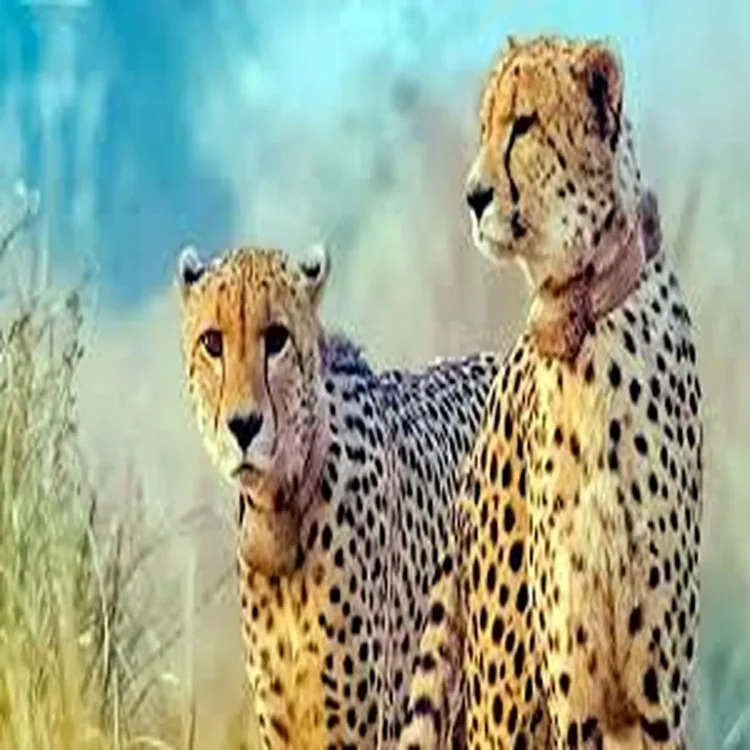
Cheetahs Travel from Kuno to Rajasthan Forest Areas
The two cheetahs, identified as KP-2 and KP-3, were tracked traveling beyond the boundaries of Kuno National Park into Rajasthan’s Baran district. Officials confirmed that KP-2 has been located within the Mangrol forest range of the district.
Meanwhile, KP-3 moved further north and reached the Banjh Amli Conservation Reserve after covering an estimated distance of nearly 60 to 70 kilometers from Kuno. Forest authorities said the two animals are currently positioned roughly six kilometers apart on opposite sides of the Parvati River.
Their movement has drawn attention from wildlife managers because it represents another example of cheetahs dispersing into neighboring landscapes since their reintroduction to India.
Continuous Monitoring Through Tracking Technology
Forest officials are keeping constant watch over both cheetahs through GPS-enabled radio collars fitted on the animals. These tracking devices allow teams to monitor their location and movement patterns in real time.
Joint monitoring teams from both states have been deployed in the field. Personnel from the Kishanganj and Anta forest ranges are actively observing the area and coordinating with wildlife officials to ensure that the cheetahs remain safe while roaming outside the national park.
According to the NTCA, communication between the two state governments is ongoing. The authority stated that updates will be shared whenever necessary as the situation develops.
Interstate Corridor Plan Under Consideration
The recent movement of the animals has prompted officials to accelerate plans for creating an interstate wildlife corridor. The proposed corridor would allow cheetahs to travel naturally between suitable habitats across Madhya Pradesh and Rajasthan.
Under the plan, a connected landscape would link seven districts in Rajasthan with eight districts in Madhya Pradesh. The total habitat area envisioned for this corridor is estimated to span about 17,000 square kilometers.
Wildlife experts say such corridors are important for species like cheetahs, which require large territories and often disperse long distances while searching for new habitats.
Natural Behavior Behind Long-Distance Dispersal
The NTCA has clarified that long-distance movement by cheetahs is not unusual. According to wildlife studies, cheetahs frequently travel across wide landscapes, especially when establishing territories or exploring new habitats.
Officials noted that the Project Cheetah action plan had already anticipated such movement. The program is designed to manage a “metapopulation landscape,” where multiple connected habitats allow animals to move between regions safely.
This approach reduces pressure on a single protected area and helps the population expand gradually across a larger ecosystem.
Background of Project Cheetah in India
Project Cheetah is a major conservation initiative launched by the Government of India to reintroduce cheetahs into the country after the species became extinct domestically in 1952.
The reintroduction began in September 2022, when cheetahs from Namibia and South Africa were brought to Kuno National Park. More animals have since been relocated as part of the program, including individuals from Botswana.
The project is considered the world’s first intercontinental relocation of a large wild carnivore. Conservationists hope that the initiative will eventually restore a stable cheetah population in India while also supporting the revival of grassland ecosystems.
As the animals gradually adapt to the Indian landscape, wildlife authorities expect occasional dispersal into nearby regions. The proposed interstate corridor is expected to play a key role in managing such movements while promoting long-term conservation success.