
Migration – America Records Net Population Outflow After Decades
Migration – The United States has entered unfamiliar territory in its 250th year, recording more departures than arrivals for the first time in nearly a century. Recent estimates indicate that 2025 marked a net population loss, a development not seen since the economic turmoil of the 1930s.
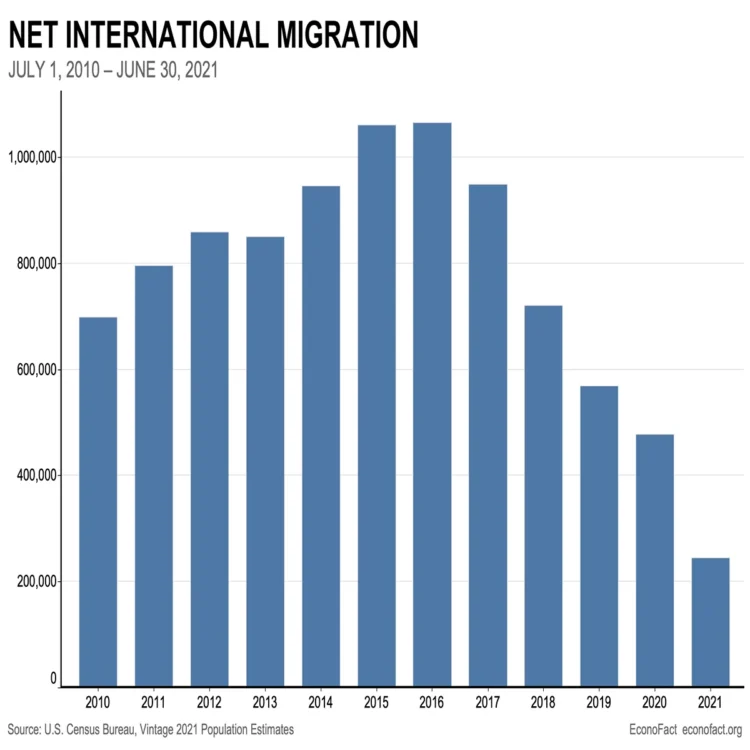
Historic Shift in Migration Balance
According to research by the Brookings Institution, the country experienced net negative migration of roughly 150,000 people in 2025. The downturn follows a sharp fall in immigration over the past two years. New arrivals dropped to between 2.6 and 2.7 million in 2025, a steep decline from nearly six million in 2023, The Wall Street Journal reported. Analysts expect the outward flow to intensify in 2026 as more Americans consider relocation abroad.
A review of partial and complete 2025 migration data from 15 countries suggests that at least 180,000 US citizens resettled overseas last year. The final figure may prove higher once all national statistics are published.
Americans Abroad: A Growing Community
There is no comprehensive global registry tracking Americans living outside the country, but estimates place the overseas population between four and nine million. Official figures show that Mexico hosted about 1.6 million US citizens in 2022. Canada is home to more than 250,000, while over 325,000 reside in the United Kingdom. Across Europe, the American community now exceeds 1.5 million people.
Southern Europe has seen particularly sharp increases. Portugal’s American resident population has surged more than fivefold since the COVID-19 pandemic, including a 36 percent rise in 2024 alone. Ireland admitted around 10,000 US citizens in 2025, roughly double the previous year’s number. Germany also recorded more Americans settling there than Germans relocating to the United States.
Relocation Industry Sees Rising Demand
Companies that assist with international moves report a surge in inquiries. During a recent online event hosted by Expatsi, nearly 400 participants signed up to explore relocation options in Albania. Founder Jen Barnett noted that the demographic profile of those considering a move has broadened.
“In the past, those leaving were often highly adventurous or internationally experienced,” she said. “Now it’s everyday families and professionals.”
Relocation firms say clients increasingly include mid-career workers, parents with young children, and retirees seeking affordability. Lower living costs in parts of Europe have become a major draw. In Albania, for example, some expatriates say a monthly budget of around $1,000 can cover basic expenses.
Political and Economic Factors
While some observers have informally labeled the recent wave of departures the “Donald Dash,” citing increased movement during President Donald Trump’s second term, migration experts caution that the trend predates the current administration. Remote work flexibility, rising housing costs, healthcare expenses, and lifestyle preferences have all influenced decisions.
A White House spokesperson defended the country’s economic performance, stating that the US continues to outpace other developed economies. The administration also highlighted enforcement measures, including 675,000 deportations and 2.2 million reported voluntary departures last year, alongside initiatives aimed at attracting wealthy foreign investors.
Citizenship Changes and Education Trends
Data indicates a growing number of Americans are formally severing legal ties. Requests to renounce US citizenship climbed 48 percent in 2024, and immigration advisers expect further increases for 2025. Officials have acknowledged a backlog of applicants seeking to surrender citizenship, often to obtain foreign passports or reduce tax obligations abroad.
Educational mobility reflects similar patterns. International student enrollment in US universities fell 17 percent last autumn, with further declines anticipated. Meanwhile, applications from Americans to European institutions are rising. British authorities reported 6,600 citizenship applications from US nationals in the year ending March 2025. Ireland issued more than 31,800 passports to Americans in 2024, a figure estimated to have reached 40,000 last year.
A Rare Historical Parallel
The last comparable period of net emigration occurred in 1935, during the Great Depression, when economic hardship prompted some Americans to seek work overseas. Census archives describe that year as one of the few moments when the United States saw a population outflow rather than growth through immigration.
As policymakers and demographers assess the implications, the current reversal underscores how global mobility, economic pressures, and lifestyle choices are reshaping long-standing migration patterns.