
GazaPeacePlan – Rubio Praises Pakistan PM at Board of Peace Meeting
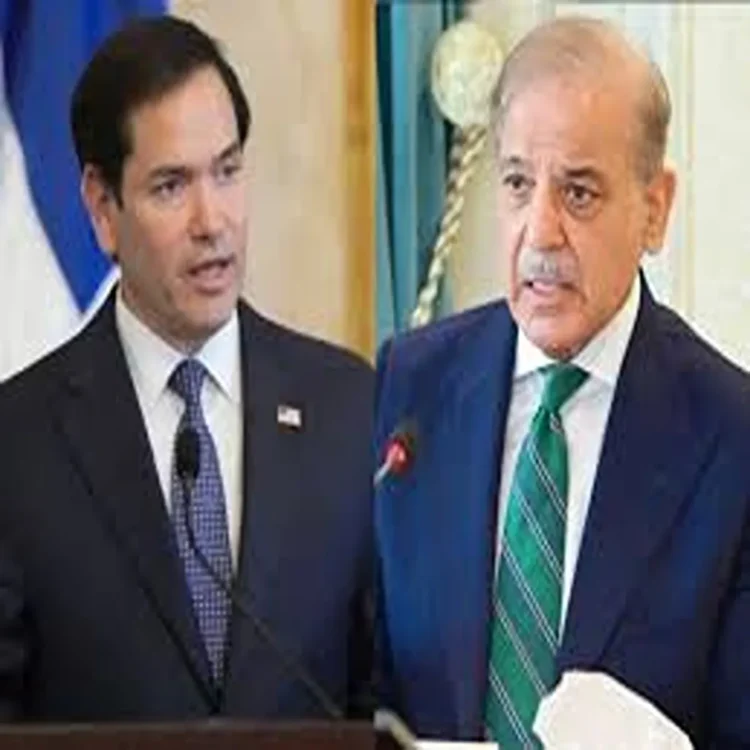
GazaPeacePlan – US Secretary of State Marco Rubio met with Pakistan Prime Minister Shehbaz Sharif and commended Islamabad’s support for President Donald Trump’s proposed peace initiative for Gaza, as well as its participation in the newly formed Board of Peace. The meeting underscored ongoing diplomatic engagement between Washington and Islamabad on regional stability and economic cooperation.
Strategic Dialogue Covers Minerals and Security
Following the talks, Rubio said he valued Pakistan’s backing of the US President’s Gaza peace framework and acknowledged the country’s role on the Board of Peace. He also emphasized the importance of strengthening cooperation in areas such as critical minerals development and counterterrorism.
According to Rubio, the discussions highlighted the long-standing strategic relationship between the two countries. He noted that collaboration on mineral resources and security matters remains central to bilateral ties, particularly at a time of evolving global supply chain challenges and regional security concerns.
Sharif Applauds Trump’s Mediation Efforts
At the inaugural meeting of the Board of Peace, Prime Minister Shehbaz Sharif spoke in support of President Trump’s diplomatic role in easing tensions between India and Pakistan during the 2024 conflict. Sharif described Trump’s intervention as timely and effective, crediting it with helping to prevent further escalation.
He stated that the ceasefire potentially averted significant loss of life and referred to Trump as a leader committed to peace in South Asia. Sharif’s remarks were delivered in the presence of senior officials during the session.
Trump Repeats Tariff Warning Claim
President Trump, addressing the same gathering, reiterated his assertion that he played a decisive role in halting hostilities between the two South Asian neighbors. He claimed that he warned both governments of substantial economic consequences, including the possibility of imposing a 200 percent tariff on trade, if fighting continued.
Trump suggested that economic considerations contributed to de-escalation, stating that financial costs influenced the decision to step back from further conflict. He also increased his earlier estimate of military aircraft losses during the confrontation, saying that 11 jets were shot down, compared to previous statements in which he cited eight.
The President said he personally contacted both Prime Minister Narendra Modi and Pakistan’s leadership during the crisis, urging restraint and a negotiated outcome.
Background: 2024 Conflict and Operation Sindoor
The tensions referenced by Trump and Sharif followed the April 2024 attack in Pahalgam, where 26 people lost their lives. In response, India carried out targeted strikes against what it described as terrorist infrastructure across the border under Operation Sindoor.
The escalation led to a period of heightened military activity between the two countries before a ceasefire was announced.
India Maintains Bilateral Position
India has consistently rejected claims of third-party mediation in achieving the ceasefire. New Delhi has stated that the agreement to halt hostilities was reached through direct communication between the Directors General of Military Operations of both nations.
Indian officials have also reiterated that all outstanding issues with Pakistan, including matters related to Jammu and Kashmir, are to be addressed bilaterally. The government maintains that external involvement in such matters is neither required nor accepted under its established policy framework.
The differing accounts regarding diplomatic involvement highlight contrasting narratives around the 2024 ceasefire. While US officials and Pakistan’s leadership have credited American intervention, India continues to assert that the resolution was achieved independently through established military and diplomatic channels.
As discussions on regional security and global peace initiatives continue, the meeting between Rubio and Sharif signals sustained engagement between Washington and Islamabad on both geopolitical and economic fronts.