
TradePolicy – Trump Cites Tariff Threat in Drug Price Dispute
TradePolicy – President Donald Trump has said he threatened steep tariffs on French wine and champagne during negotiations aimed at reshaping international drug pricing, illustrating how he views trade policy as leverage in broader economic talks.
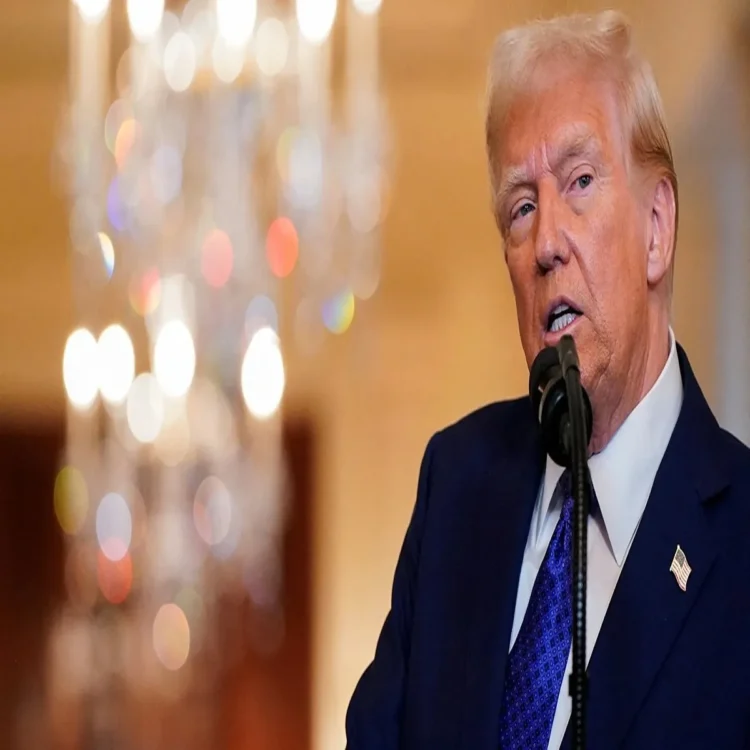
Speaking at a steel manufacturing facility in Rome, Georgia, Trump described recent discussions with foreign leaders following his proposal to align US prescription drug prices with the lowest rates paid in other developed nations. The president argued that Americans have long paid disproportionately high costs for medication compared with consumers overseas.
Pressure on Foreign Leaders Over Drug Costs
Trump told workers that he raised the issue directly with French President Emmanuel Macron. According to the president, he urged France to adjust its pricing structure to reduce disparities that he said disadvantage American buyers.
He cited a striking comparison to make his case, claiming that a medication priced at $10 in London could sell for more than $130 in New York. Such gaps, he said, demonstrate the imbalance in global pharmaceutical pricing and justify a tougher US stance.
Trump recounted that Macron initially resisted calls to increase prices in France, arguing it would hurt local markets. In response, Trump said he warned that failure to cooperate would result in a 100 percent tariff on French wine and champagne exported to the United States. The president asserted that this pressure ultimately persuaded France to reconsider its position.
While no independent confirmation of the exchange was immediately available, the comments underscore how Trump links trade tools with healthcare objectives.
Expanding the Approach to Other Countries
Beyond France, Trump said he contacted leaders in Germany and Spain with similar demands regarding drug pricing structures. He indicated that those conversations also produced positive responses, though he did not provide detailed outcomes or timelines for any adjustments.
The president portrayed these interactions as evidence that tariffs remain a central element of his negotiating strategy. During his remarks, he described trade duties as a powerful instrument for protecting domestic interests and influencing foreign economic policy.
Tariffs at the Core of Economic Strategy
Tariffs have featured prominently in Trump’s economic platform since his first term in office. Duties on steel, aluminium and a broad range of Chinese imports were introduced during that period, reshaping global trade flows and prompting retaliatory measures from trading partners.
At the Georgia event, Trump reiterated his belief that trade barriers have strengthened American industry, particularly manufacturing. He argued that without tariffs, the US economy would face greater vulnerability.
His comments come as the administration awaits a ruling from the US Supreme Court regarding executive authority to impose certain trade duties. Legal challenges have raised questions about the scope of presidential power in trade matters, creating uncertainty for businesses and international partners.
Broader Economic Claims
In addition to discussing trade and drug pricing, Trump pointed to what he described as significant economic progress under his leadership. He said the United States has secured commitments totaling more than $18 trillion in investment over the past 11 months and highlighted record stock market levels since the election.
Economists note that prescription drug prices in the United States have long exceeded those in Europe and other advanced economies. Efforts to tie US prices to international benchmarks have sparked debate in Washington, with pharmaceutical companies warning that lower prices could affect research investment and supply chains.
The president’s remarks highlight a negotiating approach that merges trade policy, healthcare reform and geopolitical considerations. As discussions over drug pricing and tariff authority continue, the impact of this strategy may extend beyond Europe, shaping broader economic relations in the months ahead.