
NuclearTest – US Raises Concerns Over Alleged Chinese Nuclear Blast
NuclearTest – The United States has alleged that China carried out a nuclear explosion with measurable yield in 2020, signaling a sharper tone from Washington as it seeks broader arms control negotiations. Senior officials say the issue underscores growing concerns about transparency and balance among major nuclear powers.
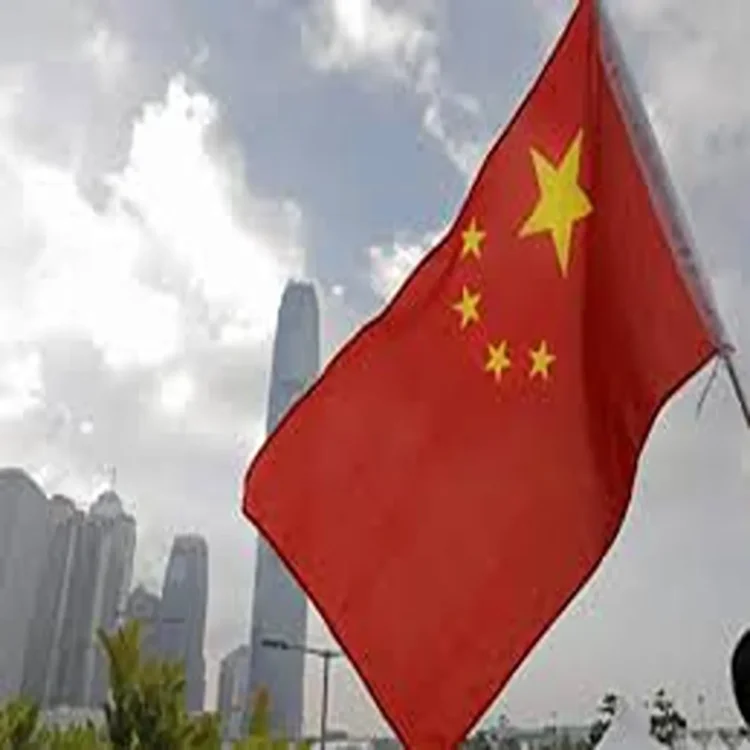
Allegation of a 2020 Test
Speaking at a policy forum in Washington on Wednesday, Assistant Secretary of State for Arms Control and Non-Proliferation Christopher Yeaw said the US government had detected evidence of what he described as a “yield-producing” nuclear test conducted by China on June 22, 2020. According to Yeaw, the event occurred near China’s Lop Nur test site, a location historically associated with its nuclear program.
Yeaw pointed to seismic data recorded at a monitoring station in Kazakhstan, which registered a magnitude 2.75 signal at 09:18 GMT that day. He said the characteristics of the reading strongly suggested a single explosive event rather than natural seismic activity. While the precise explosive yield could not be determined, he maintained that the data indicated a supercritical reaction.
Concerns Over Evasion Techniques
US officials claim that China may have used a method known as decoupling to limit the detectability of the blast. Decoupling involves conducting an underground test in a way that dampens seismic signals, making it more difficult for international monitoring systems to measure the true scale of an explosion.
Yeaw argued that such techniques complicate global verification efforts and reduce confidence in compliance with international norms. He added that Beijing has not publicly acknowledged conducting any nuclear test in 2020 and accused it of responding to inquiries with silence or deflection.
China has not issued a public response to the latest remarks.
Debate After New START Expiry
The comments come shortly after the expiration of the New Strategic Arms Reduction Treaty, commonly known as New START. The treaty, signed in 2010, placed limits on deployed strategic nuclear warheads and delivery systems held by the United States and Russia. It was extended once for five years before lapsing amid worsening relations between Washington and Moscow, particularly following tensions linked to the war in Ukraine.
Yeaw criticized the agreement as incomplete, arguing that it constrained US and Russian arsenals while leaving China outside its framework. He suggested that this imbalance had become increasingly problematic as China expanded its nuclear capabilities.
According to US assessments, China’s nuclear arsenal has grown rapidly in recent years. Yeaw described the pace of expansion as dramatic, echoing past statements from American military leaders who have expressed concern about the scale and speed of Beijing’s buildup.
Push for Broader Arms Control Talks
The US administration is now advocating for multilateral discussions that would include China alongside other nuclear-armed states. Yeaw said President Donald Trump is seeking what he called a more comprehensive agreement that addresses current realities rather than relying on Cold War-era structures.
He emphasized that arms control efforts should not exclude Washington’s allies or ignore emerging nuclear powers. At the same time, he noted that the United States would not accept a situation in which it adheres to strict limitations while others operate without comparable constraints.
Yeaw also referred to the Nuclear Non-Proliferation Treaty, highlighting Article VI, which calls on nuclear-weapon states to pursue negotiations on disarmament. He argued that the responsibility to engage in meaningful talks extends beyond the United States and Russia.
Nuclear Testing and Strategic Balance
Addressing questions about future US policy, Yeaw said that any decision regarding nuclear testing would be guided by the principle of parity. He clarified that this did not imply a return to large-scale atmospheric tests conducted during the early Cold War. Instead, he stressed that Washington would respond proportionately if other nations engaged in testing practices that placed the United States at a strategic disadvantage.
US officials have communicated their concerns to both Beijing and Moscow through diplomatic channels and expressed hope for constructive discussions in upcoming international meetings, including the NPT Review Conference scheduled for April.
As global tensions rise and nuclear modernization programs continue, arms control remains a central issue in relations among major powers. The coming months are expected to test whether renewed dialogue can ease mounting competition or whether strategic rivalries will deepen further.