
Healthcare – Gehlot Slams Rajasthan Government Over Right to Health Remarks
Healthcare – A fresh political confrontation has erupted in Rajasthan after senior Congress leader Ashok Gehlot sharply criticised the state government’s position on the Right to Health Act, describing recent remarks by the Health Minister as deeply troubling for ordinary families.
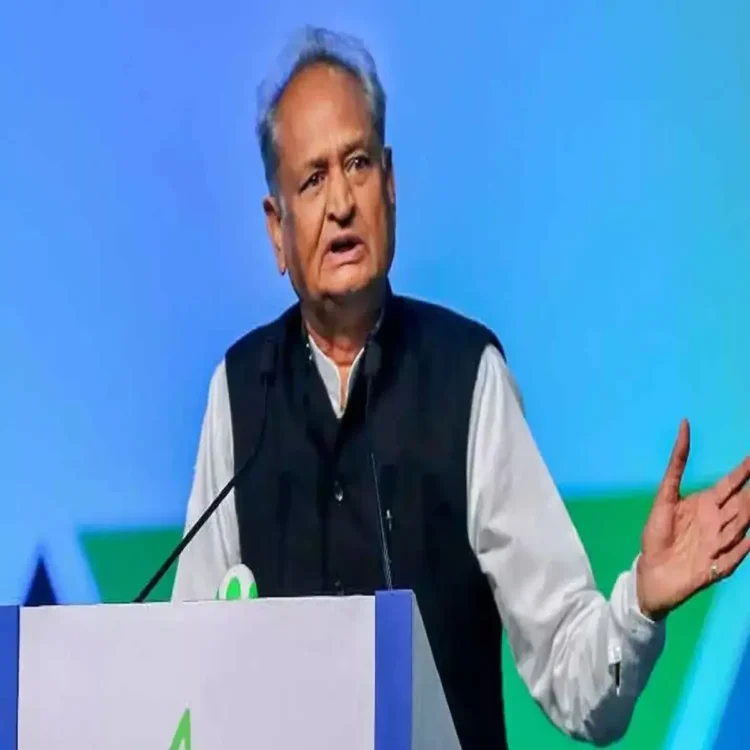
Gehlot Questions Government’s Commitment
Former Chief Minister Ashok Gehlot took strong exception to comments made by Health Minister Gajendra Singh Khinvsar in the Assembly, where the minister reportedly suggested there was no need for the Right to Health Act. Gehlot said such a statement reflected a lack of sensitivity towards low-income and middle-class households struggling with mounting medical bills.
In a public statement, Gehlot argued that the legislation had been introduced with a clear objective: to ensure that no patient is denied emergency medical care under any circumstances. He maintained that the law was designed to strengthen access to healthcare and offer legal backing to patients in urgent situations.
Gehlot further said that during the Congress government’s tenure, welfare programmes such as Chiranjeevi Yojana and Nirogi Rajasthan Yojana were implemented to expand healthcare coverage. According to him, the Right to Health framework was intended to complement these schemes by guaranteeing emergency treatment as a right rather than a discretionary service.
Assembly Debate Sparks Uproar
The controversy gained momentum during Question Hour in the Rajasthan Assembly. Congress MLA Harimohan Sharma sought clarification from the government regarding the status of rules under the Right to Health Act and whether they would be formally notified.
Responding to the query, Health Minister Gajendra Singh Khinvsar said the previous Congress administration had rushed the legislation shortly before the Model Code of Conduct came into effect. He suggested that key stakeholders were not adequately consulted and questioned the intent behind bringing the Act at that time.
The remarks led to immediate protests from the opposition benches. Leader of the Opposition Tika Ram Jully and Rajasthan Congress President Govind Singh Dotasra pressed the government to clearly state whether it intends to implement the law. Jully said the people of the state deserved transparency on such an important public health issue.
Government Cites Existing Schemes
Defending the state’s position, the Health Minister argued that free treatment is already being offered under the Maa Yojana, and therefore the Right to Health Act may not be necessary in its current form. He maintained that the government remains committed to providing medical assistance to eligible citizens through existing health schemes.
However, opposition members countered that statutory backing through a dedicated law ensures accountability and protects patients’ rights in emergencies. They accused the government of delaying the framing of rules required for the Act’s implementation and of yielding to pressure from sections of the medical community.
Gehlot also alleged that the government’s approach weakens the original welfare intent behind the legislation. He said abandoning or sidelining the law would send a discouraging message to families who depend on affordable healthcare services.
Walkout Intensifies Political Standoff
As tempers flared, Congress MLAs entered the well of the House and raised slogans, prompting Speaker Vasudev Devnani to caution members against continued disruption. He warned that proceedings could be adjourned if order was not restored.
Unhappy with the minister’s reply, Congress legislators eventually staged a walkout, further deepening the political divide over the future of the Right to Health Act in Rajasthan.
The issue is now poised to remain at the centre of state politics, with both the ruling government and the opposition staking contrasting claims over public health priorities and implementation of welfare laws. As the debate continues, clarity on the government’s next steps regarding the Act is likely to be closely watched by citizens and healthcare stakeholders alike.