
Bihar and Jharkhand Political: Congress Moves to Quell Defection Buzz Amid Turmoil
Bihar and Jharkhand Political: India’s political landscape saw intense internal activity on Friday as the Indian National Congress worked to manage emerging challenges in two key eastern states. Both Bihar and Jharkhand became focal points after speculation, dissent, and internal dissatisfaction triggered high-level meetings involving senior leadership and state legislators. The developments highlighted the party’s efforts to project unity while addressing grievances that have been simmering within its ranks since recent electoral outcomes.
Bihar Leadership Meeting to Counter Defection Speculation
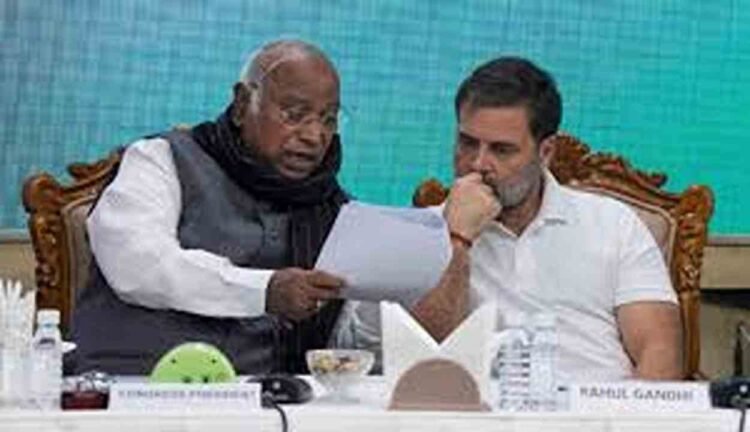
Bihar was at the center of attention after the Indian National Congress convened a closed-door brainstorming session with its state leadership. The meeting was chaired by party president Mallikarjun Kharge at his New Delhi residence and aimed to counter widespread rumours suggesting that six newly elected Congress MLAs were preparing to leave the party. These rumours had gained momentum after some legislators were absent from earlier state-level meetings and policy discussions.
Senior leaders present at the meeting included Leader of Opposition in the Lok Sabha Rahul Gandhi, AICC general secretary K C Venugopal, former Lok Sabha Speaker Meira Kumar, and prominent Bihar Congress leaders. The party had secured six seats after contesting nearly 60 constituencies in the recent Bihar Assembly elections, making the loyalty of these MLAs politically significant.
Party Rejects Claims of MLA Exodus
Following the meeting, party leaders firmly rejected claims of defection. K C Venugopal dismissed the reports as unfounded, stating that all six MLAs were present at the meeting and reaffirmed their commitment to the party. According to him, the rumours were deliberately spread to create instability and damage the party’s image in Bihar. He clarified that internal discussions were part of routine organisational reviews and not linked to any potential switch in political allegiance.
Sources indicated that while the meeting was initially expected to focus on the appointment of a Congress Legislature Party leader in Bihar, no such decision was taken. Instead, the emphasis remained on maintaining unity and addressing internal coordination issues ahead of future political challenges in the state.
Tense Atmosphere and Leadership Signals
According to insiders, the nearly two-hour-long meeting carried a tense atmosphere. Rahul Gandhi was reportedly displeased during the discussions, with sources suggesting that the leadership was keen to send a strong message of discipline and cohesion. The meeting was largely viewed as a damage-control exercise designed to present a united front amid growing political competition in Bihar.
Adding an unusual dimension to the day’s events, independent MP Pappu Yadav briefly visited Kharge’s residence. His initial absence from the invite list reportedly caused some confusion, though he later returned after consultations with party leaders, underlining the delicate internal dynamics currently at play.
Jharkhand MLAs Voice Open Dissent
While Bihar’s focus was on countering rumours, neighbouring Jharkhand witnessed open dissent from within the Congress legislature party. Five Congress MLAs met the central leadership to express dissatisfaction with the functioning of the state government and the performance of Congress ministers. The MLAs raised concerns over governance, representation, and organisational respect.
They argued that ministers had failed to deliver on expectations and were behaving in a manner disconnected from grassroots legislators. The MLAs demanded a review of ministerial responsibilities and hinted at the need for a possible reshuffle to restore balance within the party’s state unit.
Governance Issues and Organisational Concerns
Among the key issues flagged were delays in forming statutory boards and corporations even a year after the government’s formation. The MLAs also expressed resentment over the allocation of key portfolios and questioned certain decisions taken by the party high command. These grievances reflected deeper concerns about internal communication and equitable distribution of responsibilities within the state government.
Party leaders acknowledged the concerns and assured the MLAs that their feedback would be reviewed. The leadership emphasized the importance of organisational loyalty and collective responsibility, signalling that corrective steps could be considered after internal assessments.
A Test of Unity for the Congress
The parallel developments in Bihar and Jharkhand underline a critical phase for the Congress as it seeks to consolidate its position in eastern India. Managing internal dissent, countering defection narratives, and ensuring effective governance remain key challenges. How the party responds to these issues may significantly influence its political prospects in upcoming state and national contests.