
Delhi High Court: The Center informs that the GST Council has exclusive authority over the tax rate on air purifiers
Delhi High Court: The Center warned the Delhi High Court that any judicial order in this area would not only be unconstitutional but would also go against the cooperative federalism framework. The Center stated that issues pertaining to the rate, classification, and reduction of the Goods and Services Tax (GST) on air purifiers are solely within the purview of the GST Council.
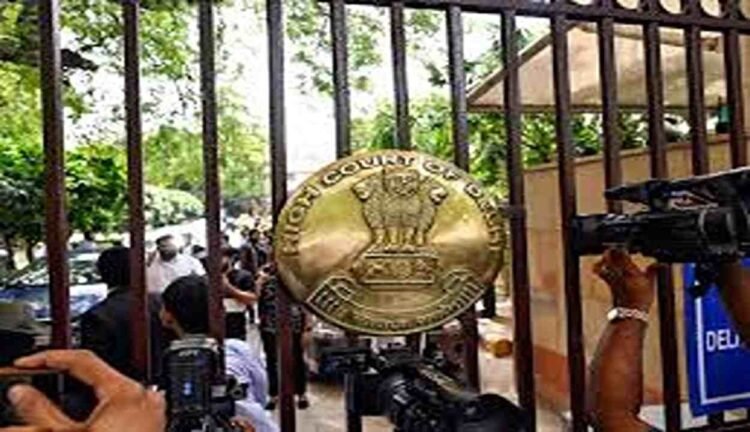
The Union government stated that the GST Council is a constitutional body established under Article 279A of the Constitution and is the “sole constitutionally designated authority” with the authority to make recommendations on GST rates, exemptions, and classifications in a thorough counter-affidavit submitted in response to a public interest litigation (PIL) seeking the reduction of GST on air purifiers and their designation as “medical devices.”
The Center stated that any court-mandated fixation of GST rates would amount to circumventing the meticulously calibrated constitutional mechanism. “The constitutional text leaves no scope for parallel, substitute, or competing recommendation-making by any other institution or authority in matters expressly entrusted to the GST Council,” the Center said.
According to the affidavit, “it is settled law that courts do not substitute themselves for constitutionally designated decision-makers, particularly in matters involving economic policy and fiscal structuring.”
“GST decisions, especially those pertaining to rates, are the result of a complicated process of cooperative federalism that balances the Union’s and the States’ conflicting budgetary interests. The reply paper said, “Judicial intervention in such matters would necessarily circumvent this constitutionally mandated process and disturb the federal equilibrium.”
It warned that any order from the Delhi High Court to change GST rates, call a meeting of the GST Council, or force the Council to think through or decide on a specific course of action “would amount to the Court stepping into the shoes of the GST Council,” which would be against the separation of powers doctrine.
According to the Center’s categorization structure, medical equipment are categorized under headings 9018 to 9022, which are subject to a merit rate of 5% after recent rationalization by the GST Council, whereas air purifiers are under tariff heading 8421, which is subject to 18% GST.
The highest bracket of taxes does not apply to air purifiers. According to the affidavit, they are liable to 18% GST, with the highest slab being 40%. In response to suggestions made by the Department-related legislative Standing Committee on Science and Technology, Environment, Forests, and Climate Change, the Union government said that the GST problem on air purifiers is now being considered via legislative process.
According to parliamentary practice, “considering the current petition at this time would amount to parallel consideration of issues currently pending consideration,” the document said.
The Center referred to the PIL as a “colourable and motivated attempt,” arguing that its true goal was to get the regulatory reclassification of air purifiers as medical equipment rather than a decrease in GST. According to the affidavit, “the plea of accessibility and public health is used as a façade to advance a fundamentally different regulatory objective.” Such reclassification might limit public access and foster monopolistic circumstances.
The Delhi High Court has scheduled a hearing on the case for tomorrow.
When Additional Solicitor General (ASG) N. Venkataraman, speaking on behalf of the Union government, requested time to submit a thorough response, a Vacation Bench consisting of Justices Vikas Mahajan and Vinod Kumar gave the Center ten days to submit its counter-affidavit in the previous hearing on December 26.
ASG Venkataraman made significant objections to the maintainability of the PIL that attorney Kapil Madan had filed during the hearing. He said that the petition was “loaded” and that, although requesting directives that would have an impact on public health policy, it had been filed without impleading the Union Health Ministry.Yesterday, we had an urgent meeting. We are worried about this PIL. Who is behind this petition is unknown to us. It’s not a PIL. The Center’s legal officer said, “The health department is not even a party.”
However, using the Parliamentary Standing Committee’s recommendations as support, the petitioner refuted the Center’s concerns, claiming that air purifiers were being taxed under the incorrect GST slab.Advocate Madan said that any delay would only make the suffering of citizens in the nation’s capital worse. “On a cursory reading of the notification, it is clear that they fall under a different schedule and are being wrongly taxed,” Madan said.
The Delhi High Court noted, however, that it was unable to provide final rulings in the case without requesting a counter-affidavit. The Vacation Bench had said, “Today it’s not possible for the court to say without a counter affidavit.”
A bench of Chief Justice Devendra Kumar Upadhyaya and Justice Tushar Rao Gedela had earlier requested that the GST Council call a meeting as soon as possible to discuss reducing the 18% GST on air purifiers, noting that a 5% rate might be suitable given the deteriorating air quality in Delhi-NCR.
The CJ Upadhyaya-led Bench had criticized the Center for the deteriorating air pollution situation in Delhi, saying that at the very least, the GST on air purifiers should be lowered if residents cannot be guaranteed clean air. “This is the very minimum that you are capable of. Every person needs clean air. At the very least, lower the GST if you are unable to provide it. It verbally informed the Center’s counsel, “Give a temporary 15-day exemption and treat this situation as an emergency.”