
Delhi High Court: Refuses to Halt Streaming of Film Based on Vikas Dubey’s Life
Delhi High Court: The Delhi High Court has declined to grant relief to Richa Dubey, wife of the late gangster Vikas Dubey, who had approached the court seeking a ban on the streaming of the film UP-77. The film is inspired by the life and criminal history of Vikas Dubey, a controversial figure from Uttar Pradesh. The court’s decision has once again brought public attention to the debate around biographical films, creative freedom, and the balance between personal privacy and public interest.
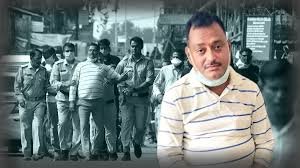
Background of the Legal Plea
Richa Dubey filed the petition alleging that the film UP-77 is an unauthorised biographical depiction of her husband’s life. According to her submission, the film and related content were created without the consent of the family. She argued that such portrayals rely heavily on dramatization and sensational storytelling rather than verified facts, which could mislead viewers and unfairly shape public perception.
The petitioner also expressed concern that the film would reopen painful memories and expose her and her family to public scrutiny. She claimed that the streaming of the film would amount to a violation of her right to privacy and could cause lasting damage to her personal reputation and dignity.
Claims Related to Reputation and Privacy
One of the key arguments raised in the petition was that biographical films based on criminal figures often blur the line between fact and fiction. Richa Dubey contended that UP-77 allegedly presents exaggerated scenes and speculative narratives that were never established in any court of law. According to her, such depictions could lead audiences to draw assumptions about her personal life and family role, despite her not being involved in her husband’s criminal activities.
She further argued that once released on digital platforms, such content spreads rapidly and becomes difficult to control, leading to irreversible harm. The plea urged the court to intervene before the damage could occur.
Who Was Vikas Dubey
Vikas Dubey, sometimes referred to as Vikas Pandit, was a well-known gangster from the Kanpur Dehat region of Uttar Pradesh. His criminal activities spanned nearly three decades, beginning in the early 1990s. Over the years, he became a prominent name in crime records, with more than 60 cases registered against him by 2020, including serious charges such as murder, kidnapping, and extortion.
Despite his criminal background, Dubey was also known for his political connections and local influence. His ability to evade arrest for years added to his notoriety and made him a subject of widespread media coverage.
Criminal Cases and Nationwide Attention
Vikas Dubey was allegedly involved in several high-profile crimes, including the murder of a state minister, which further cemented his image as a powerful criminal figure. However, the incident that brought him national attention was the killing of eight police personnel during a raid intended to arrest him. The incident shocked the country and raised serious questions about law enforcement preparedness and criminal networks.
Following this event, Dubey was declared a fugitive by the Uttar Pradesh Police. A reward of Rs 5 lakh was announced for information leading to his capture, and multiple police teams across states were put on alert.
Arrest in Ujjain and Transfer
After days of being on the run, Vikas Dubey was arrested on July 9, 2020, from Ujjain in Madhya Pradesh. His arrest was widely reported, and he was immediately taken into custody for questioning. Authorities began the process of transferring him back to Uttar Pradesh, where several cases against him were pending.
The arrest marked a crucial moment in a case that had drawn intense public and media interest, with many expecting a detailed investigation and trial.
The Encounter and Aftermath
While being transported back to Uttar Pradesh, the police vehicle carrying Vikas Dubey reportedly met with an accident. According to official statements, after the vehicle overturned, Dubey attempted to flee and allegedly tried to snatch a weapon from the officers. The police claimed they fired in self-defense, resulting in his death.
This encounter sparked widespread debate and controversy, with questions raised about transparency, due process, and the use of force. It also led to increased public interest in documentaries, films, and web series exploring his life and death.
Court’s View on Creative Expression
In rejecting the plea, the Delhi High Court emphasized the importance of creative freedom and noted that stories based on real-life events are a common form of expression. The court observed that unless there is a clear violation of law or proven malicious intent, prior restraint on artistic works is generally discouraged.
The decision highlights the ongoing tension between individual rights and the freedom of creators, especially in cases involving real-life crime stories that are already part of public record.