
Trump: A directive to relax federal regulations on medicinal marijuana is signed by
Trump: In order to promote medical research and enhance access for patients with severe and chronic conditions, US President Donald Trump issued an executive order instructing the federal authorities to remove marijuana from the most restricted category of prohibited narcotics.
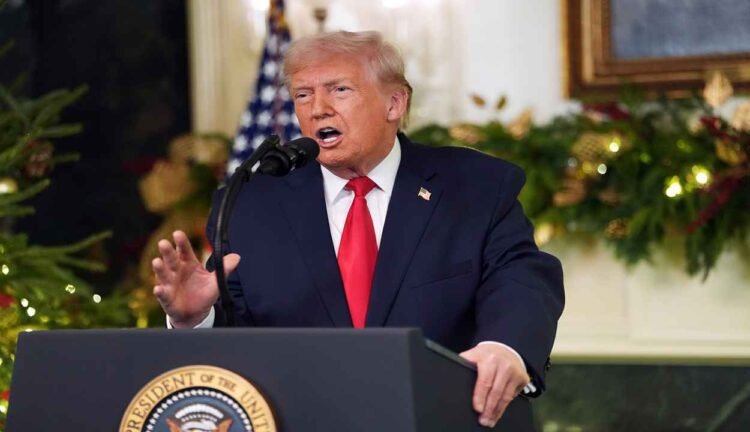
Trump described the ruling as “a big day in many reasons” and said that it will reschedule marijuana under federal law from Schedule I to Schedule III. He claimed that this change was prompted by years of pleas by patients, veterans, and medical experts.
Before signing the order, Trump said at a White House event that “American patients suffering from extreme pain, incurable diseases, aggressive cancers, seizure disorders, neurological problems, and more have requested this action for decades.”
Trump emphasized that the action does not legalize marijuana for recreational use. “The order …is not the legalization or it doesn’t legalize marijuana in any way, shape, or form,” he said, stressing the continued risk of abusing potent controlled narcotics.
He maintained that the categorization would facilitate federally authorized study on the dangers and medicinal advantages of marijuana, including its potential use as a substitute for opiate medicines.
Trump said that the reclassification order will greatly facilitate medical research on marijuana, enabling the study of its possible advantages, risks, and potential cures.
Trump was joined at the event by a number of cabinet members and health officials, including Robert F. Kennedy Jr., the secretary of health and human services, Mehmet Oz, the administrator of the Centers for Medicare and Medicaid Services, and senior researchers from Duke University, the Dana-Farber Cancer Institute, and the National Institutes of Health.
Kennedy said that the ruling will contribute to the resolution of a protracted scientific deadlock. “This will finally allow us to study this issue and answer these questions for the American people,” he said, pointing out that previous administrations had promised to take action but had fallen short.
Veterans and elderly Americans would benefit from the shift, according to Oz. According to him, if physicians suggest it, Medicare may start covering certain cannabidiol medicines made from hemp as early as next year.
“We cover 68 million Americans at Medicare,” Oz said, adding that if the policy change is implemented properly, patients may have access to more treatment alternatives at no cost.
The action was hailed as a clinical scientific triumph by medical experts.
According to Dr. Ilana Braun of the Dana-Farber Cancer Institute, rescheduling would speed up research on how to address cancer-related pain, anxiety, and side effects.
According to David Jonathan Casarett, a professor at Duke University, it would “democratize the research process,” permitting large-scale clinical trials and participation from additional institutions.
Support was also expressed by veteran organizations. According to American Legion national commander Dan K. Wiley, veterans are disproportionately affected by ailments including PTSD and persistent discomfort. “This reclassification will allow research to be conducted with regard to cannabis,” he said, adding that if it turns out to be successful, it may open up new therapeutic alternatives.
Trump admitted that some senators were worried that the order may promote drug use among young people, but he insisted that public demand and medical need were the driving forces behind the program. Citing surveys indicating widespread public support, he underlined that the goal was study rather than legalization. “Research is also a significant component of this,” he said.
A larger national discussion over cannabis policy coincides with the presidential order. medicinal marijuana is currently legal in more than 40 US states and territories, but it has long been categorized by federal law as a narcotic with no recognized medicinal benefit.
Research is challenging because Schedule I chemicals are subject to the most stringent regulations under the Controlled chemicals Act.
Moving marijuana to Schedule III puts it in the same category as medications that are acknowledged to have therapeutic value but are subject to regulation. This might change how US government agencies, academic institutions, and pharmaceutical companies research cannabis and related substances.